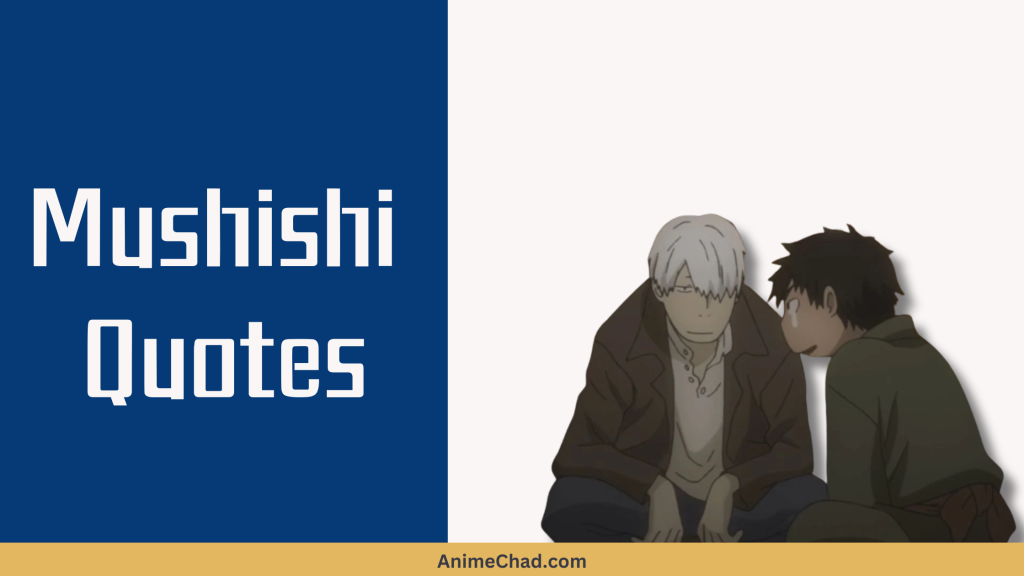
Mushishi follows Ginko, a wandering mushishi who investigates ethereal creatures called mushi that invisibly influence human lives across Japan’s rural landscapes. The series delves into profound themes of impermanence, the delicate balance between humanity and nature, and the quiet acceptance of life’s cycles, often blending serene introspection with subtle supernatural tensions.
This curated collection of 25 quotes highlights Ginko’s wisdom, character evolutions in key encounters, and the emotional resonance of pivotal moments, drawing from canonical anime episodes to illuminate the show’s philosophical depth.
Don’t let yourself be blinded by fear or anger. Everything is only as it is
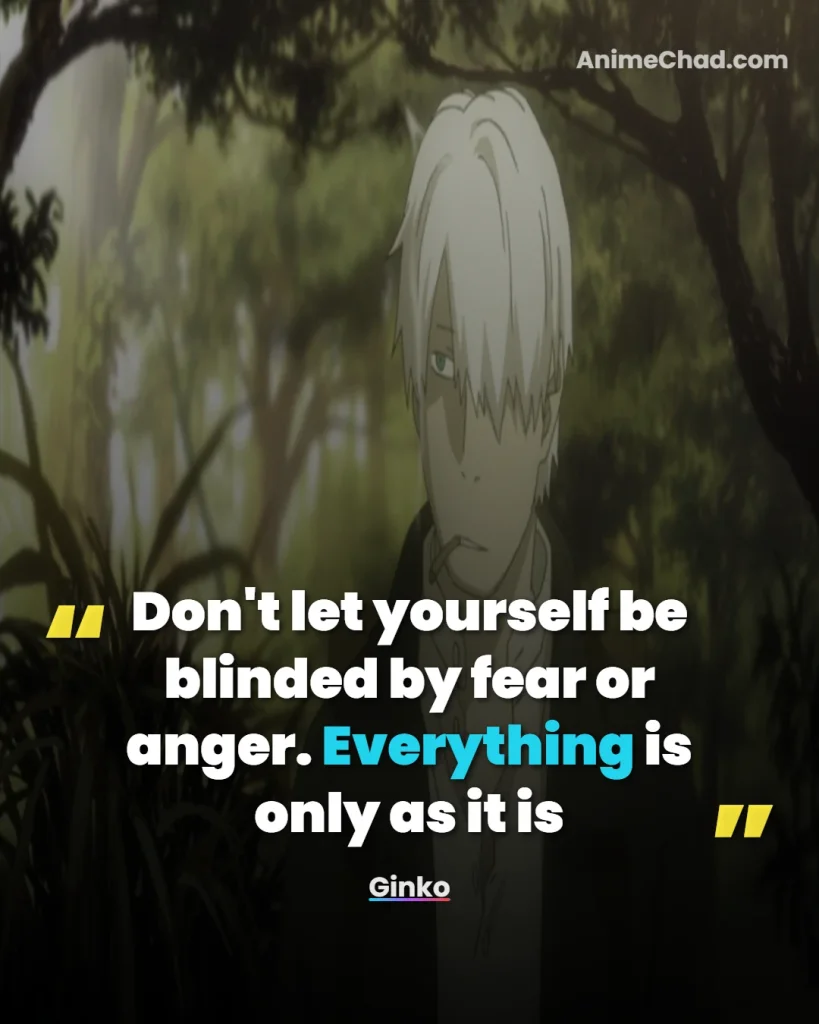
Episode 1 (The Light of the Eyelids)
Ginko
In a tense encounter with a destructive mushi, Ginko urges calm acceptance, revealing his detached philosophy while teaching a young girl to embrace reality over panic, tying to themes of harmony with unseen forces.
The sun rises today and sets again. A flower that bloomed in the morning falls from its stem
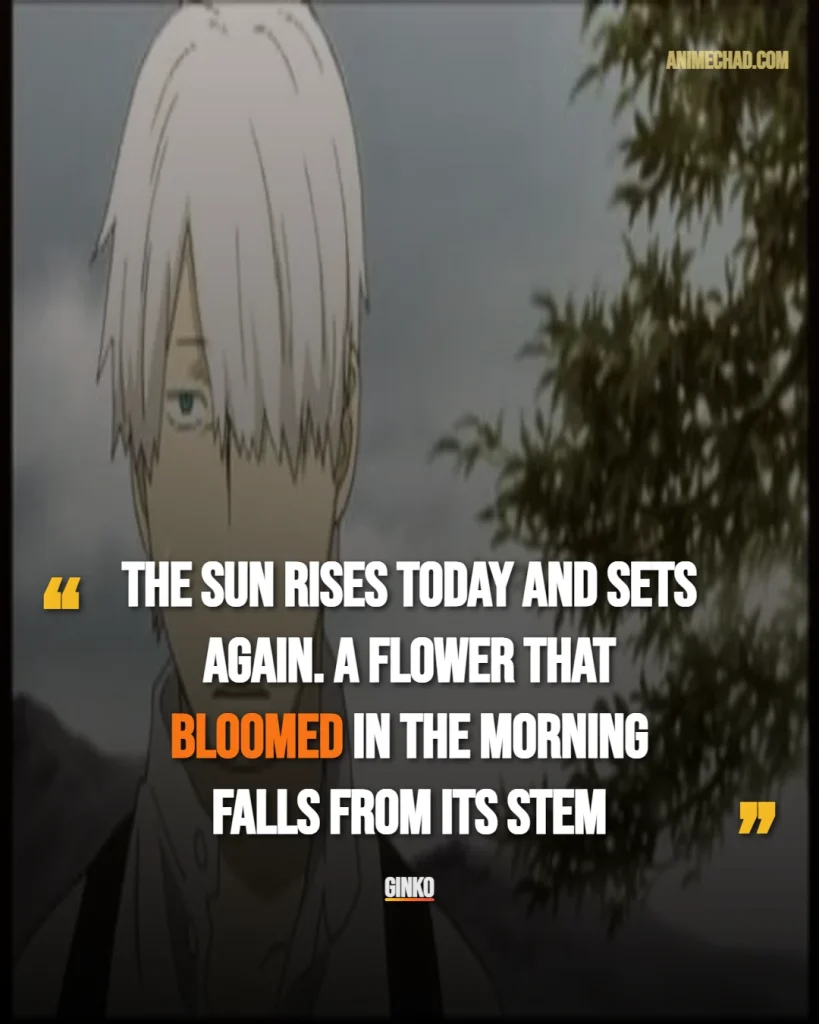
Episode 3 (Tide’s Up)
Ginko
During a peaceful coastal reflection, Ginko consoles a fisherman on loss, underscoring impermanence’s emotional weight and his growth as a guide, connecting to nature’s cyclical renewal.
Life is suffering, and suffering is an inevitability. But just because we’re powerless to escape suffering doesn’t mean we dissolve into it
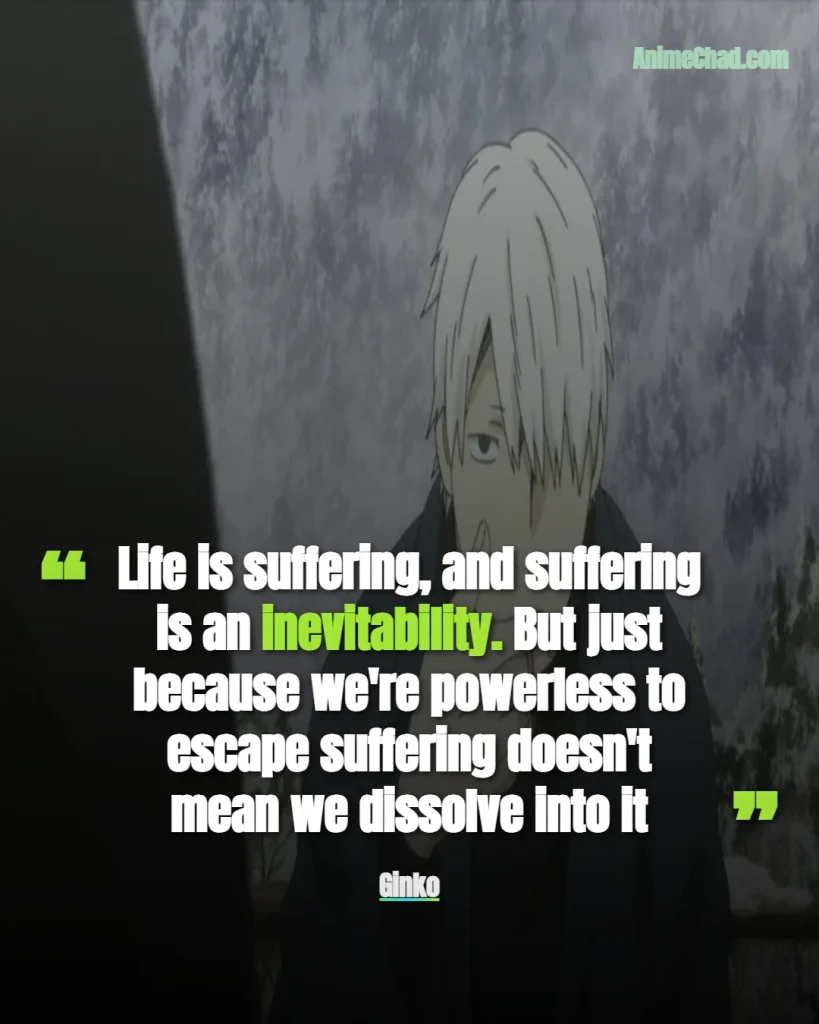
Episode 4 (String from the Sky)
Ginko
As a woman clings to a mushi-induced vision, Ginko’s words highlight resilience amid despair, marking his empathetic development and the theme of enduring human fragility.
Make sure to remember, every person and place has a right to exist. It is true for you too
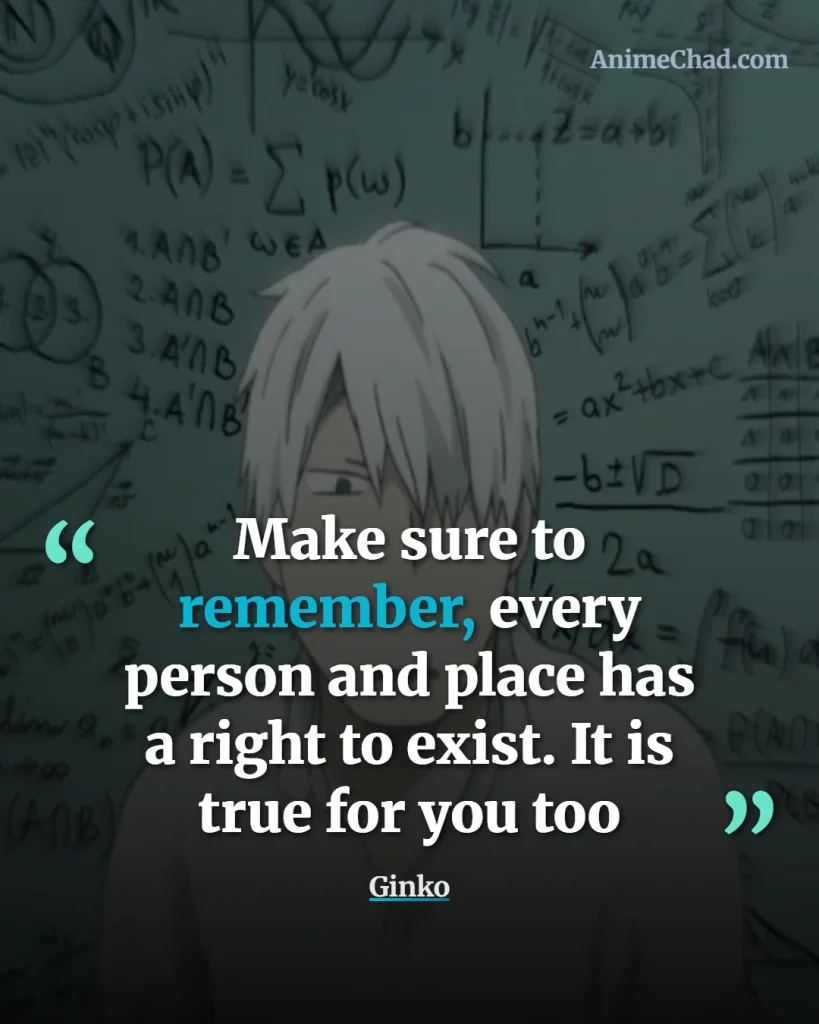
Episode 6 (Sea of Brushes)
Ginko
In the serene Karibusa library, Ginko affirms Tanyuu’s worth despite her curse, evoking quiet emotional intimacy and reinforcing coexistence with mushi as life’s inherent right.
When you’re just ‘living to live’, there’s no chance for a break. Taking a break is just as urgent a need in life as anything else
Episode 7 (A Sea of Writings)
Tanyuu
The young scribe shares this amid her endless toil, revealing her introspective growth under Ginko’s influence, and emphasizing rest’s role in themes of balanced existence.
Isn’t it quiet, Maho? It might be unsettling until you get used to it again, and sometimes you might even miss your old world
Episode 8 (The Pillow Path)
Ginko
Helping a boy return from a dreamlike mushi realm, Ginko captures re-entry’s poignant isolation, showcasing his nurturing side and solitude’s double-edged impact.
The snow can’t decide where to fall
Episode 9 (One-Eyed Fish)
Nui
In a gentle winter tale of adoption, Nui’s poetic observation reflects mushi’s whimsy, highlighting her compassionate evolution and nature’s unpredictable beauty.
We may not be right in the head. For 300 years, our family has loved a woman who is like a plant
Episode 10 (Soft Horns)
Unnamed Gardener
A family’s devoted care for a mushi-afflicted loved one conveys devoted melancholy, underscoring generational bonds and the theme of unconditional human devotion.
I don’t know. I might be eaten by a Mushi tomorrow
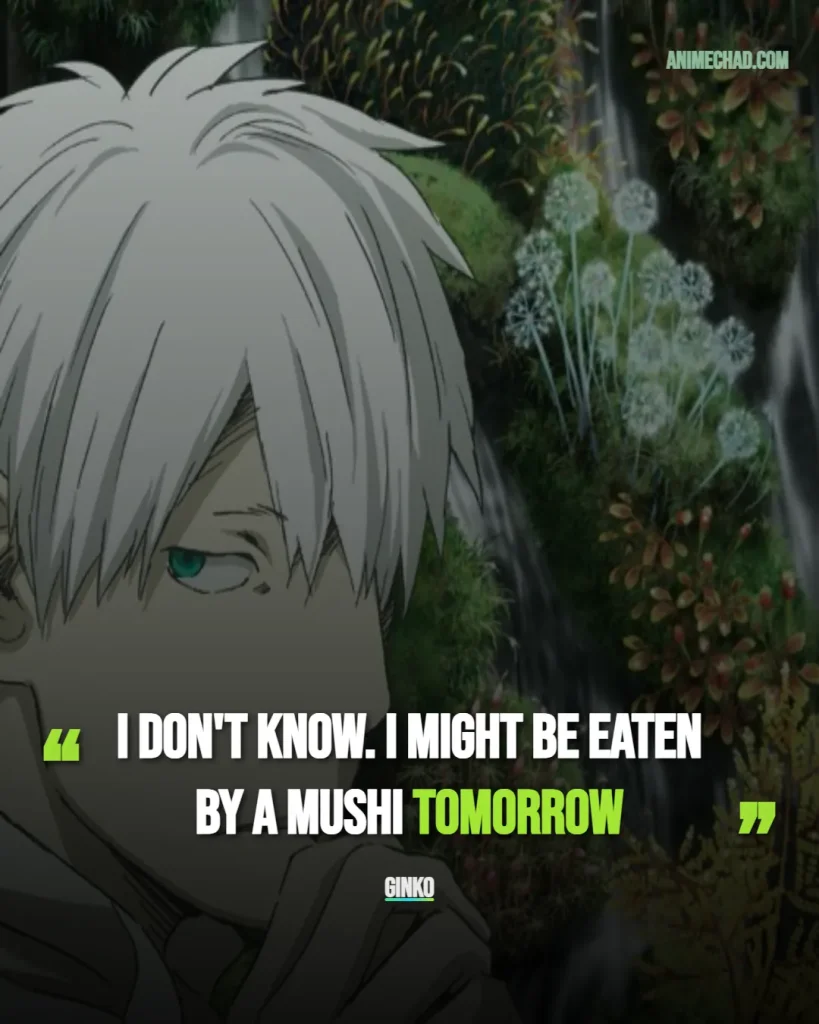
Episode 11 (The Green Gathering)
Ginko
To Tanyuu’s concern, Ginko’s wry response reveals his fatalistic humor, deepening their bond and illustrating mushi’s ever-present peril in tranquil moments.
Even then, you’ll still live
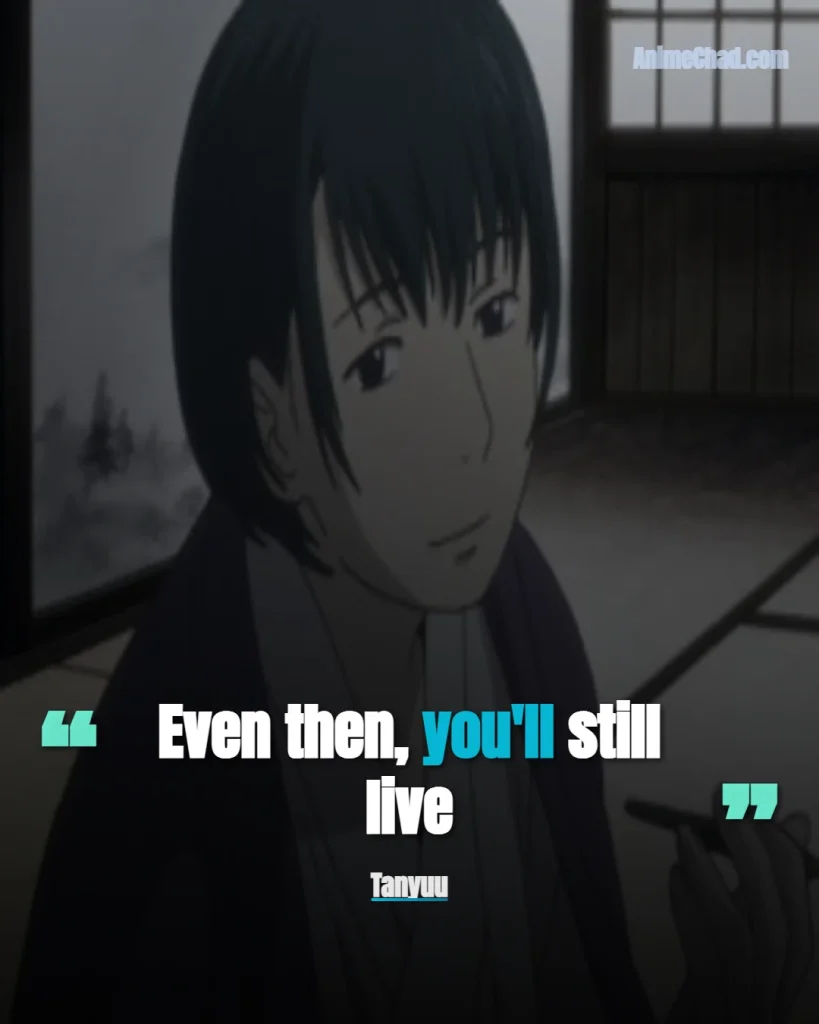
Episode 11 (The Green Gathering)
Tanyuu
Reassuring Ginko of his vitality, her faith evokes tender hope, marking her emerging strength and the series’ motif of life’s persistence beyond threats.
Don’t be ridiculous
Episode 11 (The Green Gathering)
Ginko
Dismissing peril lightly, this quip shows his resilient character arc from orphan to steadfast wanderer, blending levity with underlying vulnerability.
The mountain sleeps
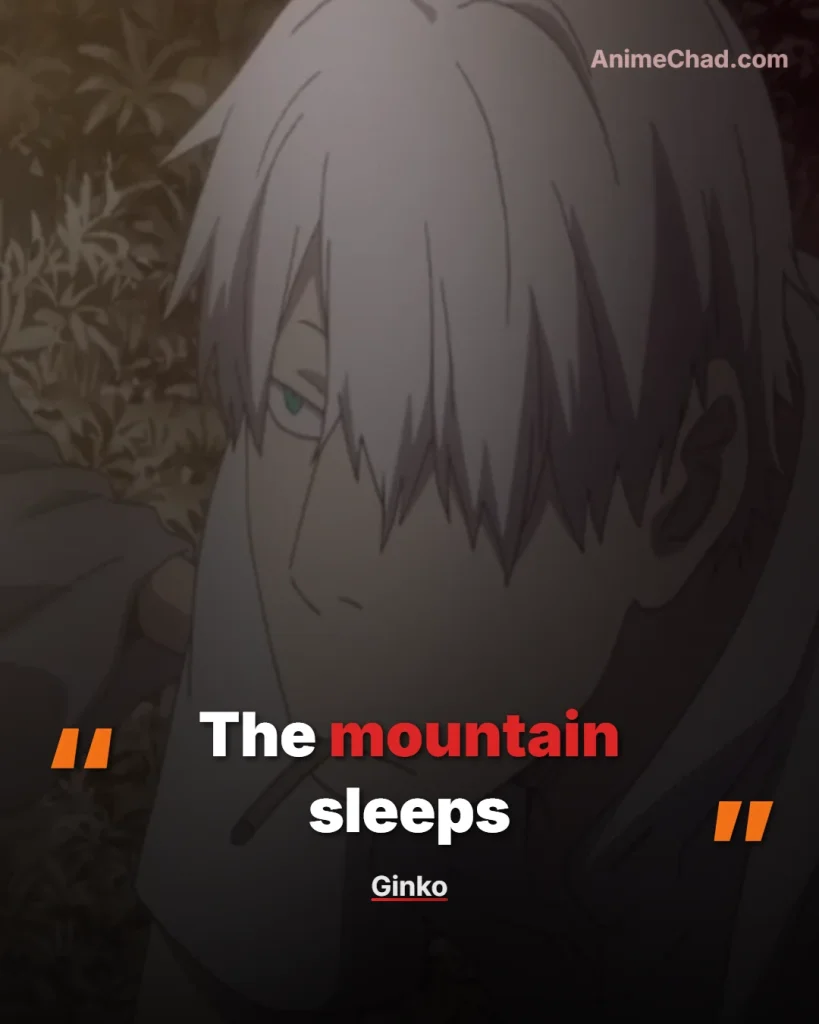
Episode 12 (Mushroom’s Twilight)
Ginko
In a hushed forest vigil, Ginko describes a dormant mushi, evoking serene awe and his attunement to nature’s rhythms, central to ecological harmony themes.
You think you are the king of the mountains?
Episode 13 (The Walking Fish)
Ginko
Challenging a villager’s hubris against mushi, this confronts arrogance’s emotional fallout, advancing Ginko’s role as mediator in human-nature conflicts.
It was not her time to die
Episode 14 (The Salt of the Sea)
Ginko
Sparing a woman from mushi fate, Ginko invokes destiny’s mercy, carrying heavy relief and tying to impermanence without needless loss.
As if she was drowning in a sea of letters, that is how one young woman lived
Episode 15 (Flames of the Lighthouse)
Narrator (reflecting on Tanyuu)
Narrating Tanyuu’s burden, this captures isolation’s depth, highlighting her development through Ginko’s aid and mushi’s invasive poetry.
The way things are is always consistent in Mushishi, even if the way with which the world is interacted with is not
Episode 16 (The Forest Bound in Weeds)
Ginko
Guiding a trapped traveler, Ginko affirms order amid chaos, revealing his philosophical core and themes of adaptive coexistence.
One night, Ginko met a young hunter who hunts without using the tool, in mountain
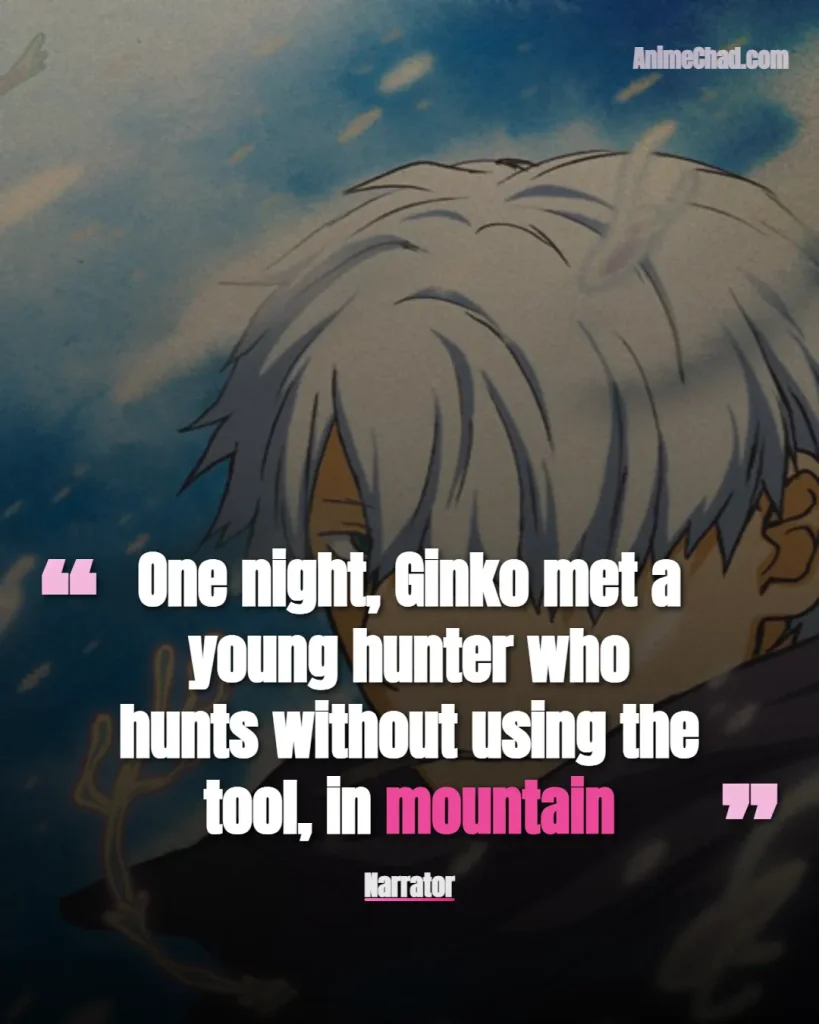
Episode 17 (The Hand That Caresses the Night – Zoku Shou)
Narrator
In a nocturnal hunt, this sets a tense pursuit, emphasizing Ginko’s vigilance and the emotional thrill of unseen dangers.
In the middle of a trip, Ginko decides to go to watch that a big cherry tree are in full blossom
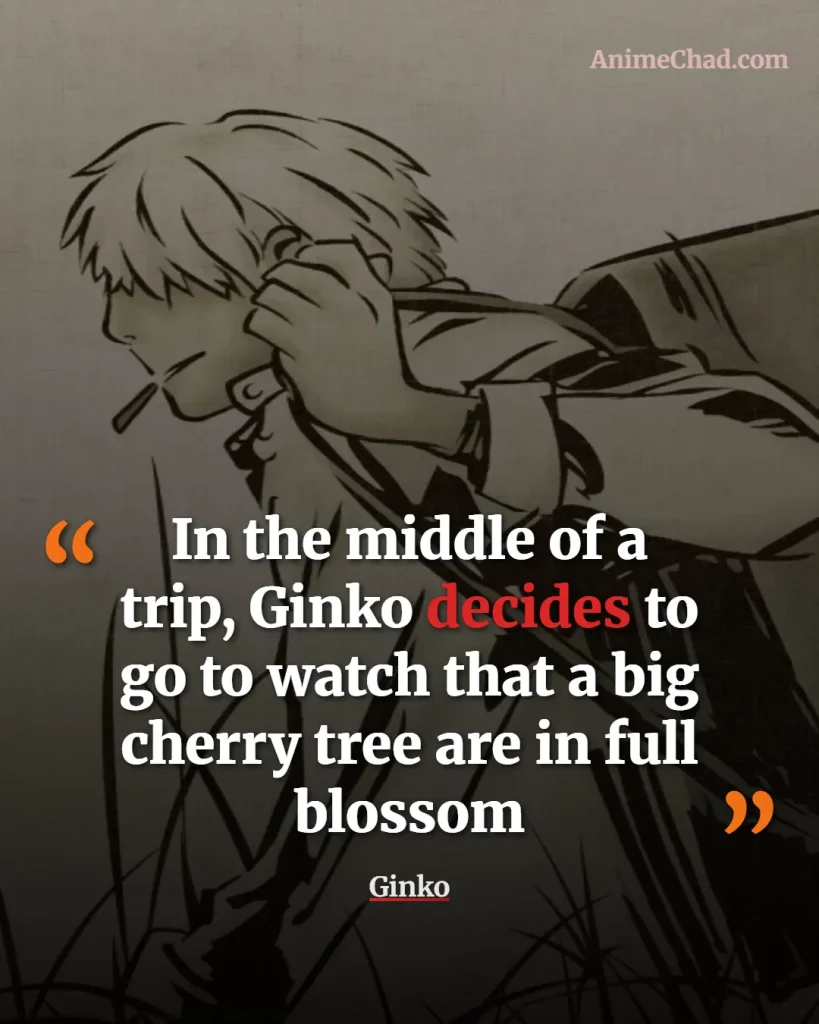
Episode 18 (Floral Delusion – Zoku Shou)
Ginko
Amid blooming beauty, Ginko ponders fleeting joy, evoking wistful peace and connecting to impermanence in serene natural spectacles.
A young woman travels around the farm villages facing the occurrence of drought, and she can bring rain
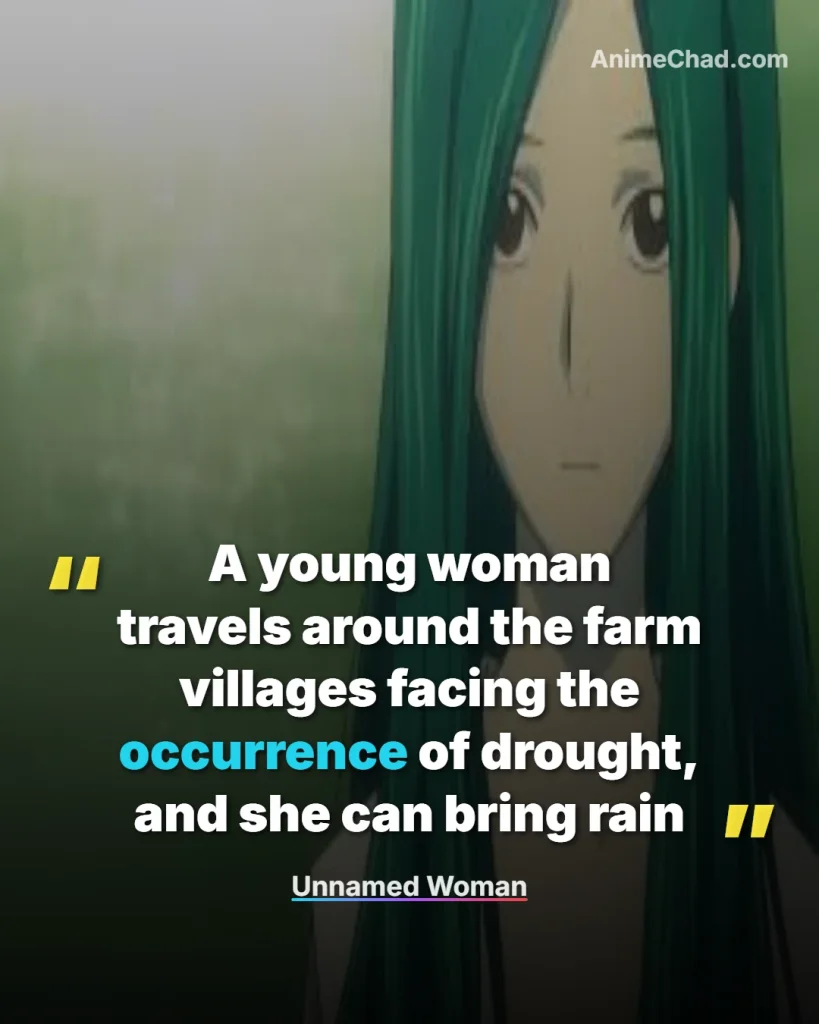
Episode 19 (Cloudless Rain – Zoku Shou)
Unnamed Woman
Her rain-bringing gift brings communal relief, showcasing self-sacrifice’s weight and themes of human intervention in nature’s cycles.
It’s the season that living things come out of hibernation. However, Ginko is confined to the mountain where winter still continues
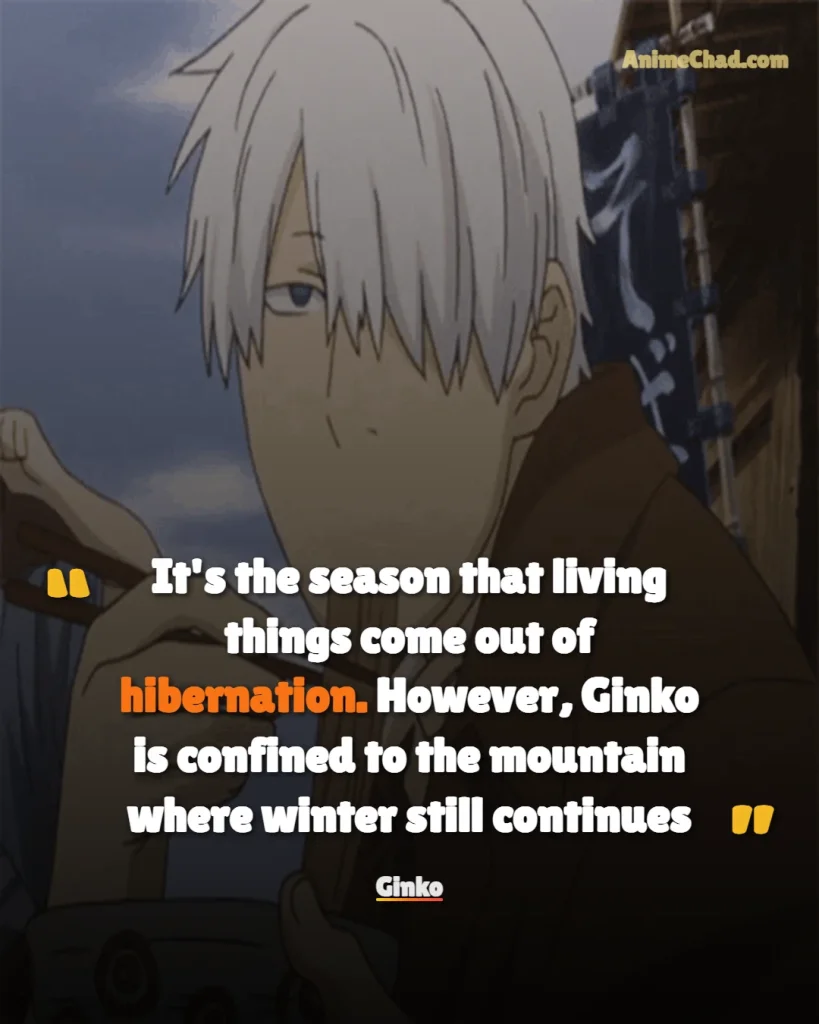
Episode 20 (The Depths of Winter – Zoku Shou)
Ginko
Trapped in lingering cold, Ginko seeks the guardian mushi, conveying isolation’s chill and his persistent curiosity.
Ginko investigates that the same tree struck by lightning many times
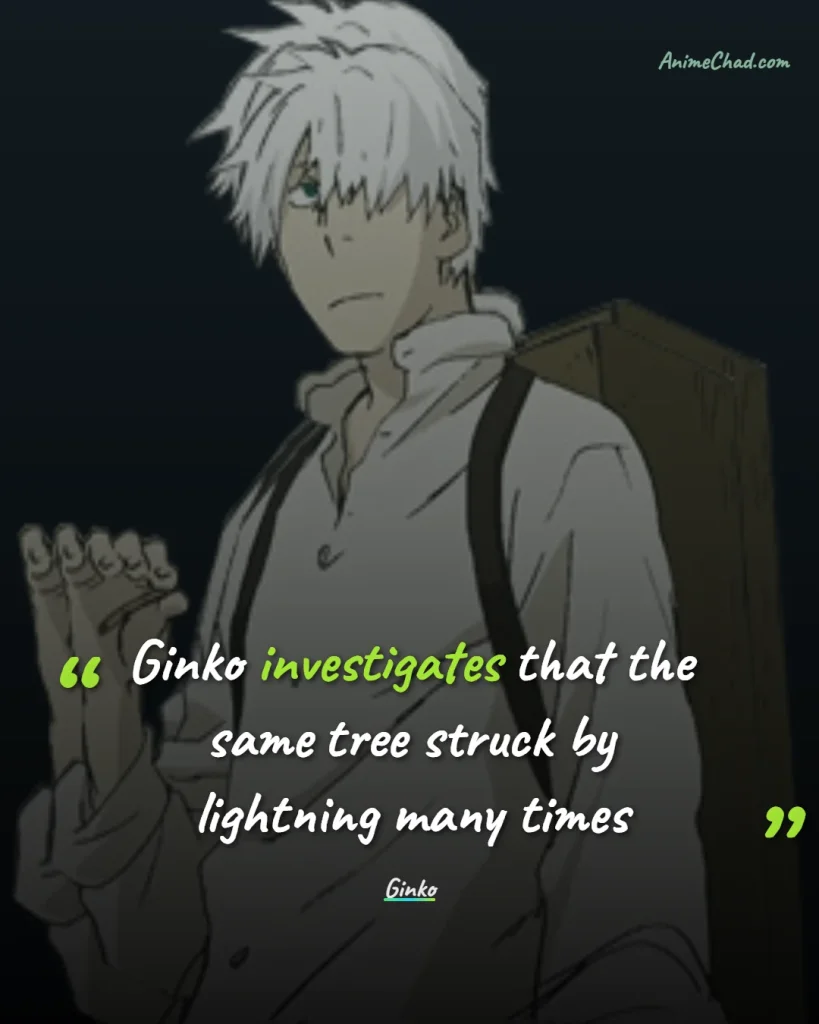
Episode 21 (Lightning’s End – Zoku Shou)
Ginko
Helping a lightning-drawn boy, this reveals peril’s repetition, with emotional urgency in averting tragedy and fate’s inescapability.
At the request of Tan’yuu, Ginko sets off to investigate a phenomenon that might be related to a dangerous mushi
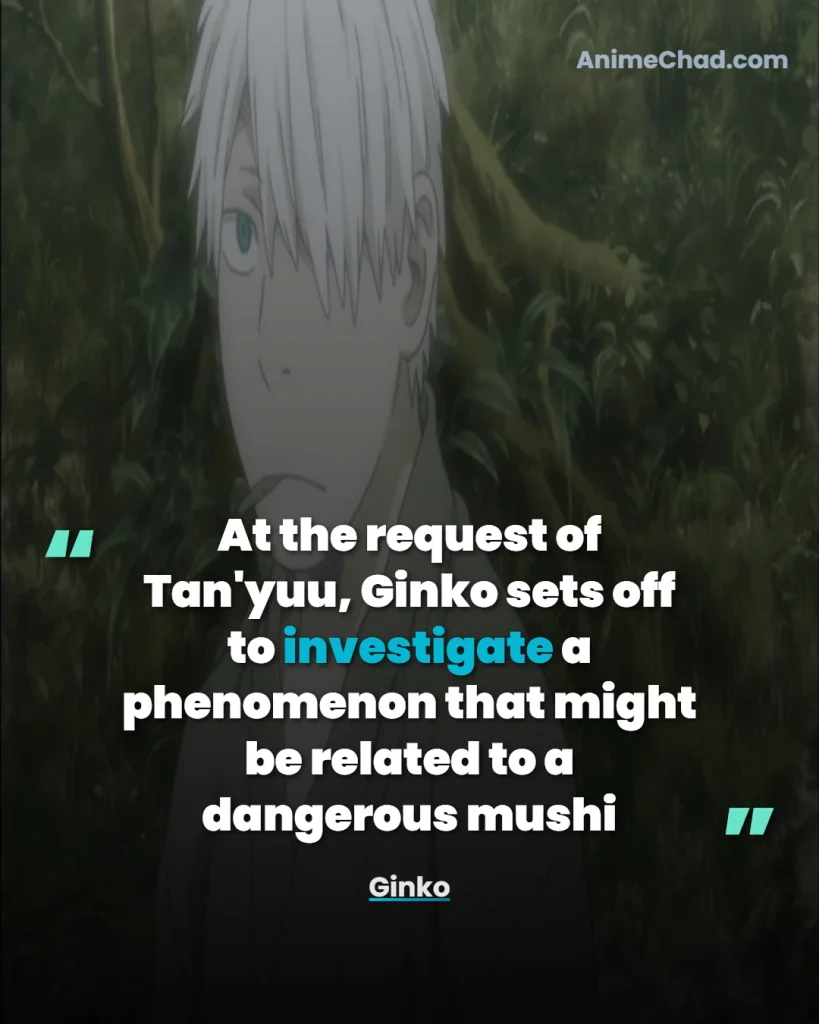
Episode 22 (Path of Thorns: Part 1 – Zoku Shou)
Ginko
Venturing into forbidden paths, Ginko protects lineage secrets, highlighting loyalty’s depth and evolving ties to Tanyuu.
The extremely rare Ginko Mushi
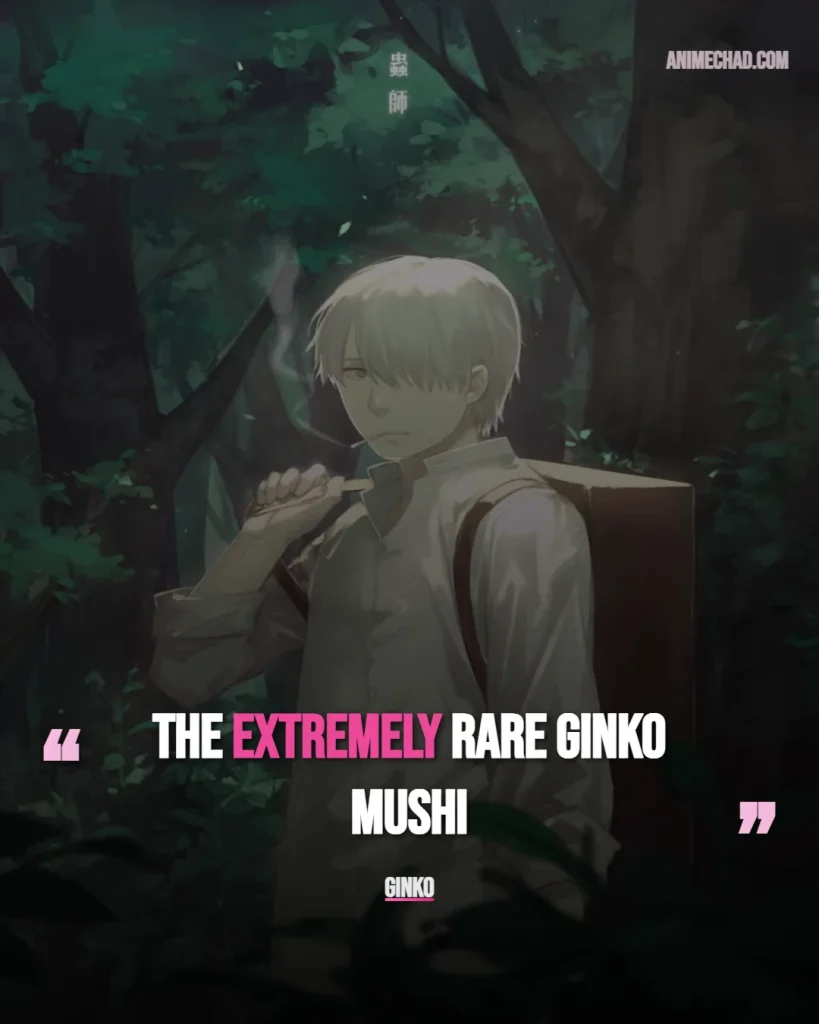
Episode 23 (The Bitter Bowl – Zoku Shou)
Ginko
Reflecting on his namesake mushi, this introspective moment uncovers his origins’ mystery, adding layers to his wandering identity.
You know, if you just throw your life, even regret it can’t
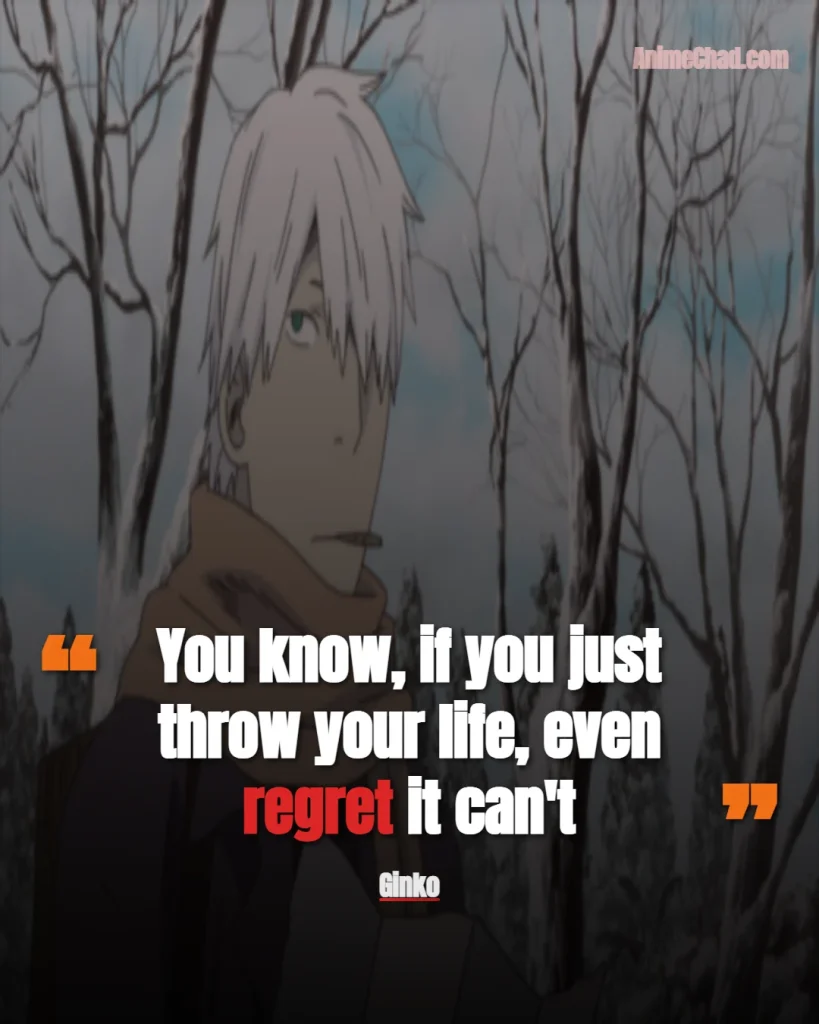
Episode 24 (Wind as a Guide – Zoku Shou)
Ginko
Advising a wind-tossed soul, Ginko stresses mindful choices, evoking regret’s sting and personal agency in life’s flow.
Mushi are creatures that are neither animals or souls, they are living things between them
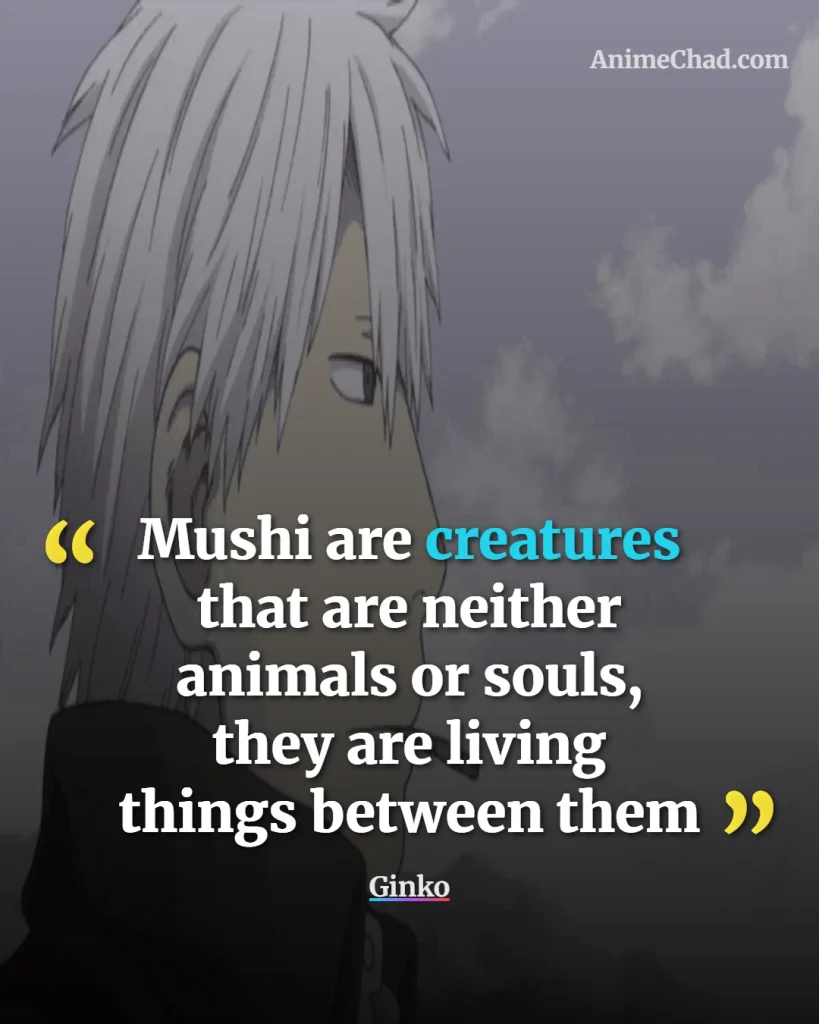
Episode 25 (A World Without Change – Special)
Ginko
In a climactic eclipse reflection, Ginko defines mushi anew, culminating his journey with profound acceptance of the unseen world’s impact.