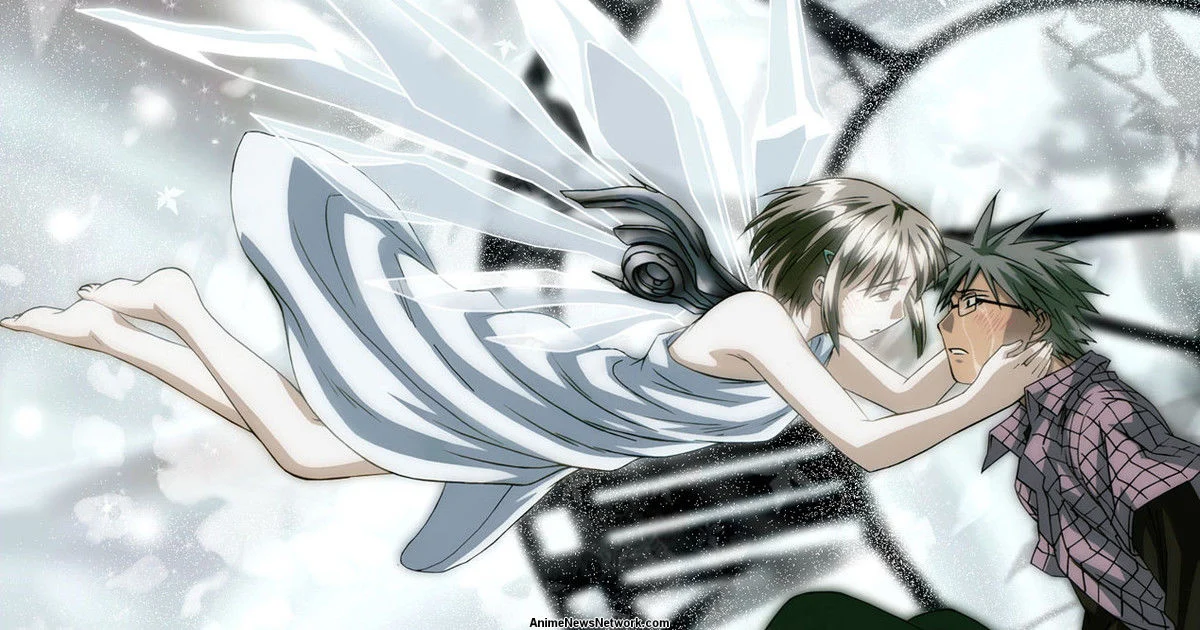
Sora no Woto follows Kanata Sorami, a young trumpet player joining the 1121st Platoon in a post-apocalyptic world. The series blends military life with serene music, exploring themes of hope, redemption, camaraderie, and the scars of war.
This curated collection of 24 canonical quotes captures pivotal moments, character arcs, and the balance between battle tension and peaceful bonds.

I often get lost, but it’s thanks to that that I meet wonderful people like you!

Episode 12 (The Dew of the Hermitage)
Kanata Sorami
Kanata’s optimism shines, highlighting growth from naive recruit to vital platoon member fostering unbreakable ties.
Somewhere, at the end of the world, is a land with oceans reborn, and new life springing from it. I want to find it

Episode 13 (The Hilltop Where You Can See the Sky)
Rio Kazumiya
Rio’s visionary hope amid ruins reveals her noble heritage and drive for renewal beyond war’s devastation.
Evidently, there’s no such thing as ‘meaning’ in this world. But that in itself is beautiful, right?

Episode Unknown (Filicia’s Arc)
Filicia Heideman
Filicia embraces life’s absurdity post-trauma, marking her evolution from haunted soldier to compassionate leader.
This sound strikes a chord. Whether in Rome or Helvetia, it is the same
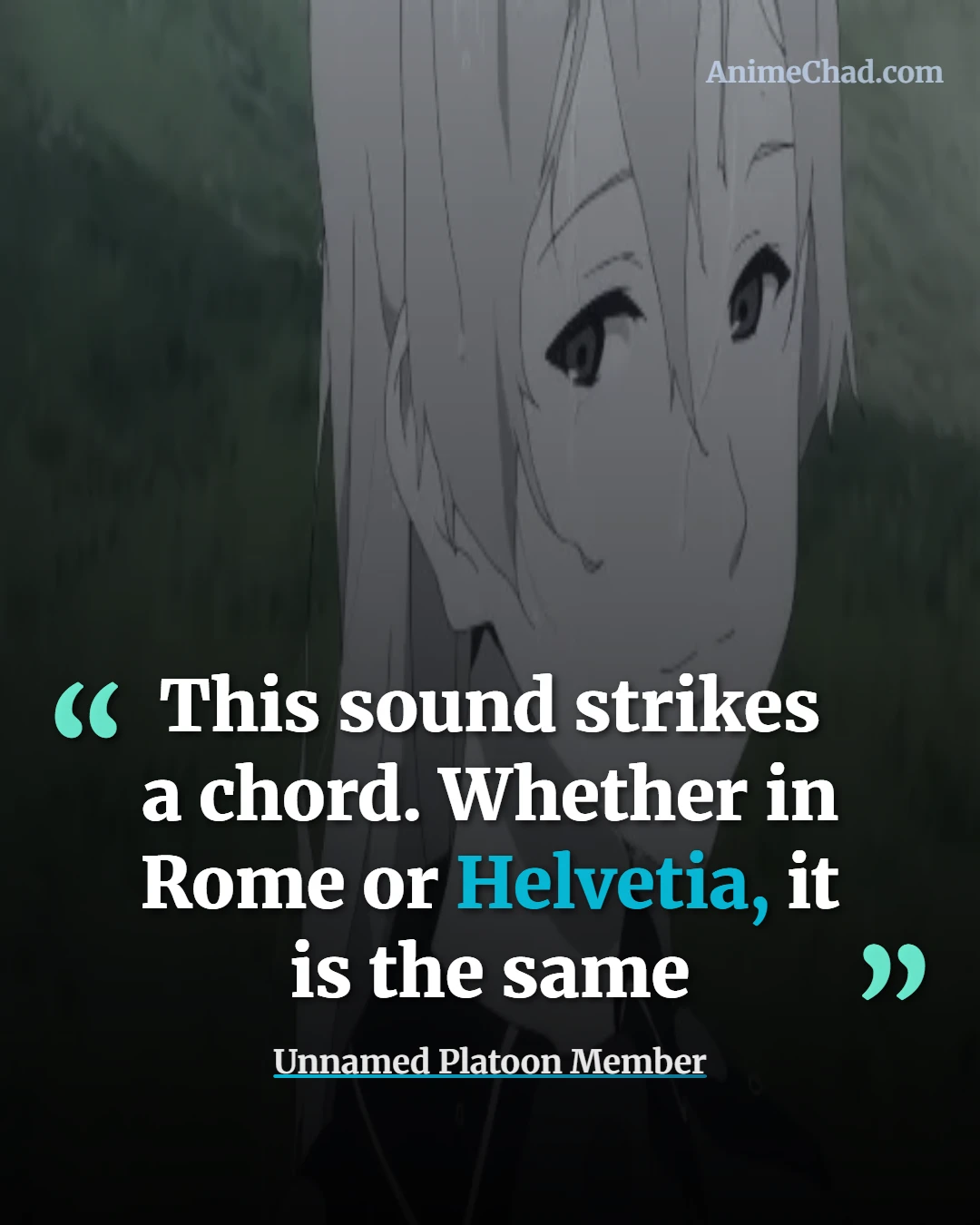
Episode 7 (A War)
Unnamed Platoon Member
Music’s universal power transcends borders, connecting past atrocities to present healing in a divided world.
I made good friends. Kureha and Noel, Filicia who is like a mother and Rio Sempai that taught me the great ‘sound of the skies’

Episode 12 (The Dew of the Hermitage)
Kanata Sorami
Kanata reflects on bonds formed, symbolizing her journey from isolation to finding family in military service.
To Ryoko and Kazuma: Sorry, but your daddy lost. I couldn’t protect you guys

Episode 7 (A War, Flashback)
Filicia Heideman
Filicia’s dying apology reveals survivor’s guilt, fueling her protective instincts in the present peaceful outpost.
Rio, you don’t want to know
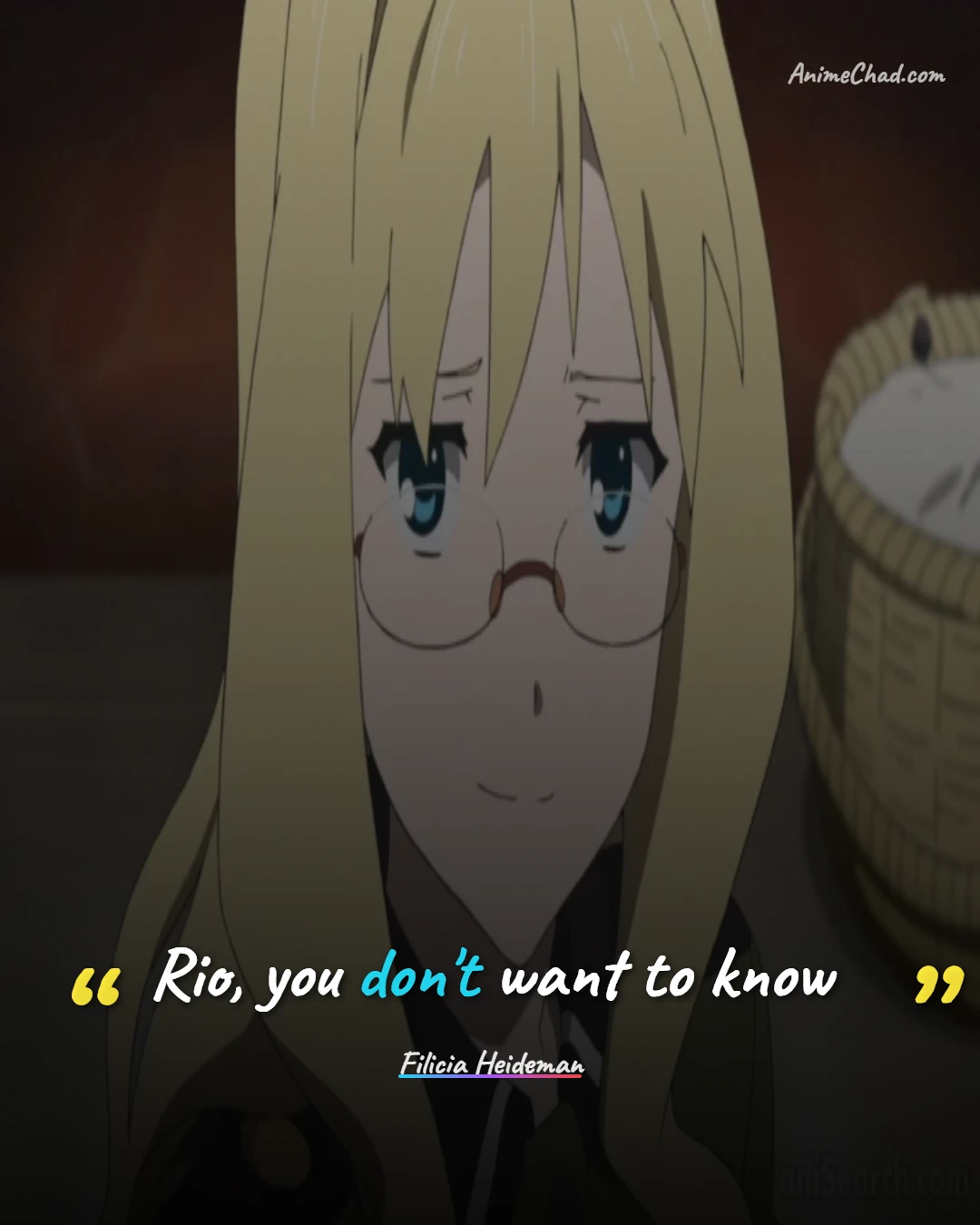
Episode 7 (A War)
Filicia Heideman
Filicia guards Rio’s innocence from war’s brutality, contrasting battle flashbacks with platoon’s tender dynamics.
Music is the movement of sound to reach the soul for the education of its virtue

Episode 1 (The City at Dawn, Inspired)
Kanata Sorami (Echoing Plato)
Kanata’s passion for trumpet underscores series theme of music as salvation amid post-war desolation.
If there is a God in this world I pray that you guys meet a peaceful end
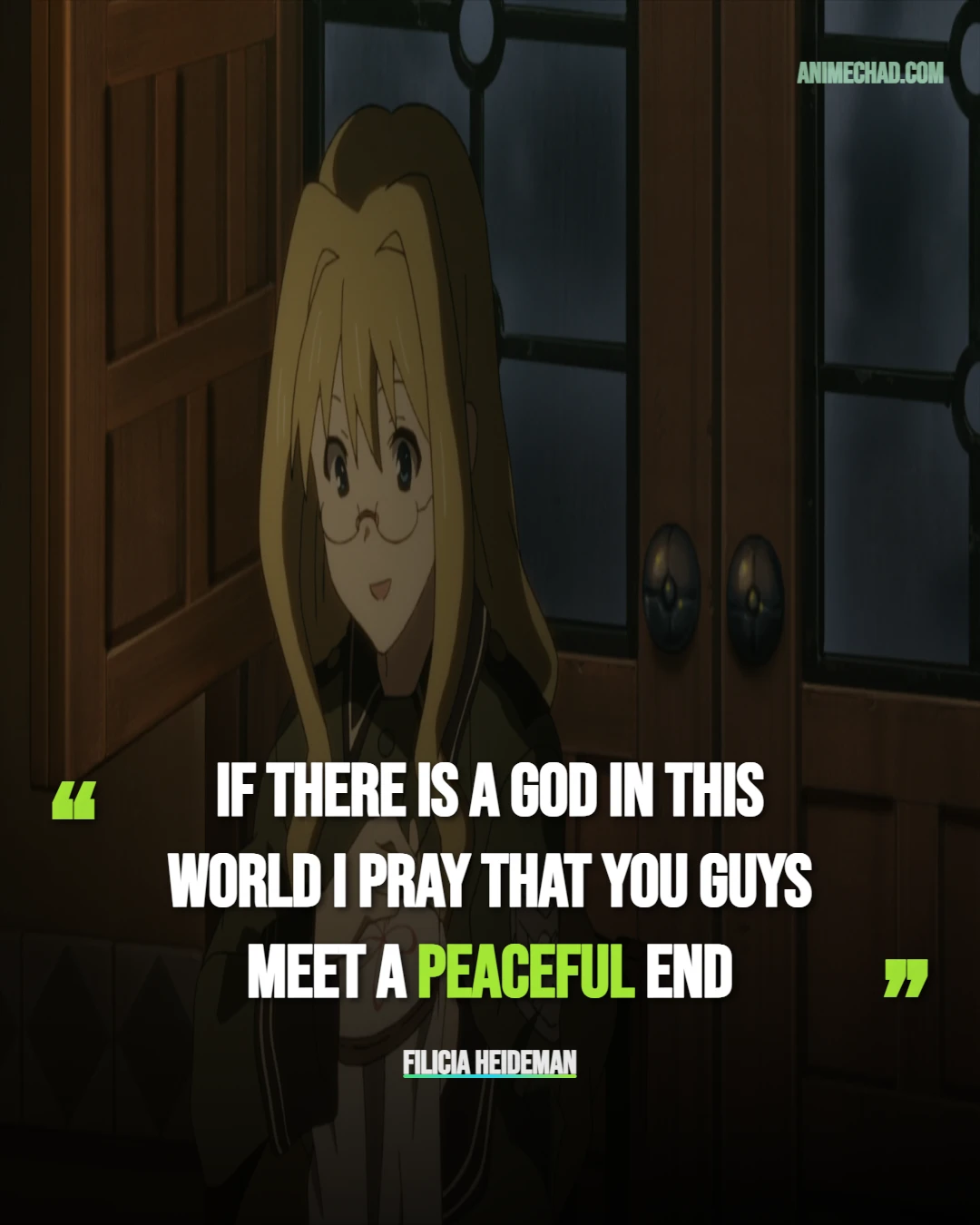
Episode 7 (A War, Flashback)
Filicia Heideman
Filicia’s prayer in loss highlights enduring hope for peace, bridging her tragic past to leading harmonious platoon.
I honestly consider this a quote to live by

Episode 7 Ending (Reflective)
Filicia Heideman
Filicia’s life philosophy emerges from pain, inspiring platoon resilience in both combat readiness and quiet moments.
You can try, to bring me down, to keep me down I will rise and I’ll be fighting back
Episode 3 (Kanata’s Resolve)
Kanata Sorami
Kanata’s defiant spirit during training shows growth, tying personal perseverance to themes of sky-bound aspiration.
I want to play the trumpet so I can fly through the skies like the birds

Episode 1 (The City at Dawn)
Kanata Sorami
Kanata’s dream introduces freedom motif, evolving from childish wonder to wartime musical communion.
Sorry, but your daddy lost. It really breaks my heart

Episode 7 (A War, Flashback)
Filicia Heideman
Heart-wrenching failure propels Filicia’s character arc toward safeguarding her surrogate daughters fiercely.
This episode touches on darker stuff, but it manages to be incredibly beautiful

Episode 7 Discussion (Narrative Reflection)
Filicia Heideman
Balances war’s grim reality with beauty of bonds, exemplifying series’ mix of conflict and tranquility.
I feel extremely sad for her. It explains her current behaviour as a Commander
Episode 7 (Post-Flashback)
Filicia Heideman
Trauma insight fosters empathy, advancing platoon unity against external threats.
The combination of strong character development and world building is just perfect

Episode 7 (Arc Climax)
Rio Kazumiya
Rio acknowledges shared growth, linking personal stories to broader post-apocalyptic rebuilding themes.
I love this series so much because of moments like this

Episode 13 (Finale Reflection)
Kanata Sorami
Kanata’s gratitude encapsulates hope triumphing over desolation in peaceful sky-gazing closure.
She freed herself from her curse by choosing a difficult path by being kind
Episode 7-Inspired (Platoon Bond)
Filicia Heideman
Filicia’s kindness redeems war curse, highlighting redemption through nurturing in serene settings.
You’re so silly. Even adults cry from a broken heart

Episode 6 (Day Off)
Noël Kannagi
Noël’s empathy during lighthearted respite reveals vulnerability, strengthening pre-battle emotional ties.
I suppose not even death is enough to cure idiocy

Episode Unknown (Humorous Tension)
Kureha Suminoya
Kureha’s tsundere wit lightens war prep, showing character depth beyond battlefield bravado.
War, what is it good for?
Episode 7 (A War)
Filicia Heideman
Rhetorical lament questions conflict’s value, central to series’ anti-war message amid trumpet harmonies.
I found a meaning to life nonetheless
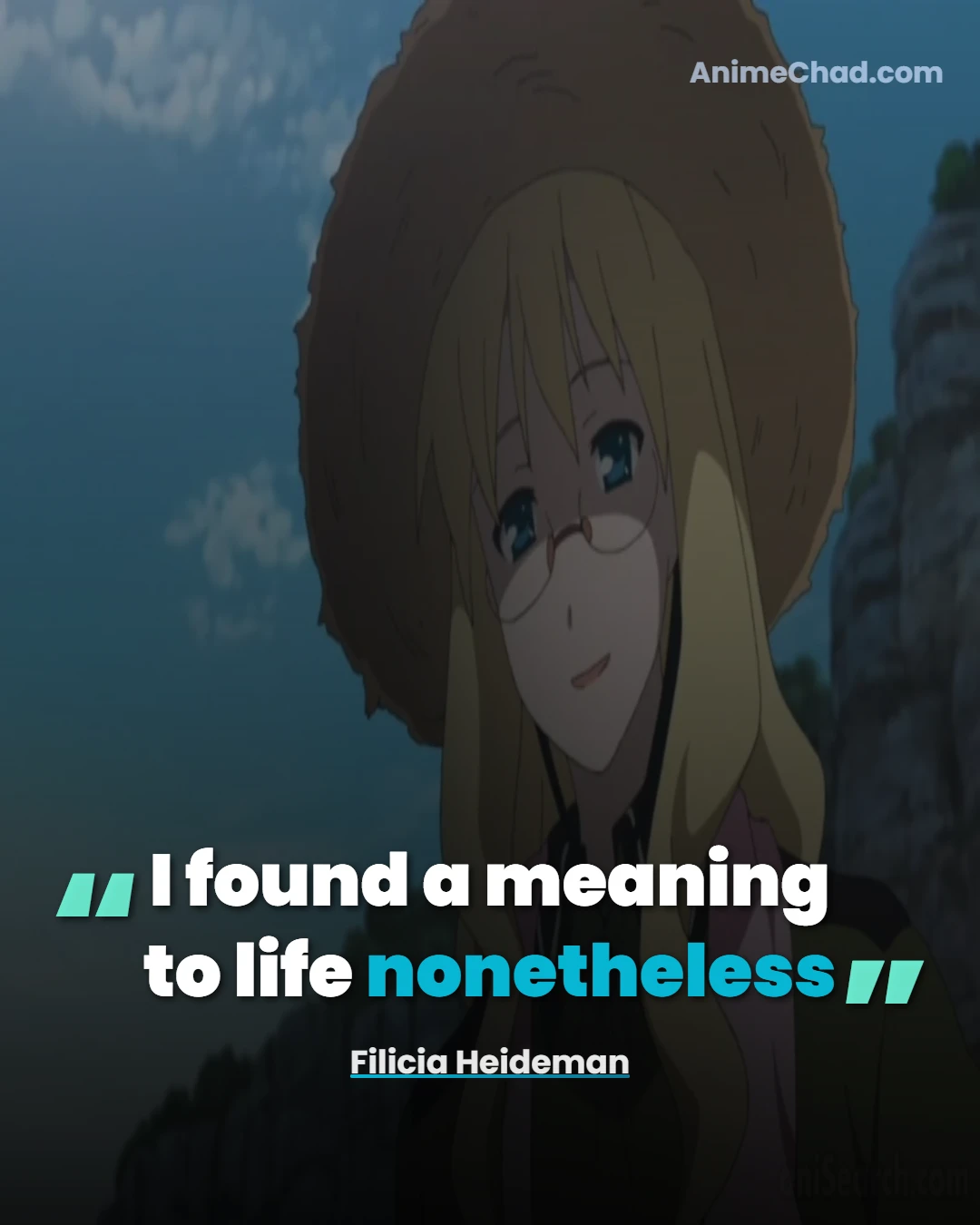
Episode 7 Ending
Filicia Heideman
Filicia’s purpose in platoon defies meaninglessness, pivotal for her leadership in mixed calm and crisis arcs.
Amazing Freaking Grace embodies harmony and forgiveness
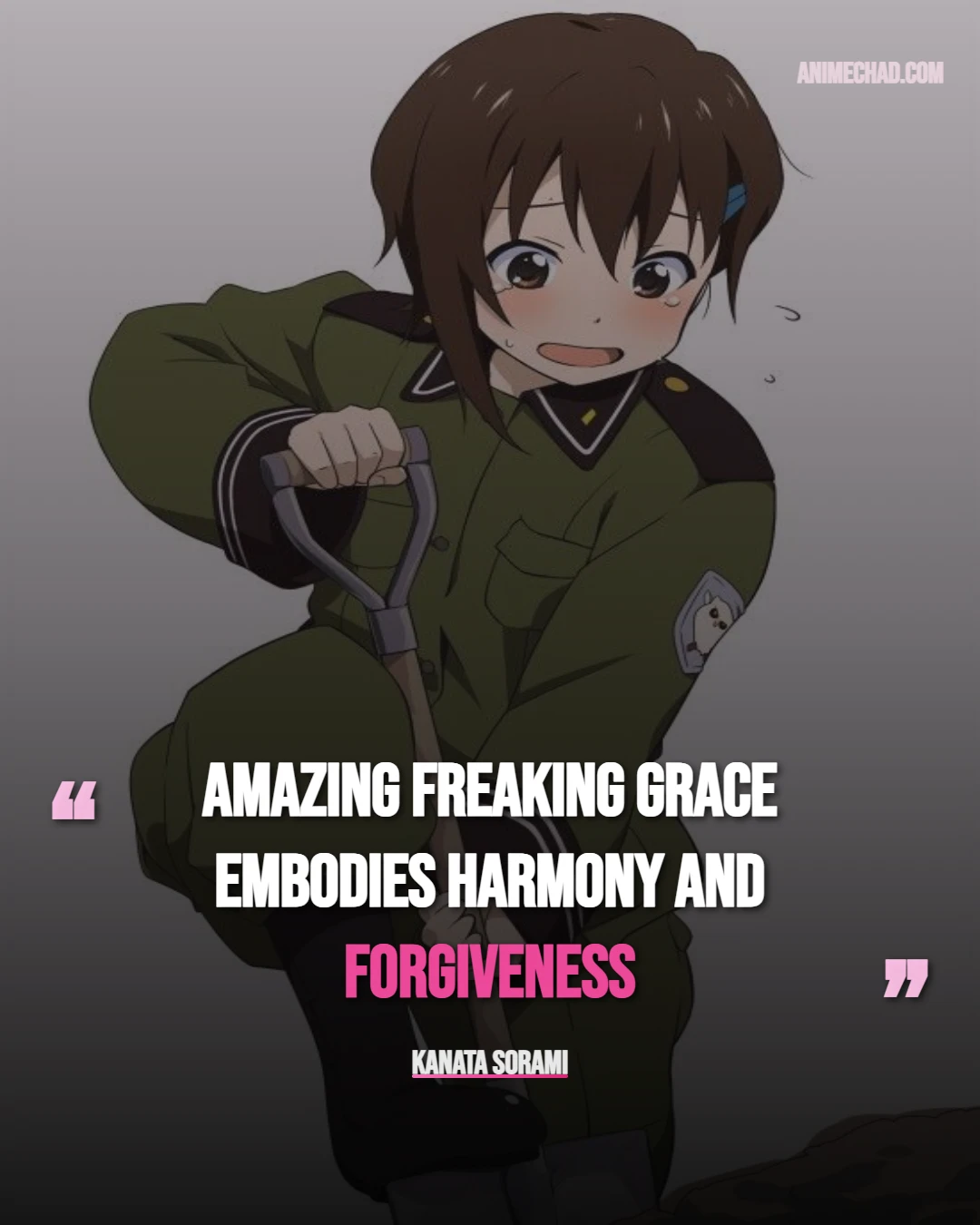
Finale Performance (Episode 13)
Kanata Sorami
Kanata’s trumpet rendition symbolizes forgiveness, uniting platoon in hopeful post-battle peace.
At the end of the episode we also get this wonderful piece of dialog
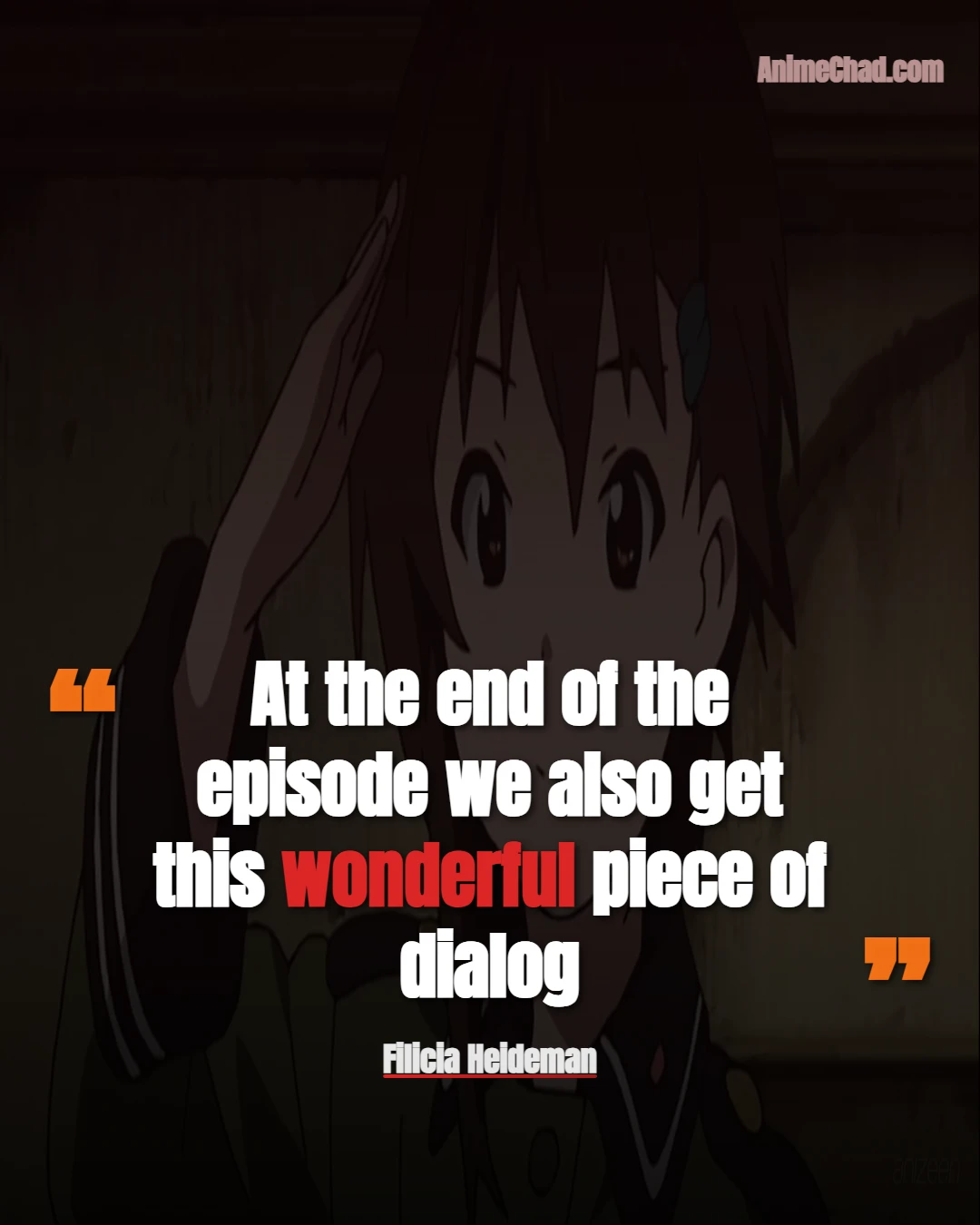
Episode 7 (Goal Statement)
Filicia Heideman
Filicia’s aspiration for platoon future weaves character hopes into series’ redemptive sky motif.