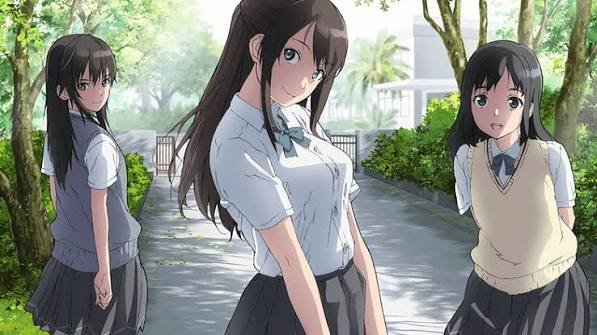
Haibane Renmei is a quiet, profoundly spiritual masterpiece that explores themes of redemption, belonging, and the search for meaning in a liminal world. The story follows Rakka, a newly born “Haibane”—a being with small wings and a halo—who awakens in a strange, walled town with no memory of her past. As she acclimates to her new life among the other Haibane, she must grapple with the rules of their existence, the mystery of the walls that confine them, and the nature of the “sin” that binds some of her kind to a tragic fate.
The series is defined by its core themes: a power system rooted in spiritual and existential rules, where the Haibane are bound by laws they do not fully understand. The protagonists are profound underdogs—not in a physical sense, but as beings who are powerless against the forces that shape their existence. Haibane Renmei masterfully subverts expectations by presenting what appears to be a gentle, pastoral slice-of-life story and gradually revealing a deep, melancholic meditation on sin, guilt, and the possibility of salvation. It is a series that trusts its audience to find meaning in silence, symbolism, and quiet observation.
For fans of Haibane Renmei, finding similar anime can be a challenge. The series occupies a unique space—part spiritual allegory, part character study, part atmospheric mystery. Yet, many underrated series share its core DNA: a focus on the inner lives of isolated individuals, a willingness to explore existential questions without easy answers, and a quiet, contemplative tone that prioritizes atmosphere over action. These shows deserve far more attention for their emotional depth, their philosophical ambition, and their ability to create worlds that feel both strange and deeply familiar.
Here are 15 underrated anime that capture the spirit of Haibane Renmei.
1. Mushi-shi (2005)
- Streaming Availability: Crunchyroll, Hulu
- Rating: MAL: 8.7
- Episodes: 26 (Season 1)
- Studio: Artland
- Notable Staff: Based on the manga by Yuki Urushibara.
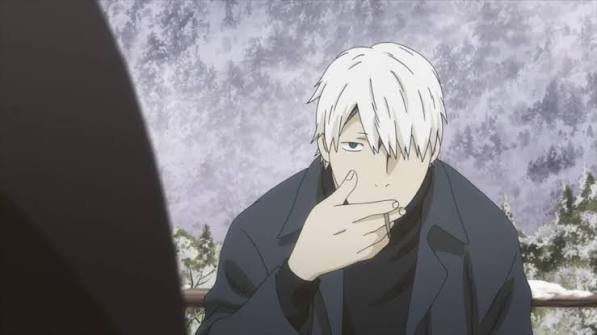
Plot Summary: Ginko, a “Mushi-shi,” travels the countryside investigating “Mushi”—primordial, ethereal lifeforms that exist alongside humanity, often causing inexplicable and sometimes harmful phenomena. His journey is one of quiet observation, understanding, and finding balance.
Similarities to Haibane Renmei: Both are episodic, meditative, and deeply atmospheric series that explore the relationship between humanity and the unseen world. The focus is on understanding rather than fighting, and the tone is one of quiet contemplation and gentle melancholy. Ginko, like Rakka, is an observer navigating a world filled with mysteries beyond human comprehension.
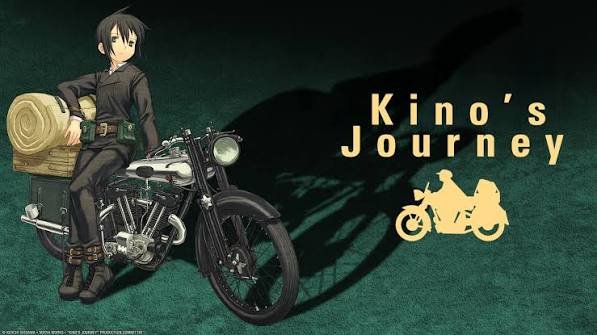
2. Kino’s Journey (2003)
- Streaming Availability: Amazon Prime Video, HiDive
- Rating: MAL: 8.3
- Episodes: 13
- Studio: A.C.G.T.
- Notable Staff: Based on the light novel series by Keiichi Sigsawa.
Plot Summary: Kino, a young traveler, journeys with a talking motorcycle named Hermes through a variety of strange and unique countries, each with its own distinct culture, technology, and philosophy. Kino’s rule is to stay in each country for only three days and two nights.
Similarities to Haibane Renmei: Both are philosophical journeys presented in an episodic format, exploring the complexities of human nature and society. The tone is quiet, observational, and often melancholic. The focus is not on action but on understanding different perspectives and the often-uncomfortable truths about the world. The sense of wandering through a strange and beautiful world is a direct parallel.
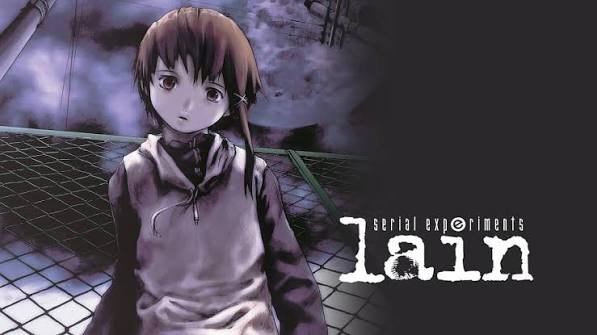
3. Serial Experiments Lain (1998)
- Streaming Availability: Funimation
- Rating: MAL: 8.0
- Episodes: 13
- Studio: Triangle Staff
- Notable Staff: Directed by Ryutaro Nakamura, written by Chiaki J. Konaka.
Plot Summary: Lain Iwakura, a quiet and socially isolated teenage girl, becomes increasingly drawn into “The Wired,” a global communications network. As the boundaries between the real world and the digital world begin to blur, Lain’s sense of identity and reality itself begins to unravel.
Similarities to Haibane Renmei: Both are deeply atmospheric and psychological explorations of identity, isolation, and the nature of reality. The protagonist, Lain, is an underdog who is overwhelmed by forces she cannot understand. The series shares a similar willingness to trust its audience to find meaning in ambiguity and symbolism, and the cold, meditative tone is a strong match.
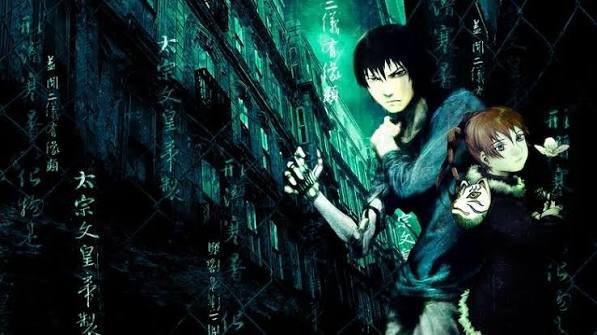
4. Texhnolyze (2003)
- Streaming Availability: Funimation
- Rating: MAL: 7.8
- Episodes: 22
- Studio: Madhouse
- Notable Staff: Directed by Hiroshi Hamasaki, with original story by Chiaki J. Konaka.
Plot Summary: In the underground city of Lux, a brutal world of violence and decay, a young fighter named Ichise loses an arm and a leg. He is fitted with “Texhnolyze,” advanced mechanical prosthetics, and becomes entangled in a conflict between factions vying for control of the city and its future.
Similarities to Haibane Renmei: Both are dark, atmospheric, and deeply philosophical series from the same creative lineage (Yoshitoshi ABe and Chiaki J. Konaka). The city of Lux is a liminal space, much like the walled town in Haibane Renmei. The minimal dialogue, the focus on visual storytelling, and the oppressive, melancholic atmosphere are a perfect match.
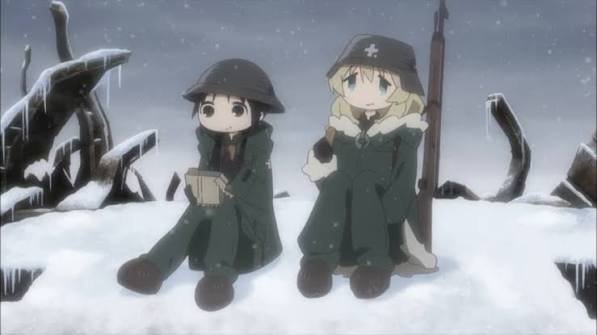
5. Girls’ Last Tour (Shoujo Shuumatsu Ryokou) (2017)
- Streaming Availability: Amazon Prime Video, HiDive
- Rating: MAL: 8.2
- Episodes: 12
- Studio: White Fox
- Notable Staff: Based on the manga by Tsukumizu, directed by Takaharu Ozaki.
Plot Summary: In a desolate, post-apocalyptic world, two young girls, Chito and Yuuri, travel through the ruins of a vast, empty city on their Kettenkrad motorcycle. They search for food, fuel, and meaning, finding small moments of joy and wonder in the remnants of a lost civilization.
Similarities to Haibane Renmei: Both are quiet, melancholic, and deeply philosophical explorations of existence in a liminal space. The focus is not on survival or conflict, but on the small, poignant moments of connection and the search for beauty in a dead world. The relationship between the two girls is the heart of the story, much like the bonds between the Haibane.
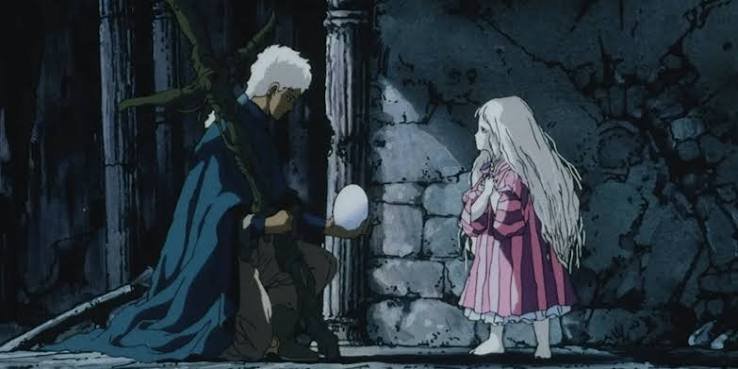
6. Angel’s Egg (Tenshi no Tamago) (1985)
- Streaming Availability: Not currently available on major platforms.
- Rating: MAL: 7.8
- Episodes: 1 (Film)
- Studio: Studio Deen
- Notable Staff: Directed by Mamoru Oshii (Ghost in the Shell), with art by Yoshitaka Amano.
Plot Summary: In a dark, surreal, and mostly deserted world, a young girl protects a mysterious egg. She is accompanied by a shadowy man who questions her faith and the meaning of her existence, leading to a profound and ambiguous exploration of belief, loss, and hope.
Similarities to Haibane Renmei: Both are deeply symbolic, atmospheric, and almost entirely devoid of conventional narrative. The focus is on visual storytelling, mood, and the exploration of spiritual and existential themes. The relationship between the girl and the egg is as mysterious and open to interpretation as the nature of the Haibane and their world.
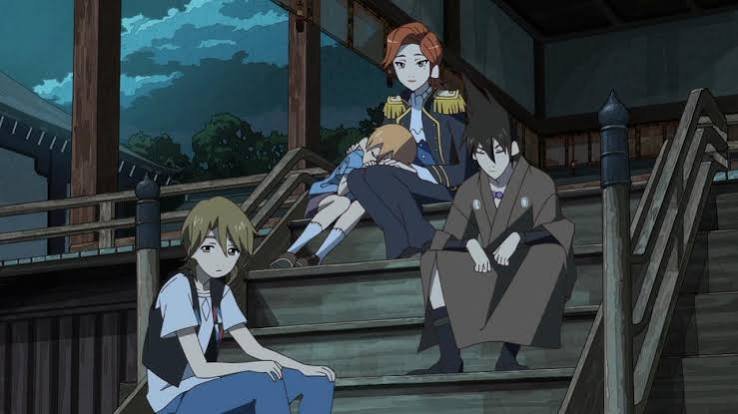
7. The Eccentric Family (Uchouten Kazoku) (2013)
- Streaming Availability: Crunchyroll
- Rating: MAL: 7.8
- Episodes: 13
- Studio: P.A. Works
- Notable Staff: Based on the novel by Tomihiko Morimi, directed by Masayuki Yoshihara.
Plot Summary: In modern Kyoto, tanuki (raccoon dogs) can shapeshift, tengu can fly, and humans coexist with these supernatural beings. The story follows Yasaburou Shimogamo, a young tanuki, as he navigates the complex social dynamics of this world and investigates the mysterious death of his father.
Similarities to Haibane Renmei: Both are set in worlds where the supernatural is integrated into daily life, and the focus is on the quiet, everyday struggles of the characters. The series explores themes of family, loss, and the acceptance of change, with a similar blend of whimsy and melancholy. The atmospheric setting of Kyoto is as much a character as the walled town in Haibane Renmei.
8. Aria: The Animation (2005)

- Streaming Availability: Crunchyroll
- Rating: MAL: 7.8
- Episodes: 13 (Season 1)
- Studio: Hal Film Maker
- Notable Staff: Based on the manga by Kozue Amano.
Plot Summary: Akari Mizunashi is a young woman training to be a gondolier in the city of Neo-Venezia, a replica of Venice on a terraformed Mars. The series follows her daily life, her interactions with her friends and mentors, and her discovery of the small wonders of the world around her.
Similarities to Haibane Renmei: Both are “iyashikei” (healing) anime that focus on the quiet beauty of everyday life. The protagonists are kind-hearted underdogs who are learning to find their place in a gentle, peaceful world. The tone is warm, contemplative, and deeply soothing, with a focus on appreciating the present moment.
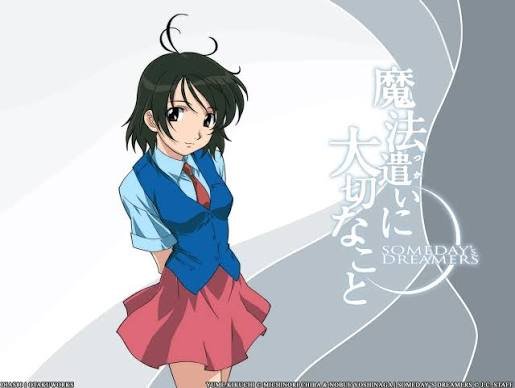
9. Someday’s Dreamers (Mahou Tsukai ni Taisetsu na Koto) (2003)
- Streaming Availability: Crunchyroll
- Rating: MAL: 7.0
- Episodes: 12
- Studio: J.C. Staff
- Notable Staff: Based on the manga by Norie Yamada and Kumichi Yoshizuki.
Plot Summary: Yume Kikuchi is a young girl who travels to Tokyo to become a certified magic user. She must complete a training program under the guidance of a mentor, learning not just how to use her magic, but when and why it should be used.
Similarities to Haibane Renmei: Both are about a young woman who is learning to navigate a world with its own unique rules and traditions. The focus is not on epic battles, but on the emotional and ethical implications of power. Yume, like Rakka, is an underdog who is kind-hearted and often unsure of herself, but she grows through her experiences and the guidance of her mentors.
10. Planetarian: The Reverie of a Little Planet (2016)

- Streaming Availability: Funimation
- Rating: MAL: 7.7
- Episodes: 5 (ONA)
- Studio: David Production
- Notable Staff: Based on the visual novel by Key, directed by Naokatsu Tsuda.
Plot Summary: In a post-apocalyptic world where humanity has been destroyed by war, a lone scavenger stumbles upon a functioning planetarium. Inside, he meets Yumemi, a cheerful robot who has been waiting for customers for thirty years, unaware that the world has ended.
Similarities to Haibane Renmei: Both are short, emotionally devastating stories about a connection formed in the midst of a larger tragedy. The focus is on the relationship between two lonely individuals and the search for beauty and hope in a broken world. The melancholic tone and the focus on the power of simple moments are a direct parallel.
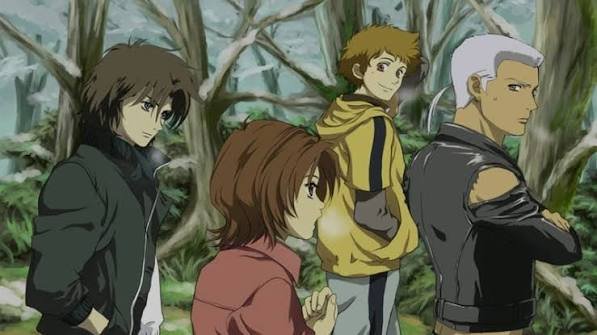
11. Wolf’s Rain (2003)
- Streaming Availability: Crunchyroll, Funimation
- Rating: MAL: 7.8
- Episodes: 26
- Studio: Bones
- Notable Staff: Directed by Tensai Okamura, with music by Yoko Kanno.
Plot Summary: In a dying, post-apocalyptic world, a group of wolves who can take human form searches for the mythical “Paradise,” a place of eternal life and peace. Their journey is fraught with danger, but they are driven by instinct and a desperate hope for a better world.
Similarities to Haibane Renmei: Both are set in a world that is slowly dying, and the protagonists are searching for something that may not even exist. The melancholic, poetic tone and the focus on the search for meaning in a bleak world are a direct parallel. The wolves are underdogs, hunted and misunderstood, but they are driven by a primal faith in something greater than themselves.
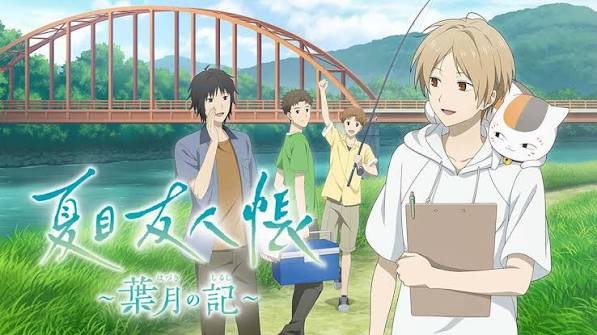
12. Natsume’s Book of Friends (Natsume Yuujinchou) (2008)
- Streaming Availability: Crunchyroll
- Rating: MAL: 8.3
- Episodes: 13 (Season 1)
- Studio: Brain’s Base
- Notable Staff: Based on the manga by Yuki Midorikawa.
Plot Summary: Takashi Natsume, a boy who can see spirits, inherits a book from his grandmother that contains the names of spirits she had bound to her will. He decides to return the names to their owners, and in doing so, he learns about the spirits’ lives and forms deep connections with them.
Similarities to Haibane Renmei: Both are quiet, episodic series about a kind-hearted protagonist who interacts with supernatural beings and learns about their struggles. The focus is on empathy, understanding, and the healing power of connection. The tone is warm, melancholic, and deeply emotional, with a focus on the beauty of the unseen world.
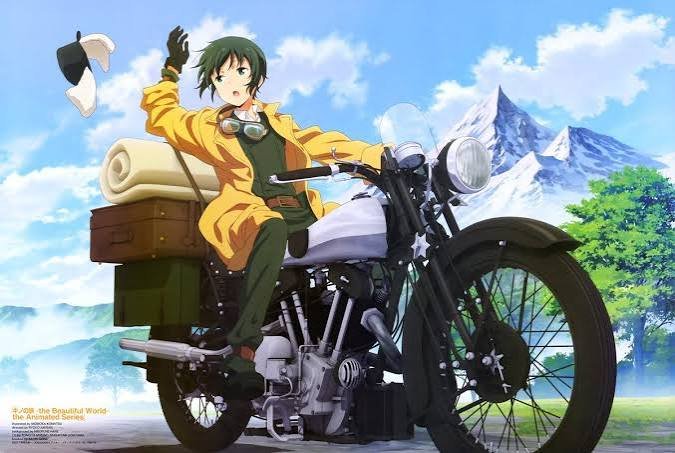
13. Kino’s Journey: The Beautiful World (Kino no Tabi) (2017)
- Streaming Availability: Crunchyroll
- Rating: MAL: 7.5
- Episodes: 12
- Studio: Lerche
- Notable Staff: Based on the light novel series by Keiichi Sigsawa, directed by Tomohisa Taguchi.
Plot Summary: A reboot of the original Kino’s Journey series, this version follows Kino and Hermes as they travel through a variety of strange and unique countries. Each episode is a self-contained philosophical story exploring the nature of society and humanity.
Similarities to Haibane Renmei: Like the original Kino’s Journey, this reboot shares the same quiet, observational tone and focus on philosophical exploration. The episodic structure allows for a variety of thought experiments, each revealing uncomfortable truths about the world. The sense of wandering through a beautiful but often cruel world is a direct parallel.
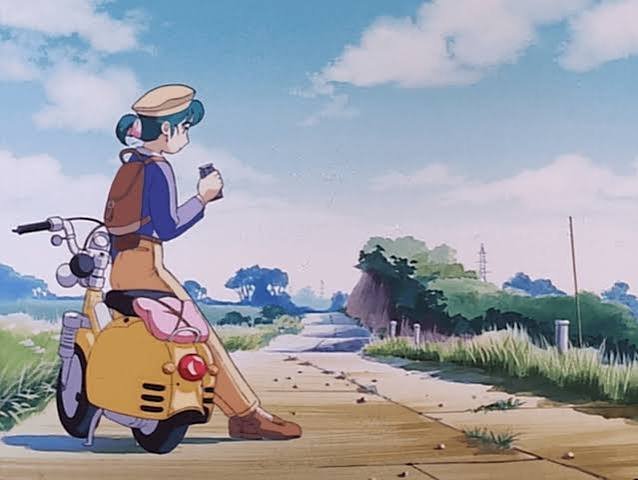
14. Yokohama Kaidashi Kikou (1998)
- Streaming Availability: Not currently available on major platforms.
- Rating: MAL: 7.2
- Episodes: 2 (OVA)
- Studio: Ajia-do Animation Works
- Notable Staff: Based on the manga by Hitoshi Ashinano.
Plot Summary: In a peaceful, post-apocalyptic world where the sea levels have risen and humanity is slowly fading away, an android named Alpha runs a small cafe in the countryside. The story follows her quiet, contemplative life as she observes the changing seasons and the gentle decline of human civilization.
Similarities to Haibane Renmei: Both are quiet, contemplative, and deeply atmospheric stories about beings who are not quite human, observing the world around them with a sense of gentle curiosity. The focus is on the beauty of the natural world, the acceptance of impermanence, and the quiet joys of a simple life. The tone is profoundly peaceful and melancholic.
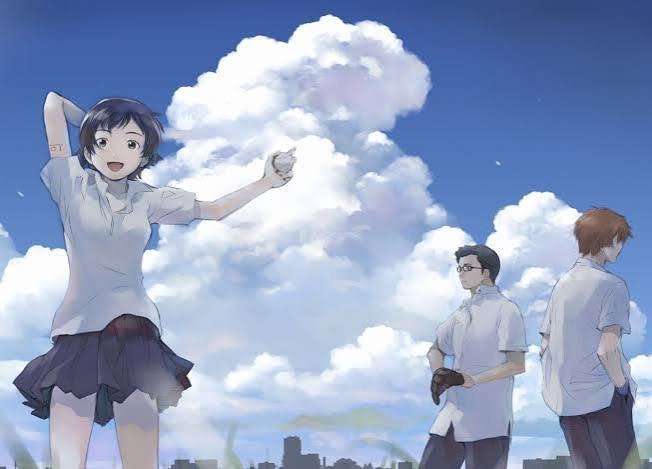
15. The Girl Who Leapt Through Time (Toki wo Kakeru Shoujo) (2006)
- Streaming Availability: Crunchyroll, Amazon Prime Video
- Rating: MAL: 8.2
- Episodes: 1 (Film)
- Studio: Madhouse
- Notable Staff: Directed by Mamoru Hosoda.
Plot Summary: Makoto Konno, a high school girl, discovers she has the ability to leap through time. She uses this power to fix small problems and avoid awkward situations, but she soon learns that her actions have unintended consequences for herself and the people she cares about.
Similarities to Haibane Renmei: While tonally different, both are about the consequences of choice and the importance of appreciating the present moment. Makoto, like Rakka, is given a unique opportunity that forces her to confront her own selfishness and the value of the time she has. The film is a poignant meditation on youth, regret, and the fleeting nature of happiness.
Why These Anime Work for Haibane Renmei Fans
Fans of Haibane Renmei are drawn to stories that are quiet, contemplative, and deeply philosophical. They appreciate a narrative that trusts its audience to find meaning in ambiguity, symbolism, and silence. They are interested in the inner lives of isolated individuals and the search for belonging in a world that is often confusing and cruel. They are not looking for action or spectacle, but for stories that touch the soul.
The anime listed above all share this fundamental DNA:
- Power as Spiritual and Existential: Whether it is the rules of the Haibane, the nature of the Mushi, or the boundaries of the digital world, these series understand that the most profound powers are not physical, but spiritual and existential. The protagonists are not empowered by their abilities; they are shaped by them, and their struggle is to understand their place in a universe that is far larger than themselves.
- The Emotional Underdog: The protagonists are not heroes. They are lonely wanderers, isolated individuals, and kind-hearted souls who are struggling to find their place in the world. Their strength lies not in their power, but in their resilience, their capacity for empathy, and their willingness to confront their own flaws and limitations.
- Subversion of the Action Genre: These series reject the violence and spectacle of typical genre anime. Instead, they use their settings—whether it is a walled town, a post-apocalyptic wasteland, or a digital world—as backdrops for quiet, intimate stories about the human condition. They understand that the most powerful stories are often the quietest ones.
These 15 anime, like Haibane Renmei, are not afraid to be silent. They trust their audience to appreciate the weight of a single glance, the meaning of a single word, and the profound impact of a single moment. They are underrated gems that offer a deeply moving, contemplative, and spiritually resonant experience for viewers who are willing to open their hearts to the mysteries of existence.