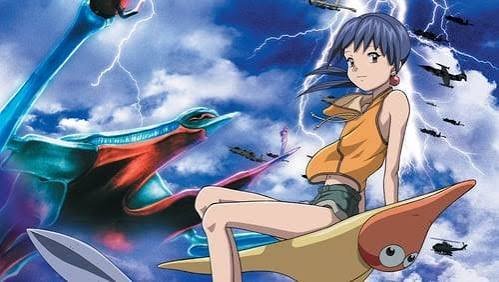
Narutaru (Shadow Star) is a deeply unsettling and subversive anime that lures viewers in with a seemingly innocent premise before revealing a dark, nihilistic core. The story follows Tamai Shiina, a cheerful and kind-hearted middle school girl who discovers a strange, star-shaped creature she names Hoshimaru. She soon learns that other children have also bonded with these mysterious beings, and the series explores the consequences of giving immense, uncontrollable power to emotionally immature and often damaged adolescents.
The series is defined by its core themes: a power system rooted in primal, almost unknowable forces, where the “shadow dragons” are extensions of their child partners’ psyches. The protagonists are profound underdogs—children who are ill-equipped to handle the trauma and responsibility thrust upon them. Narutaru masterfully subverts expectations by presenting itself as a Pokémon-like adventure and gradually descending into a harrowing exploration of bullying, abuse, violence, and the darkest aspects of human nature. It is a series that refuses to look away from the cruelty children are capable of, both as victims and as perpetrators.
For fans of Narutaru, finding similar anime can be a challenge. The series occupies a unique space—part deconstruction of the “monster companion” genre, part psychological horror, part bleak coming-of-age drama. Yet, many underrated series share its core DNA: a focus on children grappling with power they cannot control, an unflinching examination of trauma and violence, and a willingness to subvert the tropes of children’s entertainment to explore genuinely disturbing themes. These shows deserve far more attention for their courage, their psychological depth, and their refusal to provide easy answers.
Here are 15 underrated anime that capture the spirit of Narutaru / Shadow Star.
1. Bokurano (2007)
- Streaming Availability: Not currently available on major platforms.
- Rating: MAL: 7.6
- Episodes: 24
- Studio: Gonzo
- Notable Staff: Based on the manga by Mohiro Kitoh, the same creator as Narutaru.
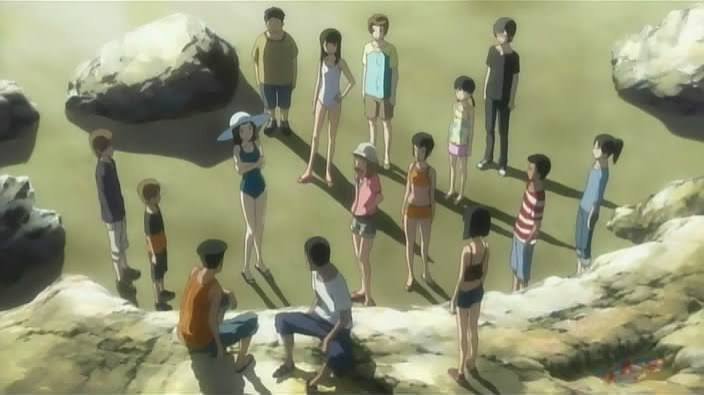
Plot Summary: Fifteen children are tricked into signing a contract to pilot a giant robot called Zearth, believing they are playing a game to save the world. They soon discover the horrifying truth: each battle costs the life of the pilot, and they are fighting against parallel versions of themselves from other Earths.
Similarities to Narutaru: Both are from the same creator, Mohiro Kitoh, and share a similar bleak, nihilistic worldview. Both feature children who are given immense power and forced to confront the horrific consequences of their actions. The focus is on the psychological toll of violence and the fragility of childhood innocence. The deconstruction of the mecha genre mirrors Narutaru‘s deconstruction of the monster companion genre.
2. Madoka Magica (Mahou Shoujo Madoka★Magica) (2011)
- Streaming Availability: Crunchyroll, Funimation, Hulu
- Rating: MAL: 8.4
- Episodes: 12
- Studio: Shaft
- Notable Staff: Directed by Akiyuki Shinbo, written by Gen Urobuchi.
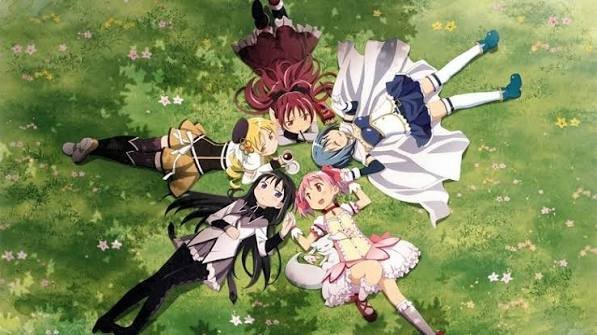
Plot Summary: Madoka Kaname and her friends are offered the chance to become magical girls, gaining a single wish in exchange for fighting witches. They soon discover that the magical girl system is a cruel and manipulative trap designed to exploit their hope and despair.
Similarities to Narutaru: Both are dark subversions of a genre typically aimed at children. The “magical girl” system is a direct parallel to the “shadow dragon” bond, where the true cost of power is hidden until it is too late. The focus on the psychological toll on young girls and the betrayal of their innocence is central to both.
3. Alien Nine (2001)
- Streaming Availability: Not currently available on major platforms.
- Rating: MAL: 6.4
- Episodes: 4 (OVA)
- Studio: J.C. Staff
- Notable Staff: Based on the manga by Hitoshi Tomizawa.
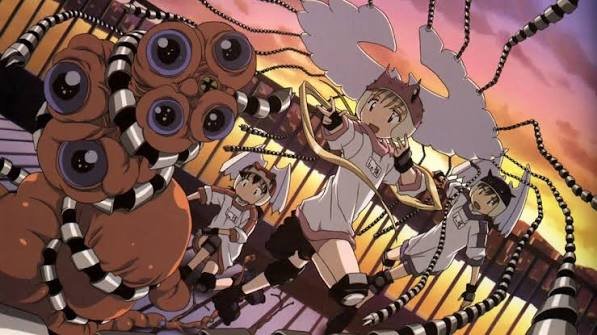
Plot Summary: In a world where alien invasions are commonplace, elementary school students are recruited as “Alien Fighters,” paired with symbiotic alien creatures called “Borgs.” Yuri Otani, a shy and anxious girl, is forced to confront terrifying aliens while dealing with her own fears and insecurities.
Similarities to Narutaru: Both are about young children who are forced to partner with strange creatures and fight against threats they don’t fully understand. The focus is on the psychological trauma of being a child soldier and the failure of adults to protect the young. The series is surprisingly dark and disturbing, with a similar sense of unease.
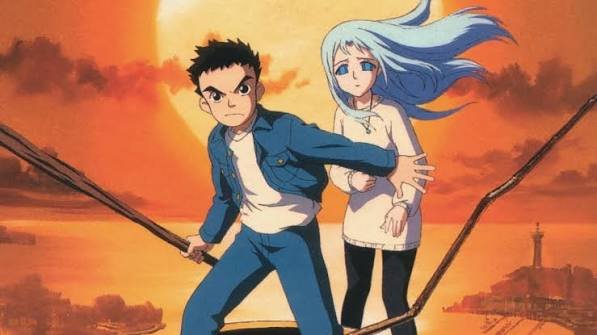
4. Now and Then, Here and There (Ima, Soko ni Iru Boku) (1999)
- Streaming Availability: HiDive
- Rating: MAL: 8.0
- Episodes: 13
- Studio: AIC
- Notable Staff: Directed by Akitaro Daichi.
Plot Summary: Shu, an ordinary boy, is transported to a dystopian world where water is scarce and children are forced to become soldiers. He is captured and must survive the brutality of this world while trying to protect a mysterious girl named Lala-Ru.
Similarities to Narutaru: Both are unflinching explorations of the cruelty of war and the exploitation of children. The focus is on the psychological toll of violence and the resilience of the human spirit in the face of overwhelming evil. The tone is bleak and often disturbing, with a similar refusal to look away from suffering.
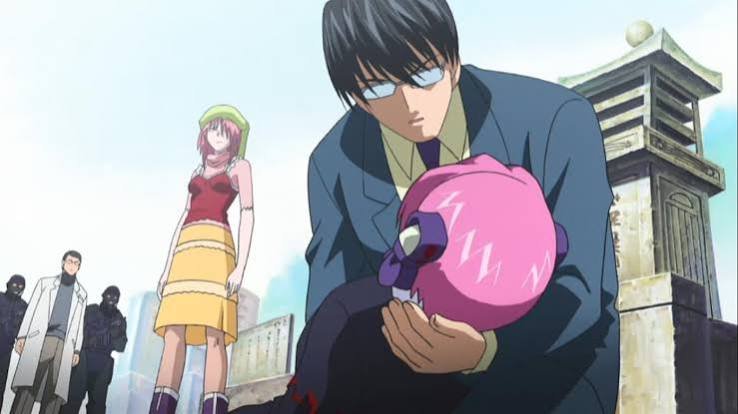
5. Elfen Lied (2004)
- Streaming Availability: Crunchyroll, Amazon Prime Video
- Rating: MAL: 7.5
- Episodes: 13
- Studio: Arms
- Notable Staff: Based on the manga by Lynn Okamoto.
Plot Summary: Lucy, a “Diclonius,” a mutant with invisible telekinetic arms, escapes from a research facility where she has been brutally experimented on. She suffers from a split personality, alternating between a childlike innocent and a ruthless killer, while a secret organization hunts her down.
Similarities to Narutaru: Both are about young women with immense, uncontrollable power who are victims of abuse and exploitation. The theme of innocence corrupted by violence is central to both. The series is graphic and often disturbing, but it is also a deeply emotional exploration of the nature of humanity and the consequences of cruelty.
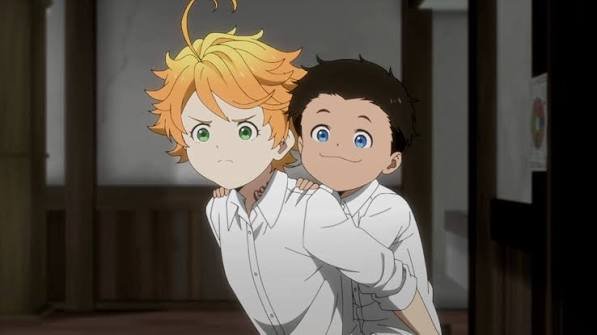
6. The Promised Neverland (2019)
- Streaming Availability: Crunchyroll, Funimation, Hulu
- Rating: MAL: 8.5
- Episodes: 12 (Season 1)
- Studio: CloverWorks
- Notable Staff: Based on the manga by Kaiu Shirai and Posuka Demizu.
Plot Summary: A group of orphaned children live happily at Grace Field House, a seemingly idyllic orphanage. They discover that their home is actually a farm where they are being raised as food for demons, and they must plan a daring escape.
Similarities to Narutaru: Both are about children who discover that their peaceful, protected lives are built on a foundation of horror and exploitation. The theme of a “utopia” that is actually a “dystopia” is central to both. The protagonists are underdogs who must use their intellect and their bonds with each other to survive against an overwhelming, inhuman system.
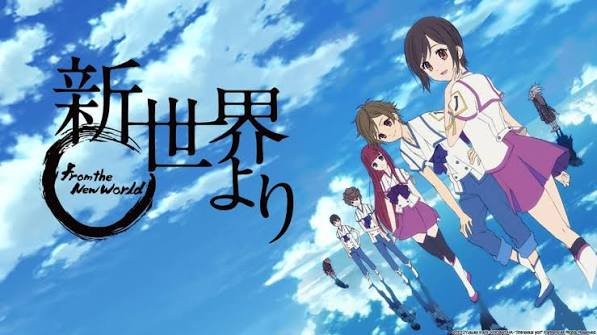
7. Shinsekai Yori (From the New World) (2012)
- Streaming Availability: Crunchyroll, Amazon Prime Video
- Rating: MAL: 8.3
- Episodes: 25
- Studio: A-1 Pictures
- Notable Staff: Based on the award-winning novel by Yusuke Kishi.
Plot Summary: A thousand years after humanity develops psychic powers called Cantus, a group of children in a seemingly utopian village begins to uncover the horrifying truths their society is built upon. They learn the terrible price of their peaceful existence and the fate of those who cannot control their powers.
Similarities to Narutaru: Both are slow-burn narratives that explore the dark side of a seemingly peaceful society and the moral compromises required to maintain it. The protagonists are children who are forced to confront the horrific truths of their world. The atmosphere of dread and the focus on the psychological impact of knowledge are direct parallels.
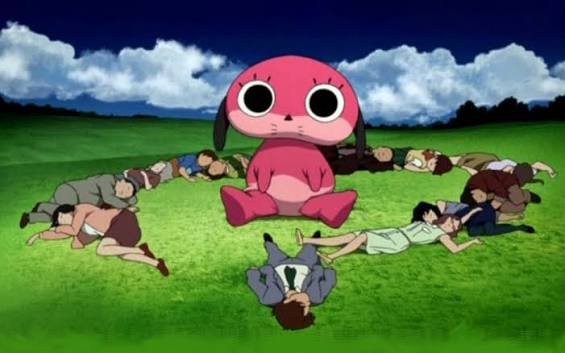
8. Paranoia Agent (2004)
- Streaming Availability: Crunchyroll, Funimation
- Rating: MAL: 7.7
- Episodes: 13
- Studio: Madhouse
- Notable Staff: Directed by Satoshi Kon.
Plot Summary: A series of seemingly random attacks by a mysterious boy on roller skates, known as “Shonen Bat,” terrorizes Tokyo. The investigation reveals that the victims are all connected by their hidden anxieties and psychological pressures, and the line between reality and delusion begins to blur.
Similarities to Narutaru: Both are psychological thrillers that explore the manifestation of trauma and social pressure in supernatural or surreal ways. The focus is on the darker aspects of the human psyche and the deconstruction of modern society. The non-linear narrative structure and the exploration of collective anxiety are a direct parallel.
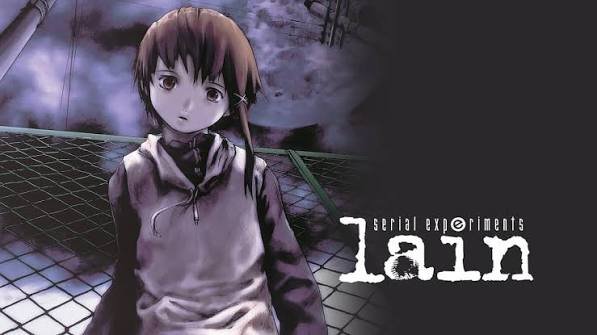
9. Serial Experiments Lain (1998)
- Streaming Availability: Funimation
- Rating: MAL: 8.0
- Episodes: 13
- Studio: Triangle Staff
- Notable Staff: Directed by Ryutaro Nakamura, written by Chiaki J. Konaka.
Plot Summary: Lain Iwakura, a quiet and socially isolated teenage girl, becomes increasingly drawn into “The Wired,” a global communications network. As the boundaries between the real world and the digital world begin to blur, Lain’s sense of identity and reality itself begins to unravel.
Similarities to Narutaru: Both are deeply atmospheric and psychological explorations of identity, isolation, and the nature of reality. The protagonist is an underdog who is overwhelmed by forces she cannot understand. The series shares a similar willingness to trust its audience to find meaning in ambiguity, and the cold, meditative tone is a strong match.
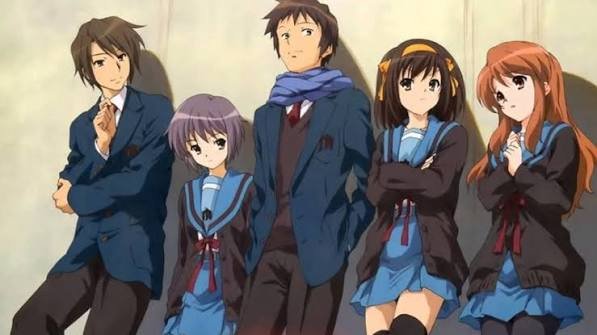
10. The Melancholy of Haruhi Suzumiya (2006)
- Streaming Availability: Crunchyroll, Funimation
- Rating: MAL: 7.8
- Episodes: 28
- Studio: Kyoto Animation
- Notable Staff: Based on the light novels by Nagaru Tanigawa.
Plot Summary: Kyon, a cynical high school student, is dragged into the world of the eccentric Haruhi Suzumiya, who is unknowingly a god-like being capable of altering reality. She forms the SOS Brigade to find aliens, time travelers, and espers, who turn out to be the other members of the club.
Similarities to Narutaru: Both feature a protagonist who is an “ordinary” observer surrounded by extraordinary individuals with immense power. The focus is on the consequences of that power and the responsibility that comes with it. The series subverts the typical high school comedy by exploring the darker implications of its premise, much like Narutaru subverts the monster companion genre.
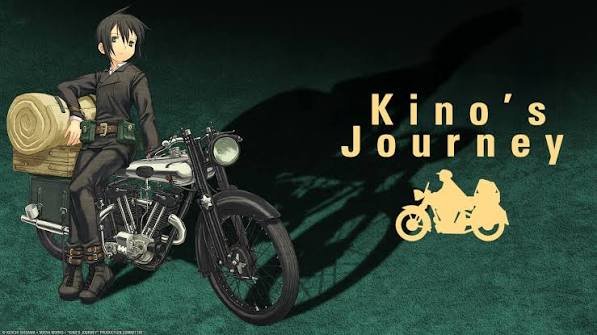
11. Kino’s Journey (2003)
- Streaming Availability: Amazon Prime Video, HiDive
- Rating: MAL: 8.3
- Episodes: 13
- Studio: A.C.G.T.
- Notable Staff: Based on the light novel series by Keiichi Sigsawa.
Plot Summary: Kino, a young traveler, journeys with a talking motorcycle named Hermes through a variety of strange and unique countries, each with its own distinct culture, technology, and philosophy. Kino’s rule is to stay in each country for only three days and two nights.
Similarities to Narutaru: Both are philosophical journeys that explore the dark side of human nature and the complexities of morality. Each “country” in Kino’s Journey is a thought experiment, often revealing uncomfortable truths about society. The tone is quiet, observational, and often melancholic, with a focus on understanding rather than judging.
12. Texhnolyze (2003)
- Streaming Availability: Funimation
- Rating: MAL: 7.8
- Episodes: 22
- Studio: Madhouse
- Notable Staff: Directed by Hiroshi Hamasaki, with original story by Chiaki J. Konaka.
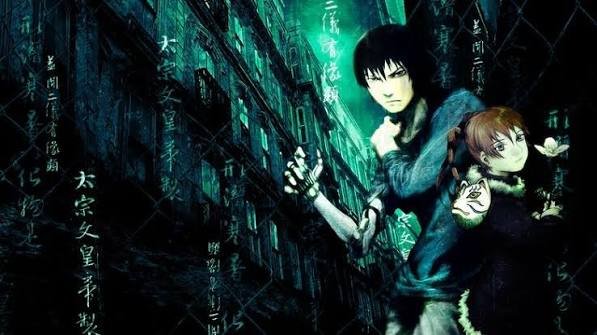
Plot Summary: In the underground city of Lux, a brutal world of violence and decay, a young fighter named Ichise loses an arm and a leg. He is fitted with “Texhnolyze,” advanced mechanical prosthetics, and becomes entangled in a conflict between factions vying for control of the city and its future.
Similarities to Narutaru: Both are dark, atmospheric, and deeply philosophical series that explore the dehumanizing effects of violence and the struggle for survival in a cruel world. The protagonist is an underdog who is literally rebuilt with mechanical parts. The minimal dialogue and oppressive atmosphere create a similarly bleak and powerful experience.
13. Ergo Proxy (2006)
- Streaming Availability: Crunchyroll, Amazon Prime Video
- Rating: MAL: 7.9
- Episodes: 23
- Studio: Manglobe
- Notable Staff: Directed by Shukou Murase.
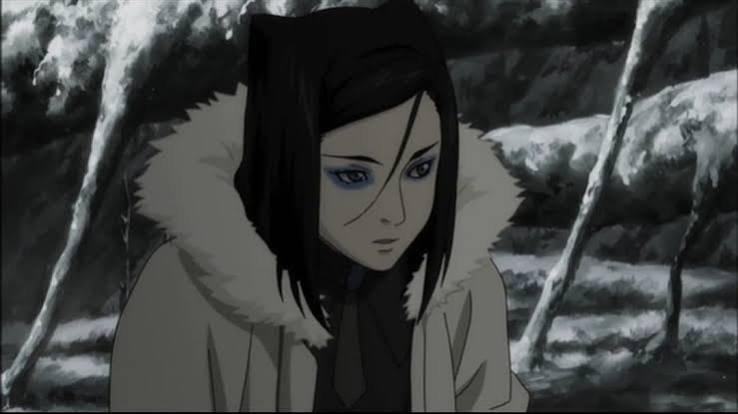
Plot Summary: In a post-apocalyptic domed city, an inspector and an immigrant android investigate a series of murders linked to a mysterious entity known as “Proxy.” Their journey takes them into the desolate outside world, where they confront questions about their own existence and the nature of their reality.
Similarities to Narutaru: Both are slow-burn, atmospheric narratives that explore the nature of identity and the dehumanizing effects of a controlled society. The protagonists are underdogs caught in a system they don’t fully understand. The philosophical exploration of consciousness and what it means to be human is a direct thematic parallel.
14. Mononoke (2007)
- Streaming Availability: Crunchyroll, Amazon Prime Video
- Rating: MAL: 8.4
- Episodes: 12
- Studio: Toei Animation
- Notable Staff: Directed by Kenji Nakamura.
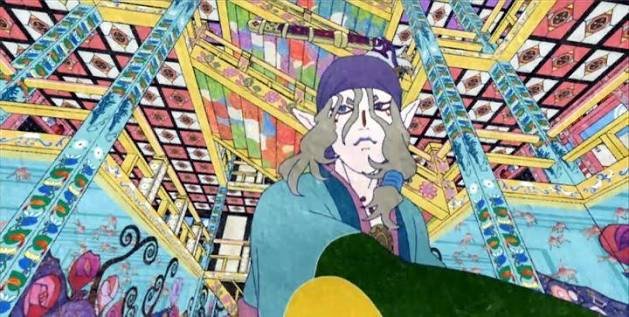
Plot Summary: A mysterious figure known only as the “Medicine Seller” travels feudal Japan, exorcising malevolent spirits called Mononoke. To do so, he must first uncover the spirit’s Form (Katachi), Truth (Makoto), and Regret (Kotowari), a process that requires intense psychological investigation.
Similarities to Narutaru: Both feature supernatural entities that are deeply connected to human psychology and emotion. The focus is on understanding the root causes of suffering and violence. The unique, highly stylized animation of Mononoke mirrors the surreal and often disturbing tone of Narutaru, and both series demand the audience’s full intellectual engagement.
15. Gilgamesh (2003)
- Streaming Availability: Not currently available on major platforms.
- Rating: MAL: 6.5
- Episodes: 26
- Studio: Group TAC
- Notable Staff: Based on the manga by Shotaro Ishinomori.
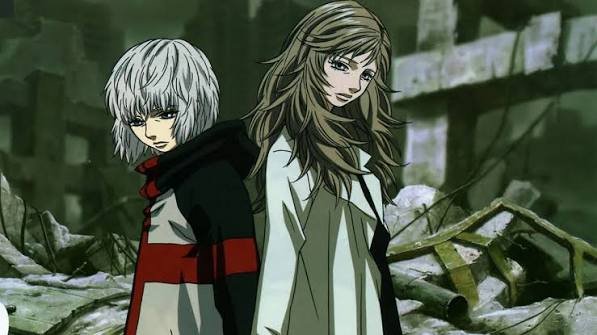
Plot Summary: After a catastrophic event, a group of children with psychic powers are gathered in a mysterious research facility. They are caught in a conflict between two factions, both of which seek to use their powers for their own ends, and they must uncover the truth about their origins.
Similarities to Narutaru: Both feature children with special abilities who are treated as tools or weapons by the adults around them. The atmosphere is dark and oppressive, with a focus on the psychological manipulation of the protagonists. The series explores themes of identity, free will, and the search for meaning in a world that has been destroyed.
Why These Anime Work for Narutaru Fans
Fans of Narutaru / Shadow Star are drawn to stories that are dark, subversive, and psychologically complex. They appreciate a narrative that takes the tropes of children’s entertainment and uses them to explore the darkest aspects of human nature. They are invested in underdog protagonists who are victims of circumstances beyond their control, and they are not afraid of a story that is willing to be bleak, disturbing, and deeply thought-provoking.
The anime listed above all share this fundamental DNA:
- Power as a Reflection of the Psyche: Whether it is the shadow dragons of Narutaru, the magical girl system of Madoka, or the psychic powers of Shinsekai Yori, these series understand that power is not just a tool, but a reflection of the wielder’s inner state. The protagonists’ abilities are often tied to their traumas, their insecurities, and their capacity for both good and evil.
- The Underdog as Victim: The protagonists are not heroes. They are children, outcasts, and survivors who have been exploited, abused, and discarded by the adult world. Their strength lies not in their power, but in their resilience, their capacity for empathy, and their refusal to be completely broken by their circumstances.
- Subversion of Innocence: These series understand that childhood is not a time of pure innocence, but a time of vulnerability, confusion, and often cruelty. They take the familiar settings and tropes of children’s stories and twist them into something dark and unsettling, forcing the audience to confront uncomfortable truths about the world and themselves.
These 15 anime, like Narutaru, are not afraid to look into the shadows. They are underrated gems that offer a profound, thought-provoking, and deeply disturbing experience for viewers who are willing to confront the darkness that lurks beneath the surface of childhood innocence.