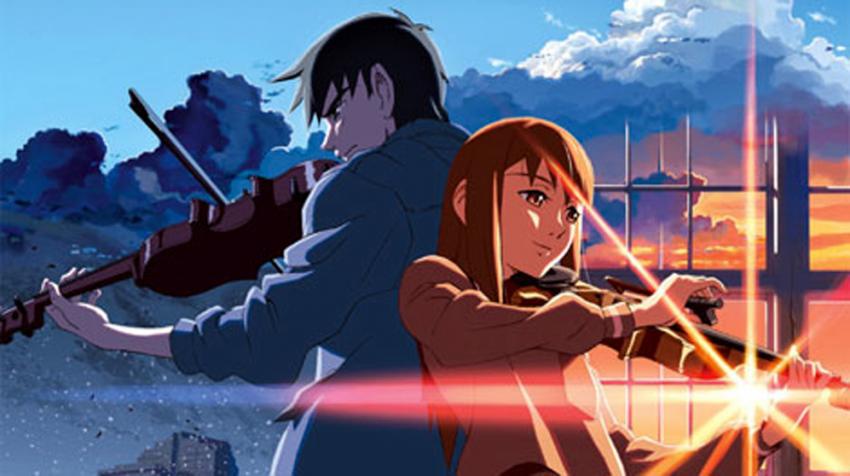
Kokoro Connect is a masterful blend of high-concept supernatural phenomena and deeply personal character drama. The story follows the five members of the Student Cultural Society—Taichi, Iori, Himeko, Yoshifumi, and Yui—whose lives are suddenly disrupted by a mysterious entity known as “Heartseed.” Without warning, they are subjected to a series of bizarre phenomena, starting with random body-swapping, which forces them to confront the secrets, traumas, and hidden emotions they have kept from each other and themselves.
The series’ brilliance lies in how it uses its power system not for action or adventure, but as a scalpel to dissect the human heart. These are underdog stories in an emotional sense; the protagonists are ordinary teenagers fighting not monsters, but their own insecurities and fractured relationships. It masterfully subverts expectations by using classic anime tropes—the cheerful girl, the stoic loner, the childhood friend—and then systematically deconstructing them, revealing the complex and often painful truths beneath the surface. The result is a profoundly empathetic and psychologically rich narrative.
For fans of Kokoro Connect, the search for something similar can be difficult. It occupies a specific niche: the supernatural mystery that is entirely in service of character development. However, many underrated series share its core DNA—whether it be a forced supernatural bond that exposes true selves, a deep exploration of adolescent psychology, or a narrative that prioritizes emotional stakes over physical ones. These shows deserve more attention for their willingness to explore the messy, beautiful complexity of human connection.
Here are 15 underrated anime that capture the spirit of Kokoro Connect.
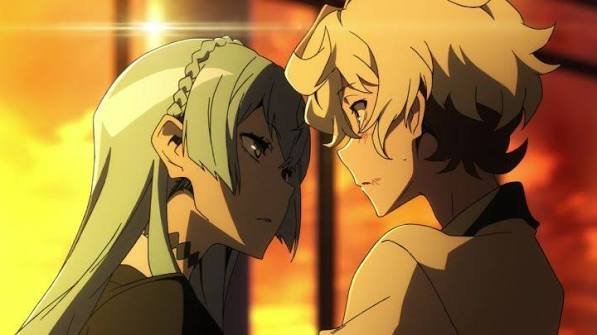
1. Kiznaiver (2016)
- Streaming Availability: Crunchyroll
- Rating: MAL: 7.3
- Episodes: 12
- Studio: Studio Trigger
- Notable Staff: Directed by Hiroshi Kobayashi, written by Mari Okada (Anohana, Maquia).
Plot Summary: In a futuristic city, a group of high school students is forcibly linked by the “Kizuna System,” a scientific experiment that causes them to share each other’s physical and emotional pain. They are assigned missions to deepen their bonds, forcing them to reveal their deepest wounds.
Similarities to Kokoro Connect: This is arguably the most direct successor to Kokoro Connect. The “Kizuna System” acts in a very similar way to Heartseed’s phenomena, serving as an external force that removes all emotional barriers between strangers. It has the same focus on forced vulnerability and the idea that true connection can only be forged through shared suffering, making it a vibrant and emotionally charged exploration of empathy.
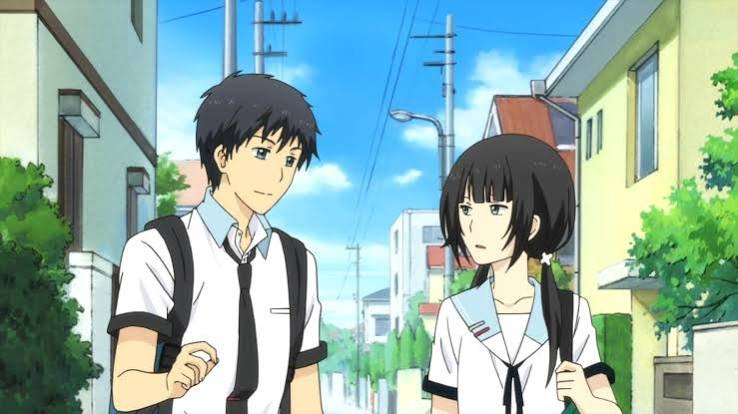
2. ReLIFE (2016)
- Streaming Availability: Crunchyroll, Funimation
- Rating: MAL: 8.0
- Episodes: 13 + 4 OVA (conclusion)
- Studio: TMS Entertainment
- Notable Staff: Based on the webtoon by Yayoiso.
Plot Summary: Arata Kaizaki, a 27-year-old NEET, is given a chance to restart his life by taking a pill that makes him look 17 again and enrolling him in high school for one year. He must navigate the social complexities of adolescence while keeping his true identity a secret.
Similarities to Kokoro Connect: While not supernatural, ReLIFE shares the core theme of characters who are hiding parts of themselves. The show is a deeply empathetic look at the pressures teenagers face and the regrets adults carry. Like Kokoro Connect, it is ultimately about breaking down the walls people build and learning to ask for help, with a narrative that is both heartwarming and surprisingly melancholic.
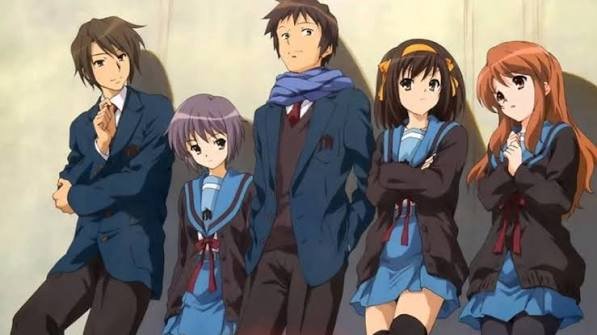
3. The Melancholy of Haruhi Suzumiya (2006)
- Streaming Availability: Crunchyroll, Funimation
- Rating: MAL: 7.8
- Episodes: 28 (in chronological order)
- Studio: Kyoto Animation
- Notable Staff: Based on the light novels by Nagaru Tanigawa.
Plot Summary: High school student Kyon is dragged into the world of the eccentric Haruhi Suzumiya, who is unknowingly a god-like being capable of altering reality. She forms the SOS Brigade to find aliens, time travelers, and espers, who, unbeknownst to her, are already among its members.
Similarities to Kokoro Connect: The SOS Brigade is essentially a club of individuals forced together by extraordinary circumstances, much like the Cultural Society. The show excels at using its sci-fi elements—the closed spaces, the time loops, the esper powers—to explore the loneliness and dissatisfaction that drives its characters, particularly the titular Haruhi. Its legacy as a classic is well-earned, and its character-focused narrative is often underappreciated amidst its pop-culture fame.
4. Anohana: The Flower We Saw That Day (2011)
- Streaming Availability: Crunchyroll, Netflix
- Rating: MAL: 8.3
- Episodes: 11
- Studio: A-1 Pictures
- Notable Staff: Directed by Tatsuyuki Nagai, written by Mari Okada.
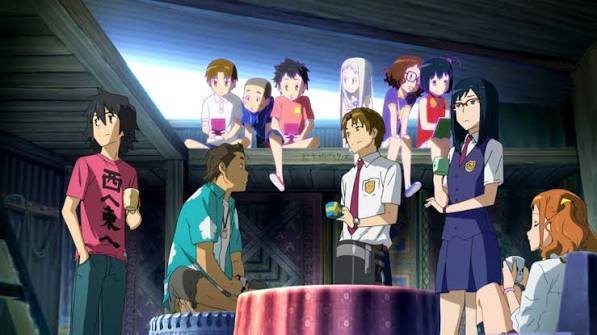
Plot Summary: Years after the death of their friend Menma, a group of estranged childhood friends is brought back together when Menma’s ghost appears to Jinta, the group’s former leader. She asks him to grant her a wish, forcing the group to confront the guilt and grief that drove them apart.
Similarities to Kokoro Connect: This is a direct predecessor from the same core creative team (Director Nagai and Writer Okada). The supernatural element—Menma’s ghost—is the catalyst that forces a group of friends to confront the emotions they have suppressed. The focus is entirely on the group dynamic, the weight of unspoken feelings, and the painful, beautiful process of healing from shared trauma.
5. Charlotte (2015)
- Streaming Availability: Crunchyroll, Hulu
- Rating: MAL: 7.8
- Episodes: 13
- Studio: P.A. Works
- Notable Staff: Created by Jun Maeda (Clannad, Angel Beats!).
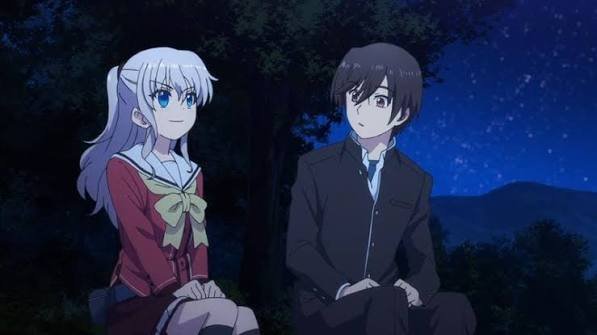
Plot Summary: In a world where a small percentage of adolescents develop supernatural abilities, Yuu Otosaka uses his power to cheat his way through life—until he is caught and forced to join the student council of Hoshinoumi Academy, which is dedicated to finding and protecting ability users.
Similarities to Kokoro Connect: Like Kokoro Connect, the superpowers in Charlotte are initially a source of fun but quickly become a vehicle for exploring deep emotional pain and tragedy. The series focuses on a group of teens bound by their shared secret and their responsibility to help others like them, while also dealing with their own personal traumas and the transient nature of their powers.
6. A Lull in the Sea (Nagi no Asukara) (2013)
- Streaming Availability: Crunchyroll, Amazon Prime Video
- Rating: MAL: 8.0
- Episodes: 26
- Studio: P.A. Works
- Notable Staff: Directed by Toshiya Shinohara, written by Mari Okada.
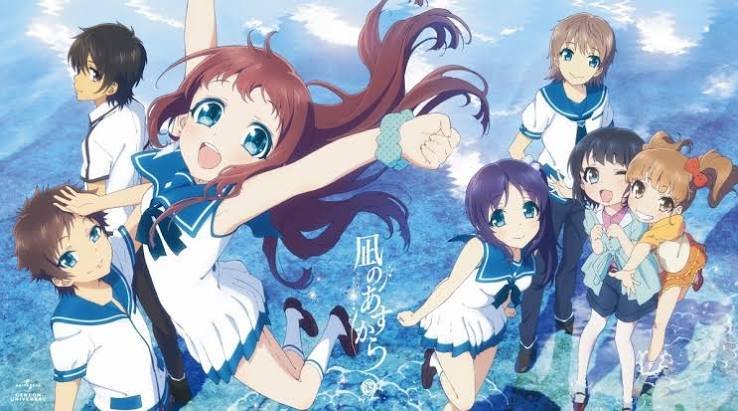
Plot Summary: From a school under the sea, four childhood friends are forced to attend a school on the surface when their own is closed. A catastrophic event occurs, separating the group and forcing them to confront their changing relationships and feelings over time.
Similarities to Kokoro Connect: The core of this series is a deeply complex and evolving web of relationships, reminiscent of the love polygon in Kokoro Connect. It masterfully explores themes of unrequited love, jealousy, and the pain of change. The character development is exceptional, as each character’s feelings evolve realistically over the show’s run, making it a staple of the emotional-drama genre.
7. Bunny Drop (Usagi Drop) (2011)
- Streaming Availability: Crunchyroll, Amazon Prime Video
- Rating: MAL: 8.4
- Episodes: 11
- Studio: Production I.G.
- Notable Staff: Based on the manga by Yumi Unita.
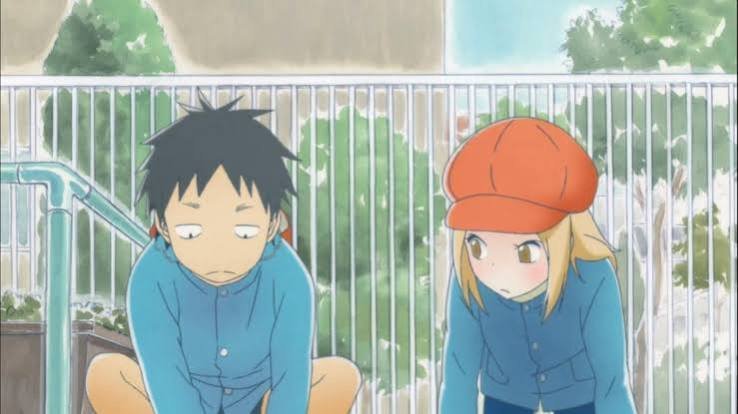
Plot Summary: When his grandfather dies, 30-year-old Daikichi decides to take in Rin, the grandfather’s illegitimate six-year-old daughter. The series follows their quiet life together as Daikichi learns to be a parent and Rin finds a place to belong.
Similarities to Kokoro Connect: While the subject matter is completely different, Usagi Drop shares the same core thematic DNA: the exploration of deep, empathetic human connection. It is a quiet, mature story about two people healing each other through simple acts of kindness and understanding. It subverts expectations by focusing on the small, emotional victories of daily life rather than grand dramatic gestures.
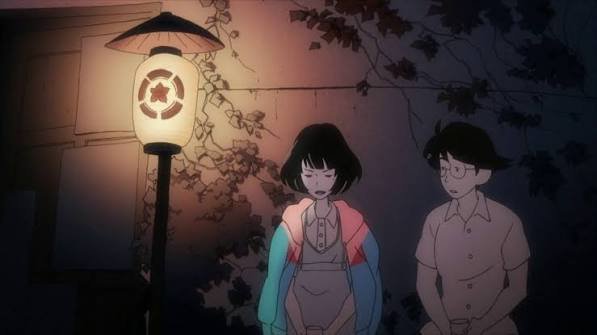
8. The Tatami Galaxy (Yojouhan Shinwa Taikei) (2010)
- Streaming Availability: Crunchyroll, Funimation
- Rating: MAL: 8.5
- Episodes: 11
- Studio: Madhouse
- Notable Staff: Directed by Masaaki Yuasa (Devilman Crybaby), based on the novel by Tomihiko Morimi.
Plot Summary: An unnamed college student reflects on his failures, wondering how his life would have been different if he had joined a different club. The series uses a time-loop/parallel universe structure to show him repeatedly trying to live the “rose-colored campus life” of his dreams.
Similarities to Kokoro Connect: This is Kokoro Connect’s “what if” scenario taken to its extreme. The entire narrative is about exploring the consequences of choices and the idea that happiness is not about finding the perfect path, but about appreciating the one you are on. It shares a core theme of self-acceptance, and its unique, rapid-fire visual style is a reflection of the protagonist’s chaotic mind.
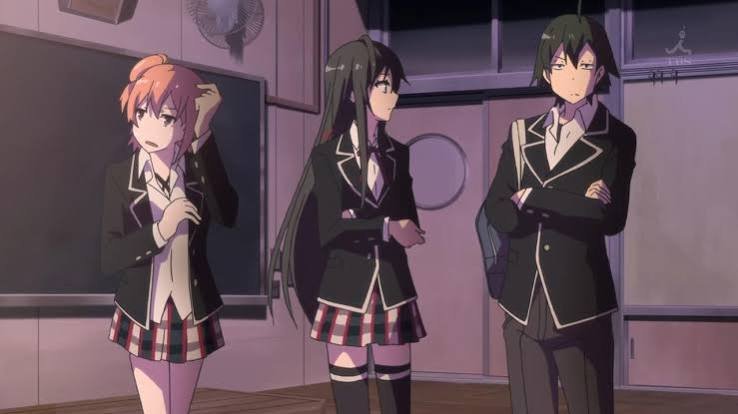
9. Oregairu (My Teen Romantic Comedy SNAFU) (2013)
- Streaming Availability: Crunchyroll, Amazon Prime Video
- Rating: MAL: 8.0
- Episodes: 13 (Season 1)
- Studio: Brain’s Base
- Notable Staff: Based on the light novel series by Wataru Watari.
Plot Summary: Cynical loner Hachiman Hikigaya is forced to join his school’s “Service Club,” alongside the cold beauty Yukino Yukinoshita and the cheerful Yui Yuigahama. The club helps students with their problems, often exposing the superficiality of social relationships in the process.
Similarities to Kokoro Connect: Both series are deeply invested in deconstructing the “high school friendship” ideal. Hachiman, like the characters in Kokoro Connect, constantly questions whether genuine connection is possible or if all relationships are built on a fragile, unspoken lie. The show is a cynical but ultimately rewarding exploration of the search for something real.
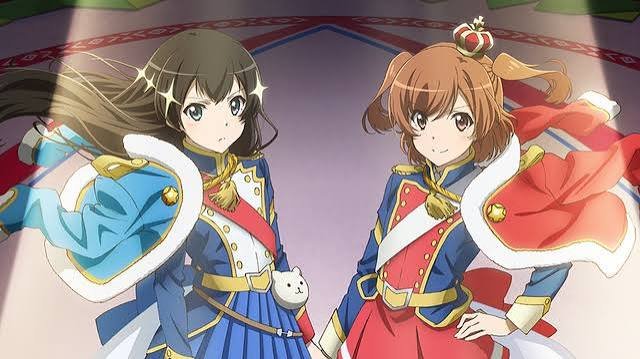
10. Revue Starlight (2018)
- Streaming Availability: HiDive, VRV
- Rating: MAL: 7.7
- Episodes: 12
- Studio: Kinema Citrus
- Notable Staff: Directed by Tomohiro Furukawa, with music by Yoshiaki Fujisawa.
Plot Summary: At a prestigious music school, eight girls preparing for a theatrical production are pulled into a secret, underground “Revue” where they must fight each other in musical battles using weapons and song. The winner is promised the role of “Top Star.”
Similarities to Kokoro Connect: The battles in Revue Starlight are not just flashy action scenes; they are psychological duels. Each fight is a collision of the characters’ desires, insecurities, and rivalries, laid bare through song and choreography. It’s a fantastic subversion of the “idol” and “battle” genres, using its fantastical framework to dissect the passionate and often painful emotions of its cast.
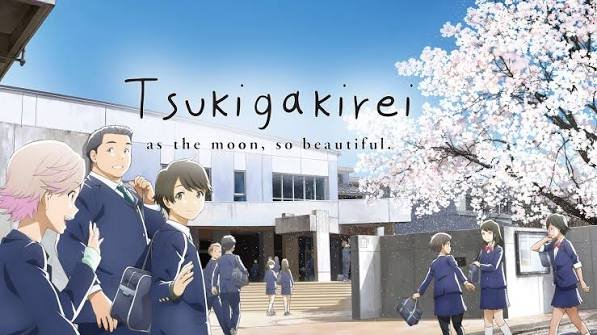
11. Tsukigakirei (2017)
- Streaming Availability: Crunchyroll
- Rating: MAL: 7.9
- Episodes: 12
- Studio: feel.
- Notable Staff: Directed by Seiji Kishi (Angel Beats!), with original character designs by loundraw.
Plot Summary: Kotarou Azumi and Akane Mizuno are two shy, awkward third-year middle school students who begin a tentative relationship. The series is a grounded, realistic portrayal of first love, with all its awkwardness, miscommunication, and quiet joy.
Similarities to Kokoro Connect: The key similarity is the raw authenticity of its character emotions. The characters are not archetypes; they are painfully real teenagers navigating feelings they don’t fully understand. The focus on subtle body language and unspoken communication mirrors the quieter, more intimate moments of Kokoro Connect when the characters are trying to understand each other.
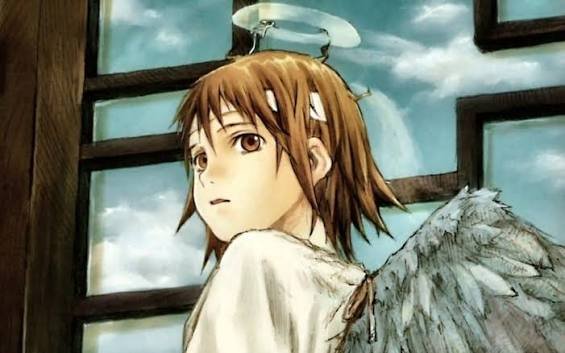
12. Haibane Renmei (2002)
- Streaming Availability: Funimation
- Rating: MAL: 8.0
- Episodes: 13
- Studio: Radix
- Notable Staff: Created by Yoshitoshi ABe (Serial Experiments Lain).
Plot Summary: Rakka, a newly born “Haibane,” awakens in a strange, walled town with a pair of small wings and no memory of her past. She and the other Haibane are forbidden from leaving and must live a quiet, simple life while grappling with their existence.
Similarities to Kokoro Connect: This is a deeply atmospheric and melancholic series about identity and belonging. It shares the core theme of characters who are “broken” by their pasts, even if they can’t remember them. The story is a slow, quiet meditation on sin, guilt, and salvation, with the Haibane’s support for one another echoing the hard-won bonds of the Cultural Society.
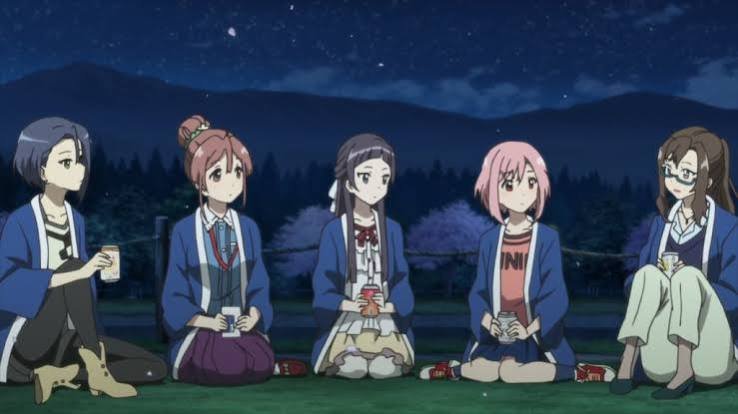
13. Sakura Quest (2017)
- Streaming Availability: Crunchyroll
- Rating: MAL: 7.4
- Episodes: 25
- Studio: P.A. Works
- Notable Staff: Directed by Soichi Masui, written by Masahiro Yokotani.
Plot Summary: Fresh out of college, Yoshino Koharu is hired to be the “Queen” of a small, dying rural town as part of a tourism revival project. She and a group of other young women must work together, facing failure and frustration as they try to find their purpose.
Similarities to Kokoro Connect: This is the “working adult” version of the same character-driven drama. Like the Cultural Society, the women of Sakura Quest are a group of strangers thrown together who must learn to rely on each other. The show is a brilliant exploration of the quarter-life crisis, focusing on the theme of finding self-worth and identity, which is a natural extension of the adolescent struggles in Kokoro Connect.
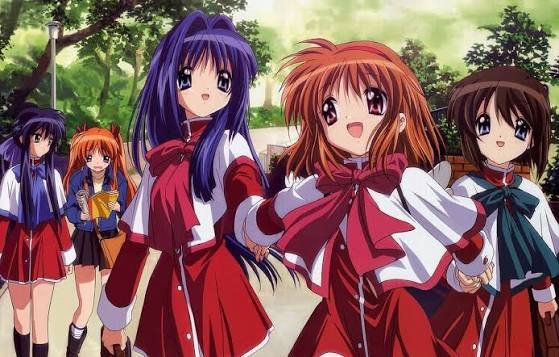
14. Kanon (2006)
- Streaming Availability: Crunchyroll, Funimation
- Rating: MAL: 7.9
- Episodes: 24
- Studio: Kyoto Animation
- Notable Staff: Based on the visual novel by Key, directed by Tatsuya Ishihara.
Plot Summary: Yuuichi Aizawa returns to a town he lived in seven years ago, but he has lost all memories of the time he spent there. He reconnects with several girls, each of whom is connected to his forgotten past in a way that is often tragic and mysterious.
Similarities to Kokoro Connect: The central mystery of the forgotten past acts as a supernatural catalyst for emotional revelation, much like Heartseed’s games. Each girl in Kanon has a deeply hidden trauma that Yuuichi must uncover and help them confront. The series is a masterclass in using a supernatural premise to explore themes of loss, regret, and the power of memory to both wound and heal.
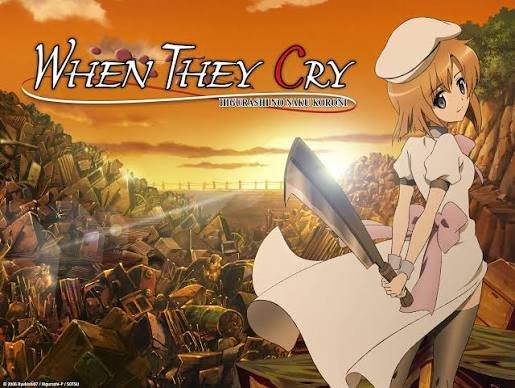
15. When They Cry (Higurashi no Naku Koro ni) (2006)
- Streaming Availability: Crunchyroll, Hulu
- Rating: MAL: 7.9
- Episodes: 26 (Season 1)
- Studio: Studio Deen
- Notable Staff: Based on the visual novel by Ryukishi07.
Plot Summary: In the small village of Hinamizawa, Keiichi Maebara and his friends live peaceful, idyllic lives. However, as the annual Watanagashi Festival approaches, a series of horrific murders begins to occur, and the cheerful facade of his friends begins to crack, revealing paranoia and madness.
Similarities to Kokoro Connect: At its core, Higurashi is about a group of friends whose bonds are tested to the absolute breaking point by supernatural forces. The horror elements are a vehicle to explore the dark side of trust and the terrifying power of misunderstanding. It is a more extreme, violent exploration of the same question at the heart of Kokoro Connect: do we ever truly know the people we call friends?
Why These Anime Work for Kokoro Connect Fans
Fans of Kokoro Connect are drawn to stories where the emotional stakes are higher than any physical threat. They appreciate watching characters be broken down and rebuilt, forced to confront their flaws, and finding strength in vulnerability. They are not looking for a simple romance or a high-octane thriller, but for a nuanced character study.
The anime listed above all share this fundamental focus:
- Power in Service of Character: Whether it’s the Kizuna System, Menma’s ghost, or the time loops of The Tatami Galaxy, the supernatural elements are never just for show. They are tools used to expose the deepest, most guarded parts of a character’s heart.
- The Underdog’s Emotional Journey: These are not stories about becoming the strongest fighter, but about winning small, personal victories: saying sorry, telling the truth, letting go of the past. The protagonists are emotional underdogs fighting against their own insecurities.
- Subversion of Tropes: These series take familiar settings—high school clubs, rural towns, supernatural mysteries—and use them to tell stories that are far more complex and emotionally resonant than their premises suggest. They deconstruct the idea of “perfect friendships” and “simple happiness,” revealing the effort and pain required to build genuine connections.
These 15 anime, like Kokoro Connect, understand that the most terrifying and rewarding battles are the ones we fight within ourselves and with the people we love. They are quiet gems that offer profound emotional experiences for viewers willing to look beneath the surface.