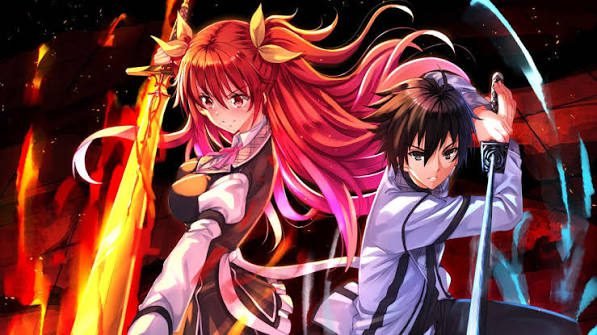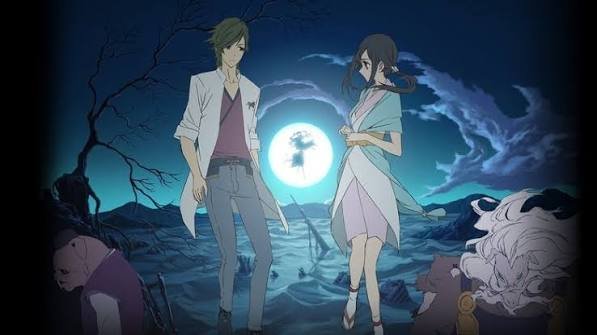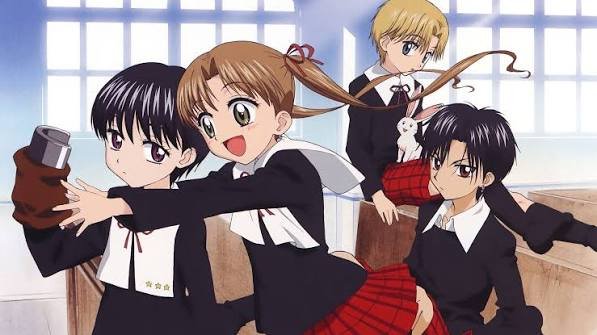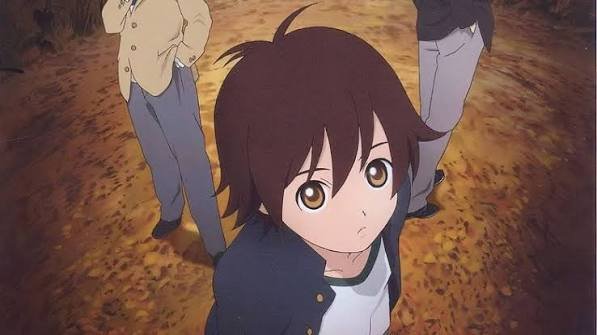
Shinsekai Yori (From the New World) is a haunting, intellectually rigorous masterpiece that stands as one of the most ambitious works in modern anime. Set a thousand years in the future, the story follows Saki Watanabe and her friends as they grow up in Kamisu 66, a seemingly idyllic village where every child develops psychic powers called “Cantus.” As they mature, they begin to uncover the horrifying truths upon which their peaceful society is built—the fate of children who cannot control their powers, the genetic manipulation of humanity, and the existence of the monstrous “Queerats” who serve them.
The series is defined by its core themes: a meticulously constructed power system with strict rules and terrifying consequences, where the misuse of Cantus leads to death and societal collapse. The protagonists are profound underdogs—not in the sense of being weak, but in being utterly powerless against the weight of their society’s history and the systems that control them. Shinsekai Yori masterfully subverts expectations by presenting a utopia that is, in fact, a carefully maintained dystopia, and by blurring the lines between humanity and monstrosity. It is a slow-burn narrative that rewards patience with devastating philosophical and emotional depth.
For fans of Shinsekai Yori, finding similar anime can be a challenge. The series occupies a unique space—part coming-of-age drama, part psychological horror, part sociological thought experiment. Yet, many underrated series share its core DNA: a focus on the dark side of societal structures, protagonists who must confront the sins of their ancestors, and a willingness to explore uncomfortable truths about human nature. These shows deserve far more attention for their ambition, their intellectual rigor, and their refusal to provide easy answers.
Here are 15 underrated anime that capture the spirit of Shinsekai Yori.
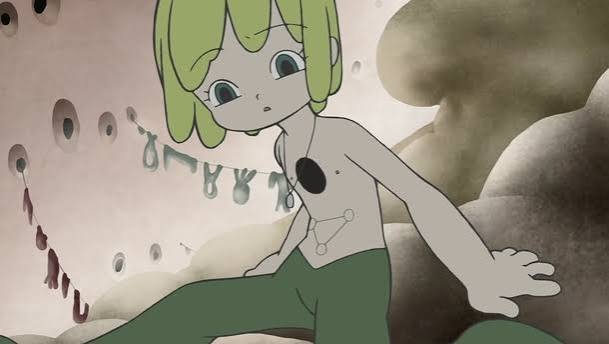
1. Kaiba (2008)
- Streaming Availability: Crunchyroll, Amazon Prime Video
- Rating: MAL: 8.1
- Episodes: 12
- Studio: Madhouse
- Notable Staff: Directed by Masaaki Yuasa (The Tatami Galaxy), with original story by Masaaki Yuasa.
Plot Summary: In a universe where memories can be digitized and bodies are interchangeable, a man named Kaiba wakes up with no memories and a hole in his chest. He travels through a surreal and often cruel universe, searching for his lost identity and the woman he loves.
Similarities to Shinsekai Yori: Both are dystopian science fiction that explore the commodification of human beings and the nature of identity. The world of Kaiba is built on a system where the poor are exploited for their bodies and memories, echoing the genetic manipulation and social control in Shinsekai Yori. The art style is unique and unsettling, perfectly complementing the dark themes.
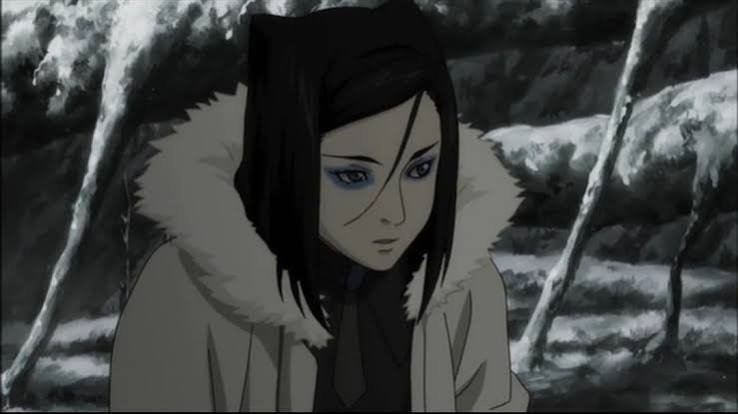
2. Ergo Proxy (2006)
- Streaming Availability: Crunchyroll, Amazon Prime Video
- Rating: MAL: 7.9
- Episodes: 23
- Studio: Manglobe
- Notable Staff: Directed by Shukou Murase (Witch Hunter Robin).
Plot Summary: In a post-apocalyptic domed city, an inspector and an immigrant android investigate a series of murders linked to a mysterious entity known as “Proxy.” Their journey takes them into the desolate outside world, where they confront questions about their own existence and the nature of their reality.
Similarities to Shinsekai Yori: Both are slow-burn, atmospheric mysteries where the protagonists gradually uncover the dark truth about their society and their own origins. The domed city is a carefully controlled environment, much like Kamisu 66, and the “Proxy” entities are a metaphor for the hidden forces that shape human destiny. The philosophical exploration of consciousness and free will is a direct thematic parallel.
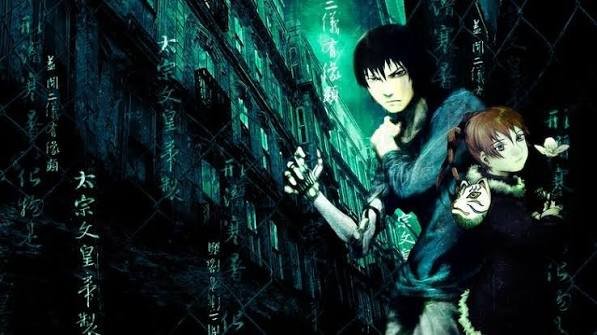
3. Texhnolyze (2003)
- Streaming Availability: Funimation
- Rating: MAL: 7.8
- Episodes: 22
- Studio: Madhouse
- Notable Staff: Directed by Hiroshi Hamasaki, with original story by Chiaki J. Konaka (Serial Experiments Lain).
Plot Summary: In the underground city of Lux, a brutal world of violence and decay, a young fighter named Ichise loses an arm and a leg. He is fitted with “Texhnolyze,” advanced mechanical prosthetics, and becomes entangled in a conflict between factions vying for control of the city and its future.
Similarities to Shinsekai Yori: Both are dark, atmospheric, and deeply philosophical series that explore the nature of society and the human condition in a bleak, controlled environment. The city of Lux is a dystopian hell, much like the hidden horrors beneath Kamisu 66. The minimal dialogue, the focus on visual storytelling, and the oppressive, melancholic atmosphere are a perfect match.
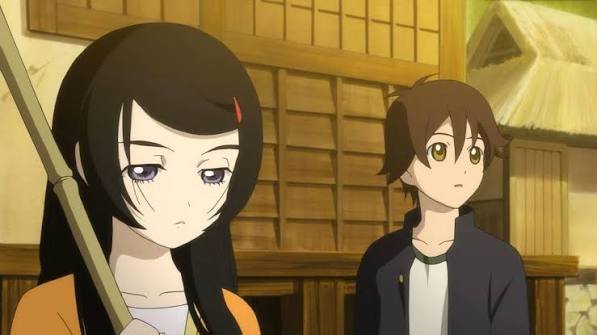
4. Ghost Hound (2007)
- Streaming Availability: Amazon Prime Video, HiDive
- Rating: MAL: 7.0
- Episodes: 22
- Studio: Production I.G.
- Notable Staff: Created by Masamune Shirow (Ghost in the Shell), directed by Ryutaro Nakamura (Serial Experiments Lain).
Plot Summary: Three high school boys who have all experienced past traumas begin to have out-of-body experiences. They use this phenomenon to explore the “Unseen World” and investigate a mysterious case from their past connected to a local religious cult.
Similarities to Shinsekai Yori: Both are slow-burn mysteries set in isolated, rural communities with hidden secrets. The exploration of trauma, memory, and the manipulation of children is a central theme in both. The psychological and supernatural elements are treated with scientific rigor, and the tone is one of quiet dread and intellectual curiosity.
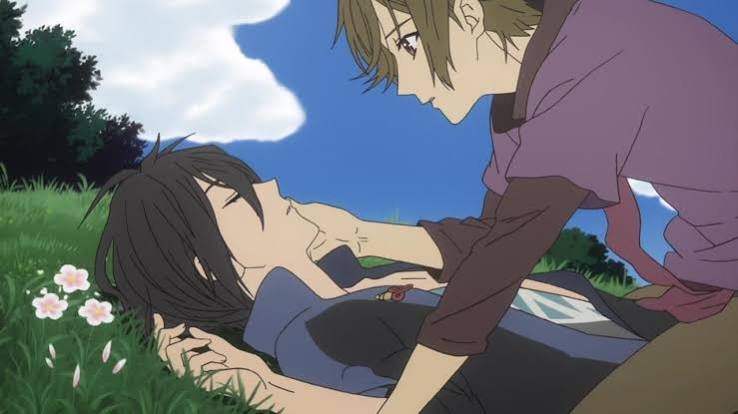
5. From the New World (Shinsekai Yori) (2012)
- Streaming Availability: Crunchyroll, Amazon Prime Video
- Rating: MAL: 8.3
- Episodes: 25
- Studio: A-1 Pictures
- Notable Staff: Based on the award-winning novel by Yusuke Kishi.
Plot Summary: A thousand years after humanity develops psychic powers called Cantus, a group of children in a seemingly utopian village begins to uncover the horrifying truths their society is built upon. They learn the terrible price of their peaceful existence and the fate of those who cannot control their powers.
Similarities to Shinsekai Yori: This is the subject of comparison itself, highlighting its own unique narrative style. The series is an understated masterpiece of cause and effect, where every line of dialogue carries weight. Its focus on logical deduction and philosophical debate over emotional outbursts creates a unique, almost literary atmosphere that is rare in the medium, making it a benchmark for intellectual anime.
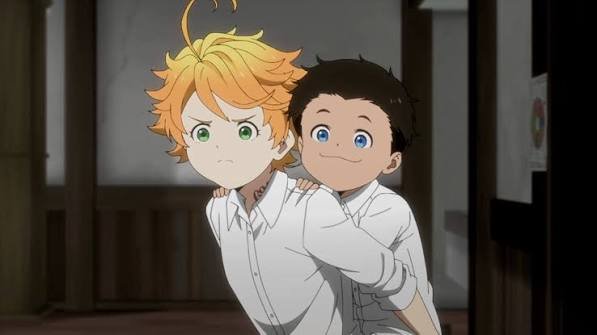
6. The Promised Neverland (2019)
- Streaming Availability: Crunchyroll, Funimation, Hulu
- Rating: MAL: 8.5
- Episodes: 12 (Season 1)
- Studio: CloverWorks
- Notable Staff: Based on the manga by Kaiu Shirai and Posuka Demizu.
Plot Summary: A group of orphaned children live happily at Grace Field House, a seemingly idyllic orphanage. They discover that their home is actually a farm where they are being raised as food for demons, and they must plan a daring escape.
Similarities to Shinsekai Yori: Both are about children who discover that their peaceful, protected lives are built on a foundation of horror and exploitation. The theme of a “utopia” that is actually a “dystopia” is central to both. The protagonists are underdogs who must use their intellect and their bonds with each other to survive against an overwhelming, inhuman system.
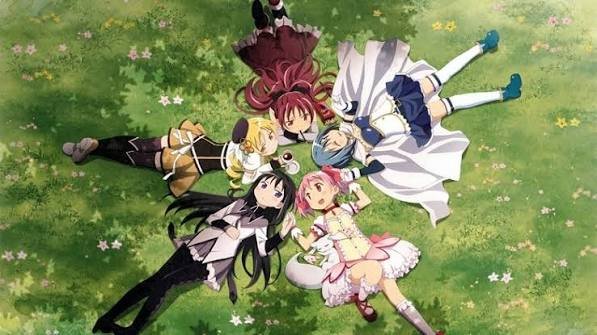
7. Madoka Magica (Mahou Shoujo Madoka★Magica) (2011)
- Streaming Availability: Crunchyroll, Funimation, Hulu
- Rating: MAL: 8.4
- Episodes: 12
- Studio: Shaft
- Notable Staff: Directed by Akiyuki Shinbo, written by Gen Urobuchi (Fate/Zero).
Plot Summary: Madoka Kaname and her friends are offered the chance to become magical girls, gaining a single wish in exchange for fighting witches. They soon discover that the magical girl system is a cruel and manipulative trap designed to exploit their hope and despair.
Similarities to Shinsekai Yori: Both are dark subversions of familiar genres that explore the consequences of power systems built on exploitation and suffering. The “magical girl” system is a direct parallel to the “Cantus” society, where the price of power is hidden until it is too late. The focus on the psychological toll on young girls is a central theme in both.
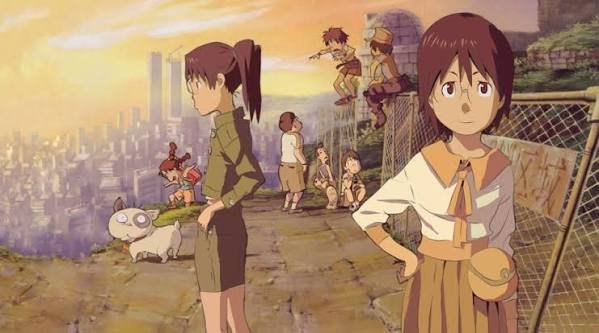
8. Dennou Coil (2007)
- Streaming Availability: Not currently available on major platforms.
- Rating: MAL: 8.1
- Episodes: 26
- Studio: Madhouse
- Notable Staff: Created, directed, and written by Mitsuo Iso.
Plot Summary: In a near-future city, children wear internet-connected glasses that overlay a seamless augmented reality (AR) onto the real world. A group of kids investigates urban legends and glitches within this digital space, leading them to uncover a dangerous and hidden truth.
Similarities to Shinsekai Yori: Both are set in a world where a pervasive technology or power has fundamentally altered society, and children are the ones who must navigate its hidden dangers. The focus is on the gradual uncovering of a mystery that is deeply connected to the past. The series treats its AR technology with scientific rigor, similar to the detailed exploration of Cantus.
9. Mawaru Penguindrum (2011)

- Streaming Availability: Crunchyroll, HiDive
- Rating: MAL: 8.0
- Episodes: 24
- Studio: Brain’s Base
- Notable Staff: Directed by Kunihiko Ikuhara (Revolutionary Girl Utena), with original story by Ikuhara.
Plot Summary: Two brothers, Kanba and Shoma, are given a mysterious penguin hat that can save their dying sister Himari, but only if they find the “Penguindrum.” Their quest is filled with surreal symbolism, social commentary, and the gradual unraveling of their family’s dark past.
Similarities to Shinsekai Yori: Both are heavily symbolic and open to multiple interpretations. They use surrealism and allegory to explore themes of fate, family, and the sins of the past. The focus is on a group of young people who are pawns in a larger game, and their struggle to understand and break free from their predetermined roles.
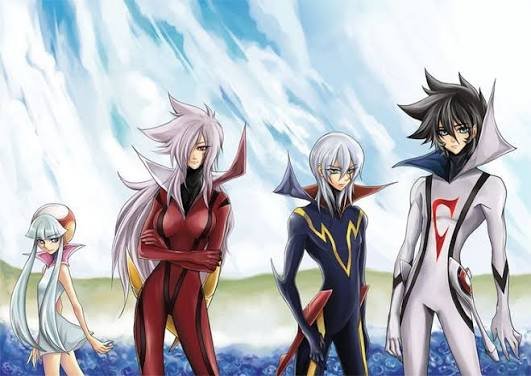
10. Casshern Sins (2008)
- Streaming Availability: Crunchyroll, Funimation
- Rating: MAL: 7.5
- Episodes: 24
- Studio: Madhouse
- Notable Staff: Directed by Shigeyasu Yamauchi, a reboot of the classic Casshan franchise.
Plot Summary: In a world where humanity has been wiped out by a plague of robots, the immortal android Casshern wanders the desolate landscape. He is blamed for the destruction of the world and must confront his own guilt, searching for redemption and a reason to continue living in a world of death.
Similarities to Shinsekai Yori: Both are post-apocalyptic stories that explore the consequences of humanity’s actions and the nature of guilt and redemption. The melancholic, atmospheric tone and the focus on a lone wanderer searching for meaning are a direct parallel. Both series ask difficult questions about what it means to be human in a world where humanity has lost its way.
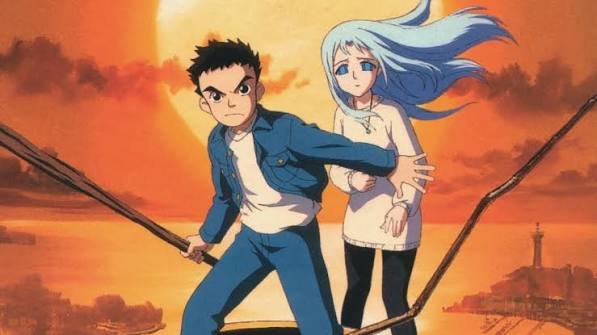
11. Now and Then, Here and There (Ima, Soko ni Iru Boku) (1999)
- Streaming Availability: HiDive
- Rating: MAL: 8.0
- Episodes: 13
- Studio: AIC
- Notable Staff: Directed by Akitaro Daichi.
Plot Summary: Shu, an ordinary boy, is transported to a dystopian world where water is scarce and children are forced to become soldiers. He is captured and must survive the brutality of this world while trying to protect a mysterious girl named Lala-Ru, who possesses a powerful pendant.
Similarities to Shinsekai Yori: Both are unflinching explorations of the cruelty that humans are capable of, particularly towards children. The dystopian setting is bleak and oppressive, and the protagonist is an underdog who must maintain his humanity in the face of overwhelming evil. The series is a powerful and disturbing meditation on war, exploitation, and the resilience of hope.
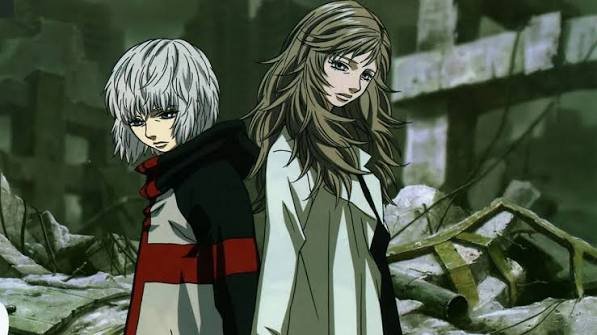
12. Gilgamesh (2003)
- Streaming Availability: Not currently available on major platforms.
- Rating: MAL: 6.5
- Episodes: 26
- Studio: Group TAC
- Notable Staff: Based on the manga by Shotaro Ishinomori.
Plot Summary: After a catastrophic event, a group of children with psychic powers are gathered in a mysterious research facility. They are caught in a conflict between two factions, both of which seek to use their powers for their own ends, and they must uncover the truth about their origins.
Similarities to Shinsekai Yori: Both feature children with psychic powers who are treated as tools or weapons by the adults around them. The atmosphere is dark and oppressive, with a focus on the psychological manipulation of the protagonists. The series explores themes of identity, free will, and the search for meaning in a world that has been destroyed.
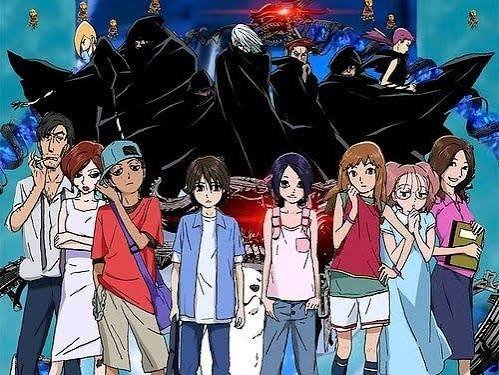
13. Noein: To Your Other Self (2005)
- Streaming Availability: Crunchyroll
- Rating: MAL: 7.5
- Episodes: 24
- Studio: Satelight
- Notable Staff: Directed by Kazuki Akane (Escaflowne), with character designs by Satoshi Kon.
Plot Summary: In a future timeline, a devastating war is being fought across multiple dimensions. A group of time-traveling warriors called the Dragon Knights arrive in the present, seeking a mysterious object known as the “Dragon’s Torque,” which is connected to a young girl named Haruka.
Similarities to Shinsekai Yori: Both series involve a conflict that spans time and space, with the actions of the present having profound consequences for the future. The complex, multi-dimensional plot and the philosophical questions about fate, free will, and determinism are a strong match. The underdog protagonists are caught in a conflict far larger than themselves.
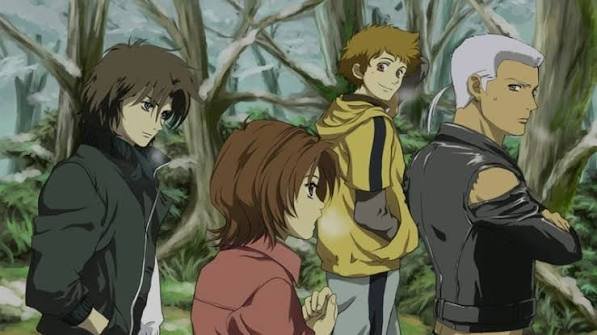
14. Wolf’s Rain (2003)
- Streaming Availability: Crunchyroll, Funimation
- Rating: MAL: 7.8
- Episodes: 26
- Studio: Bones
- Notable Staff: Directed by Tensai Okamura (Darker than Black), with music by Yoko Kanno.
Plot Summary: In a dying, post-apocalyptic world, a group of wolves who can take human form searches for the mythical “Paradise,” a place of eternal life and peace. Their journey is fraught with danger, but they are driven by instinct and a desperate hope for a better world.
Similarities to Shinsekai Yori: Both are set in a world that is slowly dying, and the protagonists are searching for something that may not even exist. The melancholic, poetic tone and the focus on the search for meaning in a bleak world are a direct parallel. The wolves are underdogs, hunted and misunderstood, but they are driven by a primal faith in something greater than themselves.
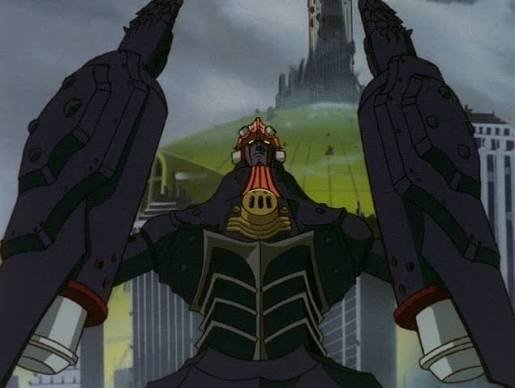
15. The Big O (1999)
- Streaming Availability: Crunchyroll, Amazon Prime Video
- Rating: MAL: 7.6
- Episodes: 26
- Studio: Sunrise
- Notable Staff: Directed by Kazuyoshi Katayama, with scripts by Chiaki J. Konaka.
Plot Summary: Roger Smith is a “Negotiator” in Paradigm City, a domed city where all the residents lost their memories forty years ago. He pilots a giant robot called the Big O and investigates the mysteries of the city’s past, uncovering strange truths about the nature of reality.
Similarities to Shinsekai Yori: Both are set in a controlled environment where the residents have been manipulated and their memories erased. The focus on uncovering the hidden truth about the past and the nature of their reality is a direct parallel. The noir-esque atmosphere and the philosophical questions about identity and free will are a strong match.
Why These Anime Work for Shinsekai Yori Fans
Fans of Shinsekai Yori are drawn to stories that are intellectually challenging, morally ambiguous, and emotionally devastating. They appreciate a narrative that takes its time to build its world and its characters, and they are willing to confront uncomfortable truths about human nature and society. They are not looking for simple heroes and villains, but for complex, flawed individuals who are shaped by the systems they inhabit.
The anime listed above all share this fundamental DNA:
- Power Systems with Profound Consequences: Whether it is Cantus, Texhnolyze, or the magical girl system, these series understand that power is never free. It comes with a price, and that price is often paid by the most vulnerable members of society.
- The Underdog Against the System: The protagonists are not chosen ones destined for greatness. They are ordinary people who are caught in the gears of a machine much larger than themselves. Their struggle is not to defeat an enemy, but to understand the truth and to maintain their humanity in the face of overwhelming odds.
- Subversion of Utopia: These series understand that the most terrifying dystopias are the ones that look like utopias on the surface. They peel back the layers of a seemingly perfect society to reveal the rot beneath, and they force the audience to question their own assumptions about right and wrong.
These 15 anime, like Shinsekai Yori, are not afraid to ask difficult questions and to leave some of them unanswered. They are underrated gems that offer a rich, intellectually stimulating, and deeply moving experience for viewers who are willing to engage with them on their own terms.