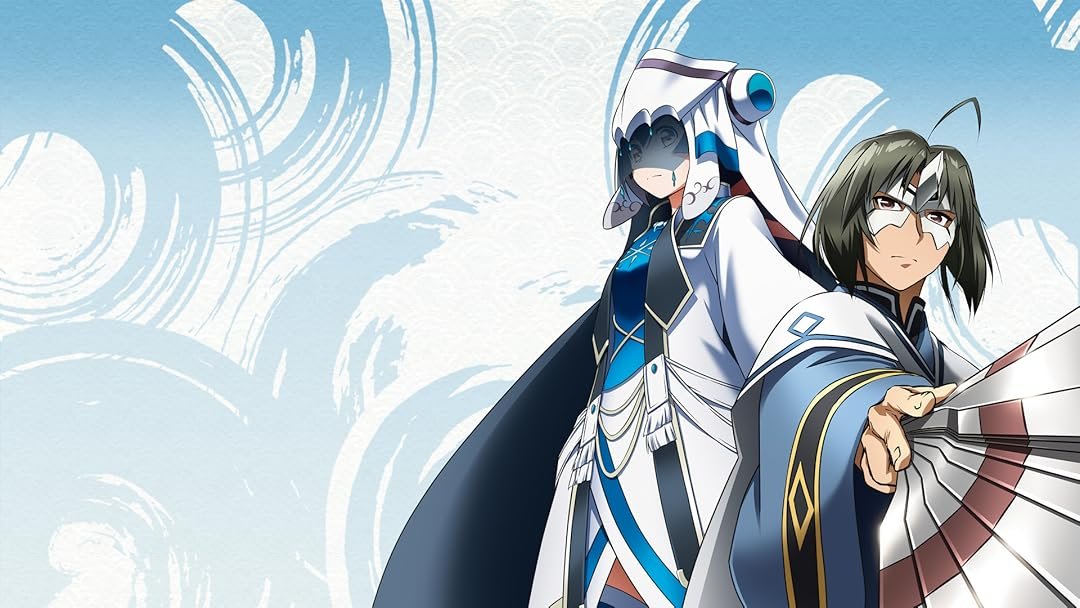
Blue Eye Samurai follows Mizu, a fierce ronin warrior with blue eyes, on her vengeful quest against the white men who fathered her in isolationist Japan. The series delves into themes of revenge, identity, honor, and the burdens of desire and impurity.
This curated collection of 25 quotes captures her growth, pivotal relationships, and the emotional intensity across key arcs, blending brutal battles with introspective moments.

To a man lost in the dark, an ember can light the way
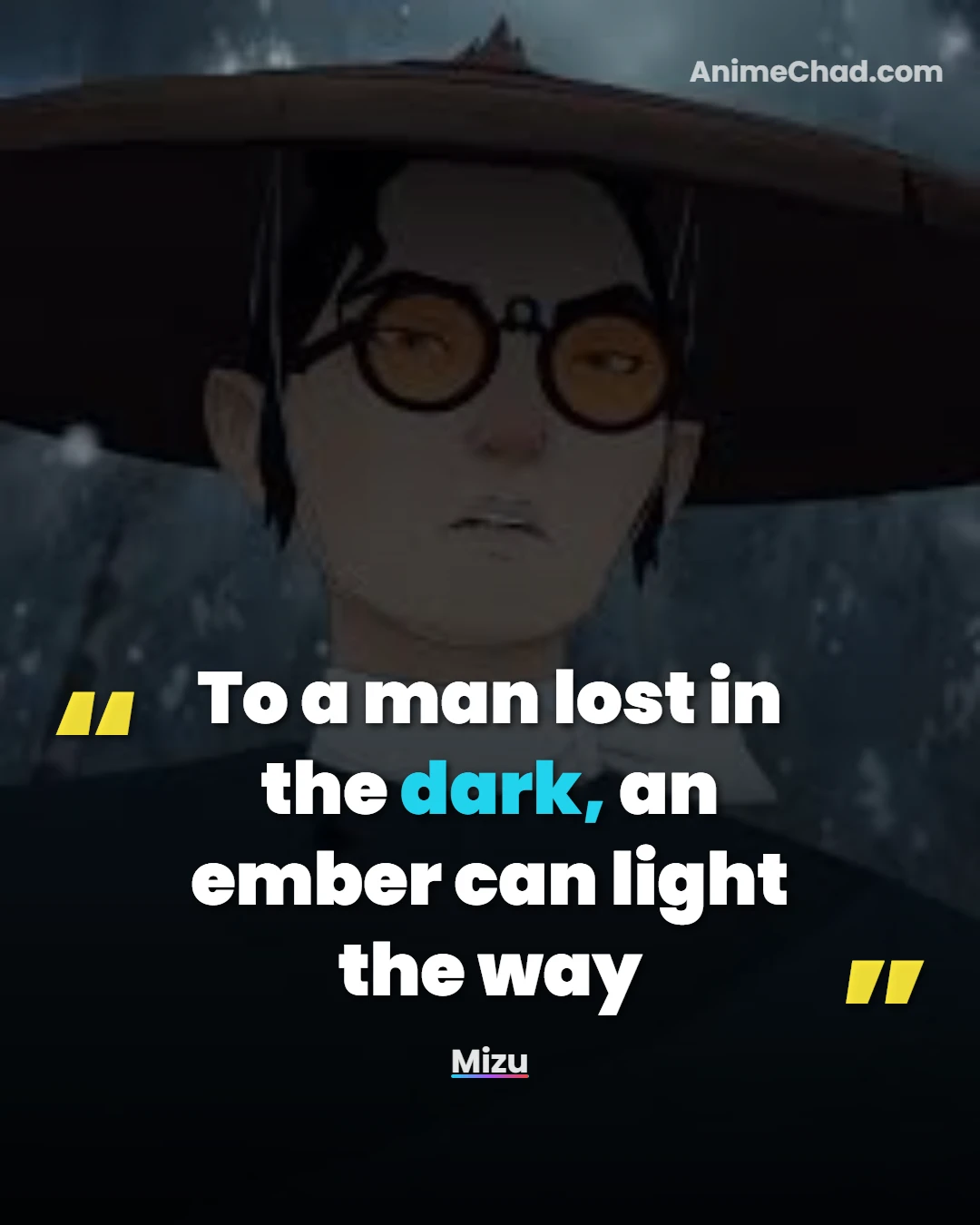
Episode 1 (Hammerscale)
Mizu
Prayer to Swordfather reveals Mizu’s vulnerability and gratitude, igniting her path of revenge amid profound isolation.
Revenge is like gold. It does not rust. It will wait
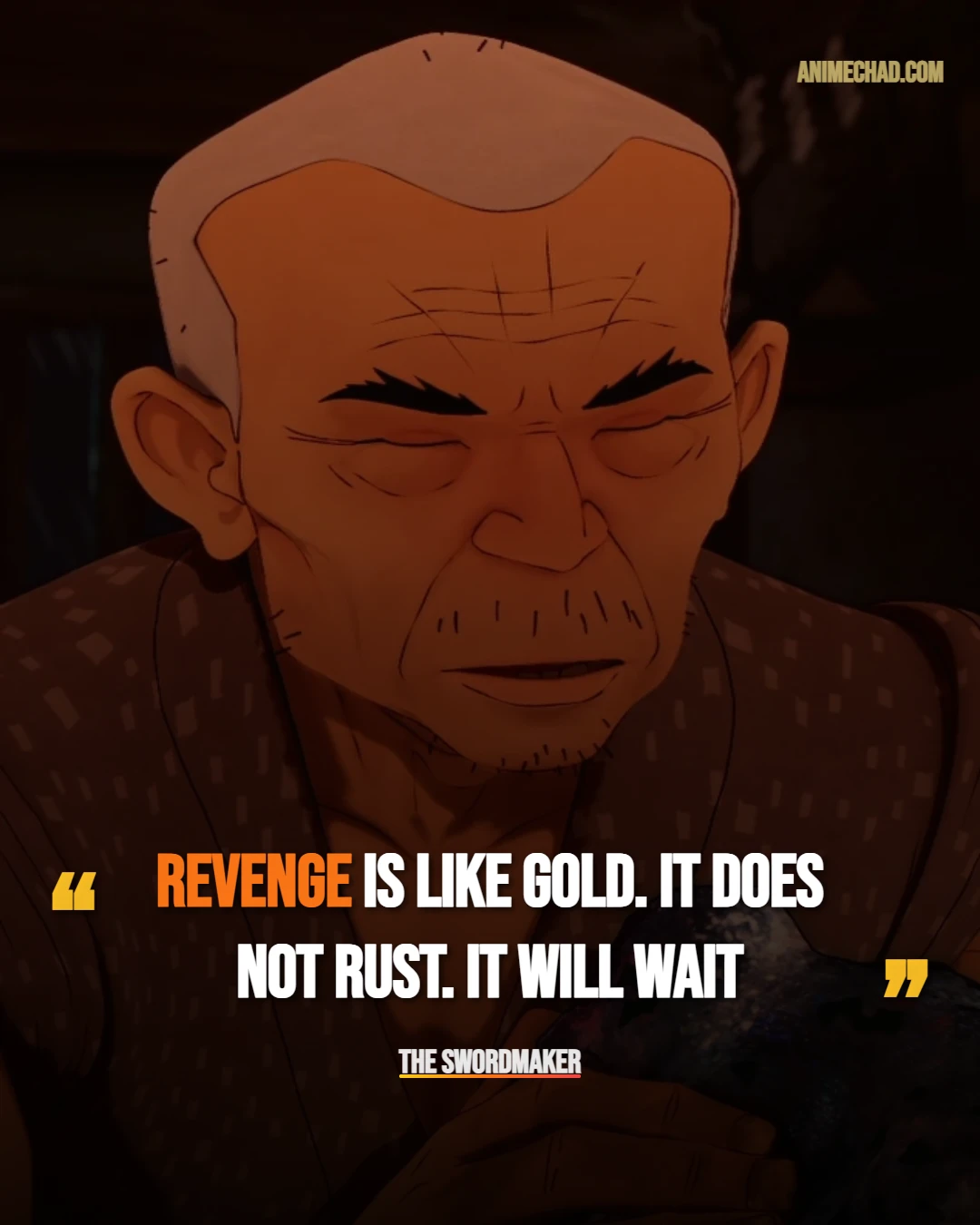
Episode 1 (Hammerscale)
The Swordmaker
Swordfather’s wisdom affirms revenge’s enduring nature, steeling Mizu for her bloody journey despite his fears.
I have no interest in money or power. I have no interest in being happy; only satisfied

Episode 1 (Hammerscale)
Mizu
Mizu rejects worldly pursuits, highlighting her single-minded vengeance over personal fulfillment or joy.
Should I have been counting?

Episode 1 (Hammerscale)
Mizu
Casual dismissal after defeating foes underscores Mizu’s lethal prowess and disdain for glory in battle.
The time to kill your enemy is when you can
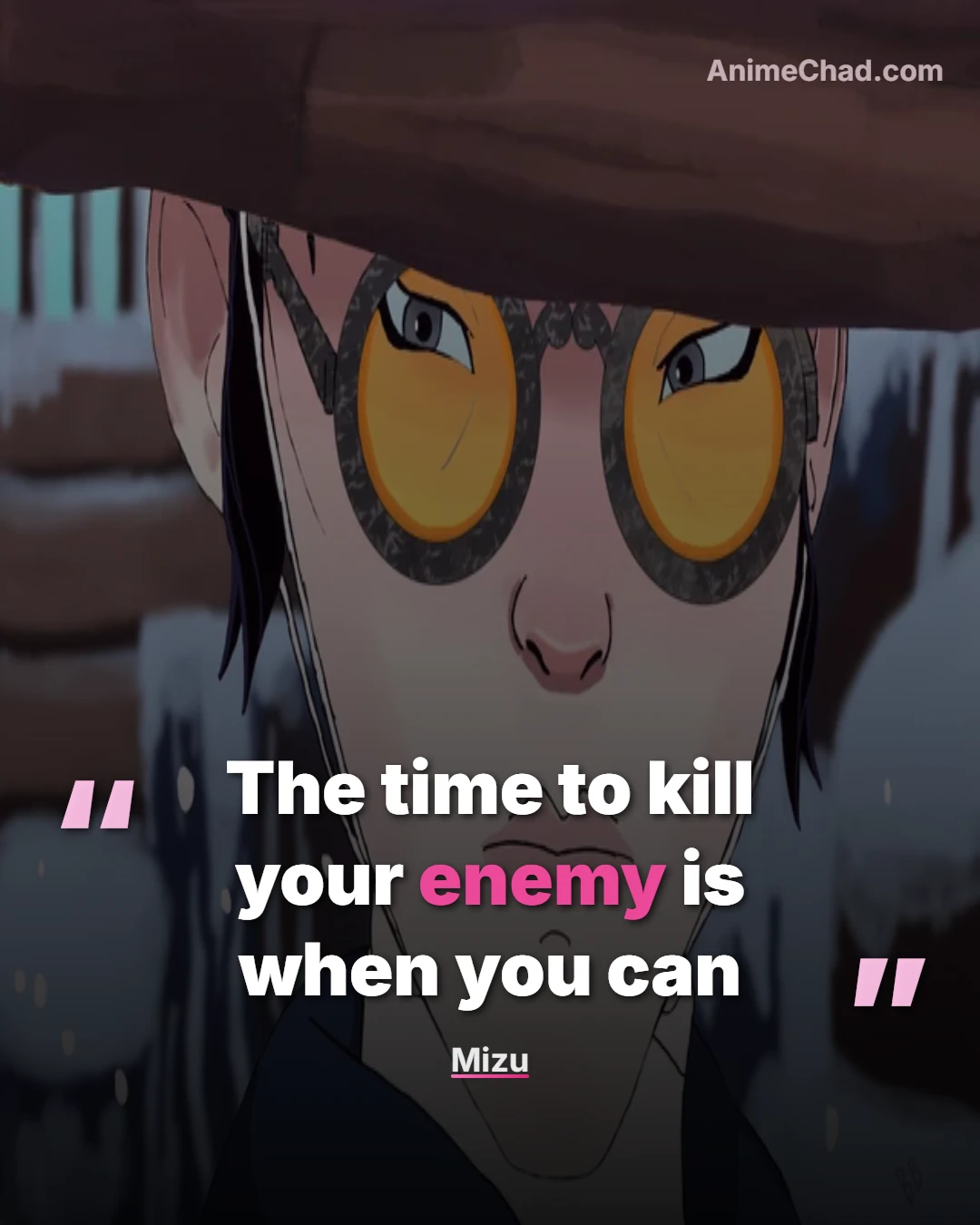
Episode 3 (A Fixed Number of Paths)
Mizu
Taigen duel advice emphasizes ruthless pragmatism, rejecting honor for survival in revenge’s harsh reality.
Revenge does not hesitate

Episode 3 (A Fixed Number of Paths)
Mizu
Rebuke to Akemi exposes revenge’s unyielding drive, contrasting with hesitation born of attachment.
I’ve been a captive my whole life. If I die today, I die free
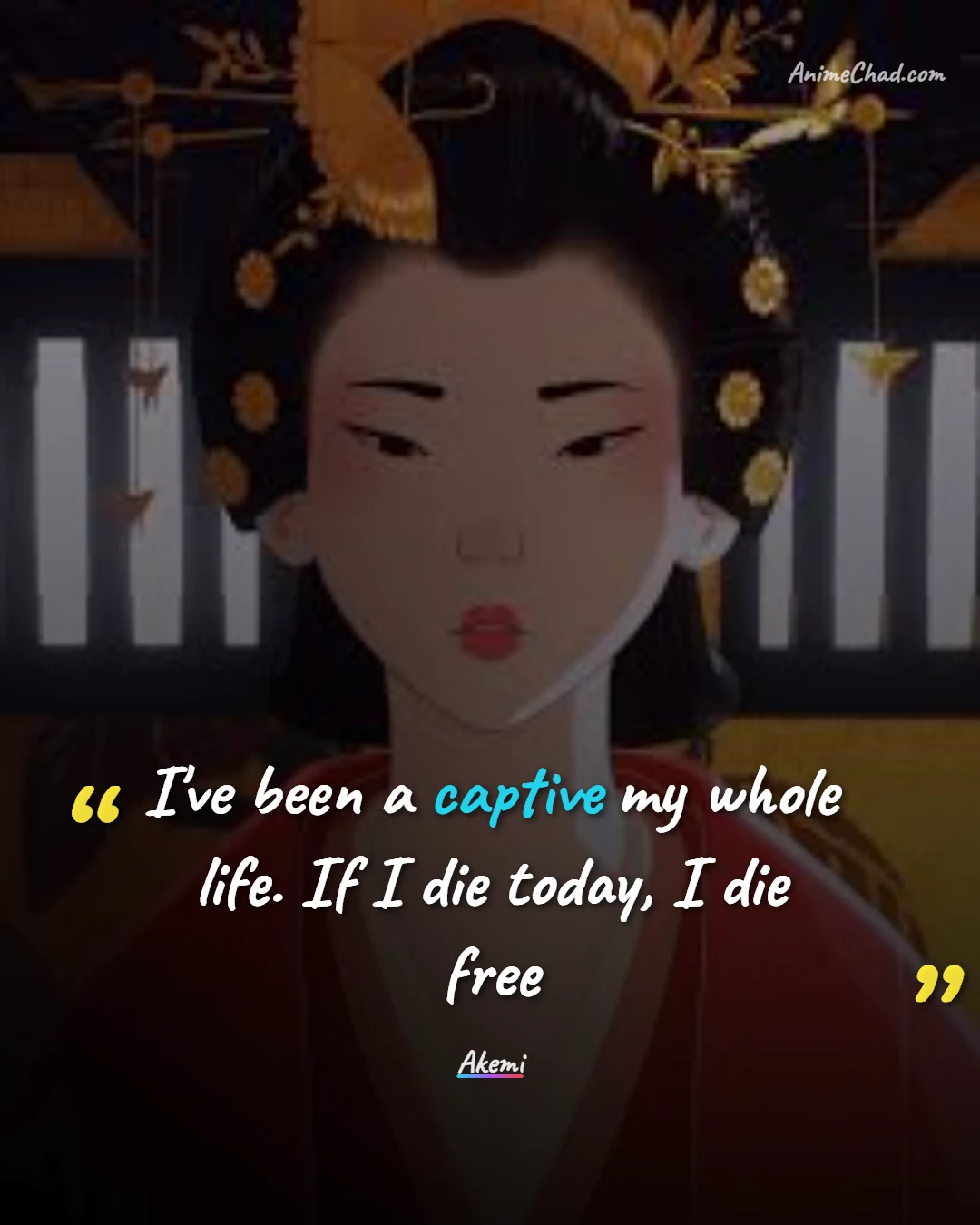
Episode 1 (Hammerscale)
Akemi
Akemi’s defiance against arranged marriage marks her rebellion, paralleling Mizu’s fight for autonomy.
You are blind… and so cannot see the shame of my face. I am… made of mixed metal

Episode 2 (An Unexpected Element)
Mizu
Confession to Ringo unveils Mizu’s “impure” heritage, fueling her self-loathing and vengeful identity.
To deny desire is to cut out a corner of your own heart
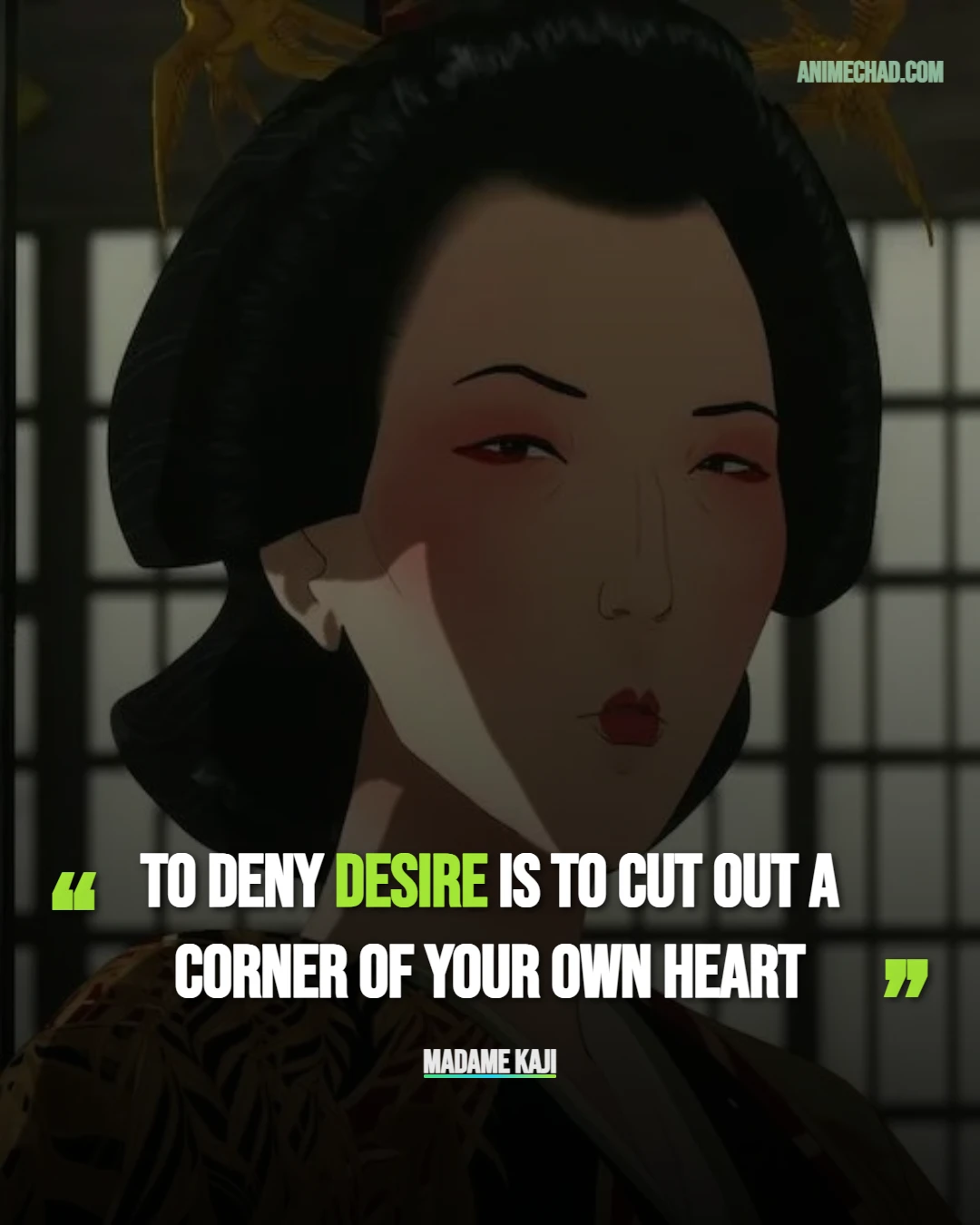
Episode 4 (Peculiarities)
Madame Kaji
Kaji’s counsel to Mizu links suppressed desires to weakened resolve, deepening themes of inner conflict.
All men are weak; those who act like beasts are the weakest
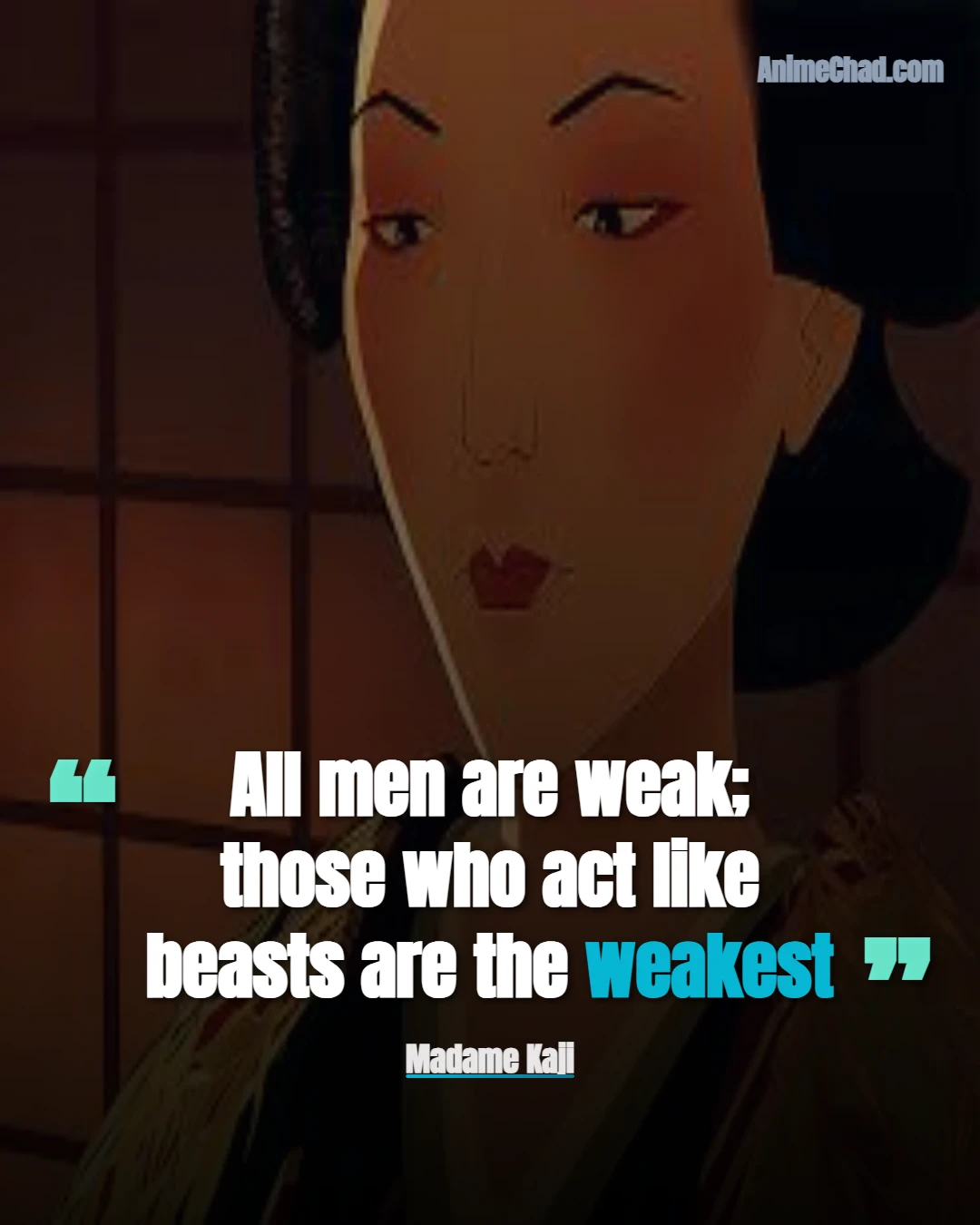
Episode 4 (Peculiarities)
Madame Kaji
Insight exposes male fragility, empowering female characters to seize control amid patriarchal oppression.
Stop running to and from men, and decide what you want for your f***ing self

Episode 4 (Peculiarities)
Madame Kaji
Direct advice to Akemi promotes self-determination, challenging cycles of dependency and revenge.
The biggest city in the world is burning… that’s your white half showing

Episode 7 (Apparitions)
Abijah Fowler
Fowler taunts Mizu’s rage, confronting her hybrid rage and the destructive cost of her heritage.
If one God forsakes you, another one will help you

Episode unknown
Unknown
Fowler’s cynical faith remark highlights resilience amid betrayal, tying to Mizu’s forsaken path.
There’s no place on it for love or friendship or weakness

Episode 5 (The Tale of the Ronin and the Bride)
Mizu
Rejection of Ringo’s bond reinforces revenge’s isolating toll, evolving from her ronin backstory.
Honor is meaningless. Nothing comes from being a samurai but death

Episode 3 (A Fixed Number of Paths)
Mizu
Challenge to Taigen discards samurai code, prioritizing vengeance over tradition’s fatal constraints.
Women in our world don’t have a single good option. Except you

Episode 6 (All Evil Dreams and Angry Ghosts)
Mizu
Bitter observation to Akemi critiques gender traps, mirroring Mizu’s own “monstrous” outsider status.
You could have anything in the world yet you beg for trash
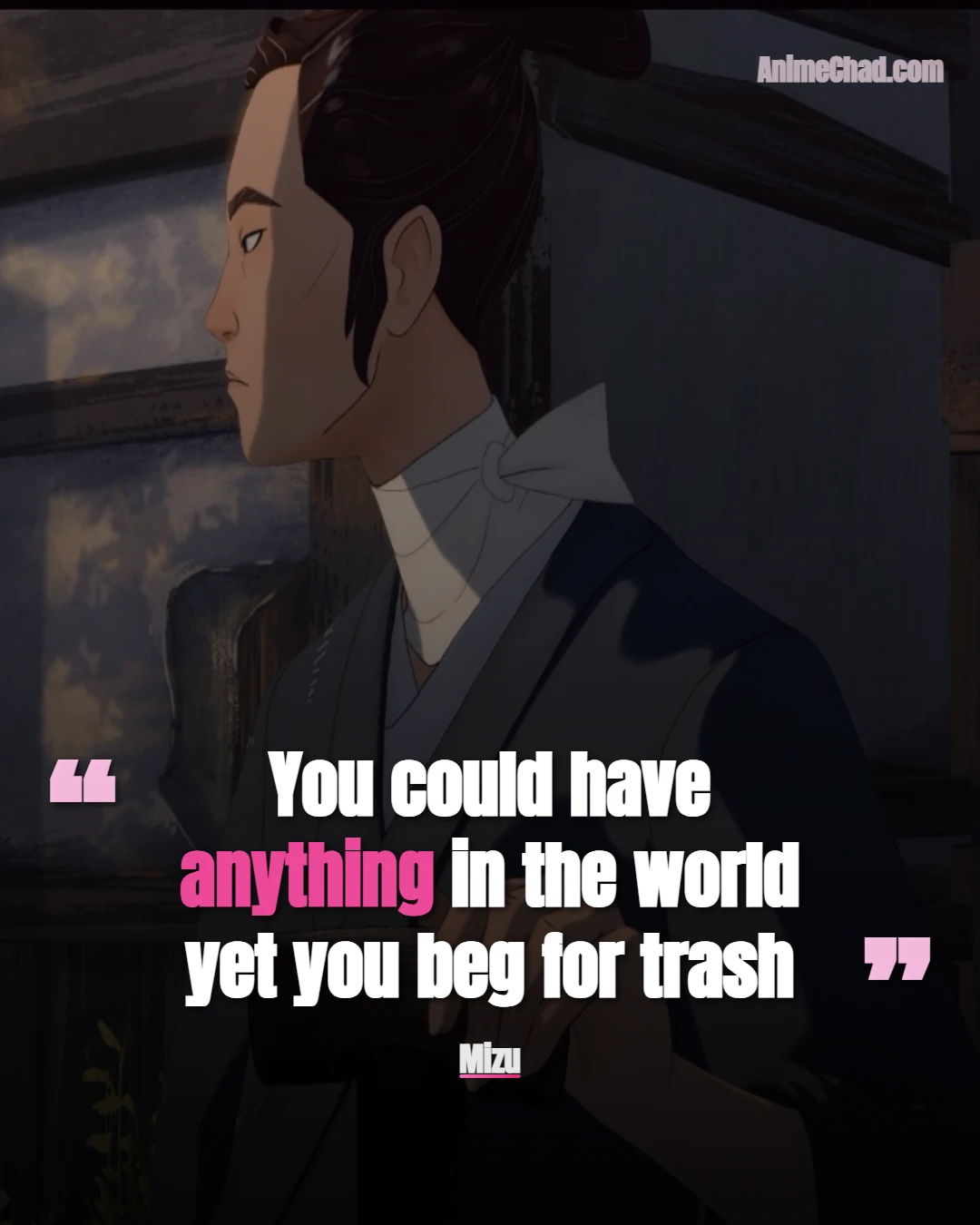
Episode unknown
Mizu
Scorn for Akemi’s choices underscores themes of agency, contrasting with Mizu’s self-imposed chains.
We are only responsible for our own soul, Mizu
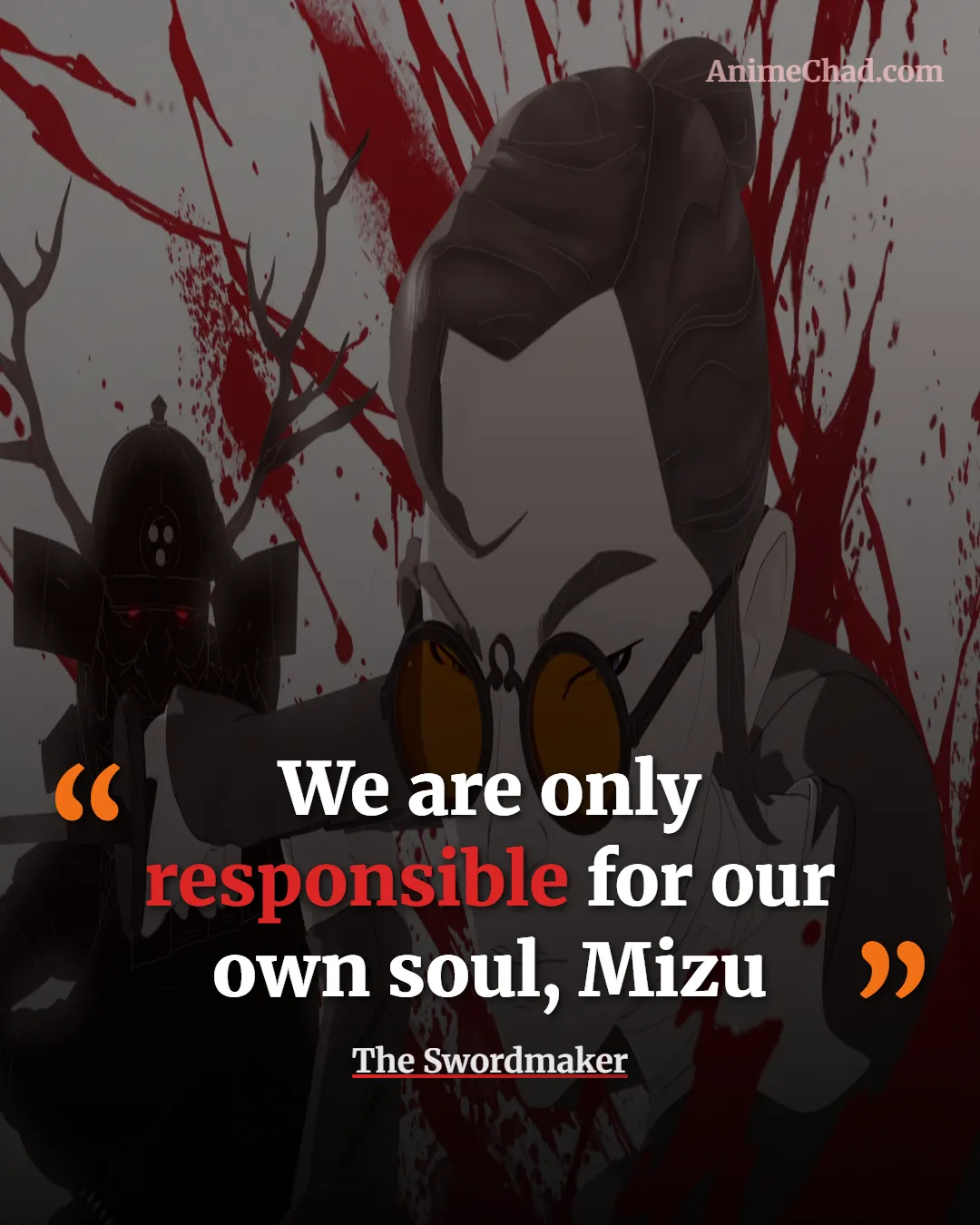
Episode unknown
The Swordmaker
Guidance to Ringo absolves collective guilt, urging Mizu toward personal redemption beyond revenge.
To be alive is to wake up and do things you don’t want to do

Episode 4 (Peculiarities)
Madame Kaji
Harsh life truth motivates endurance, reflecting characters’ daily battles against fate.
Victory cannot come from dishonor. Therefore, you never lost
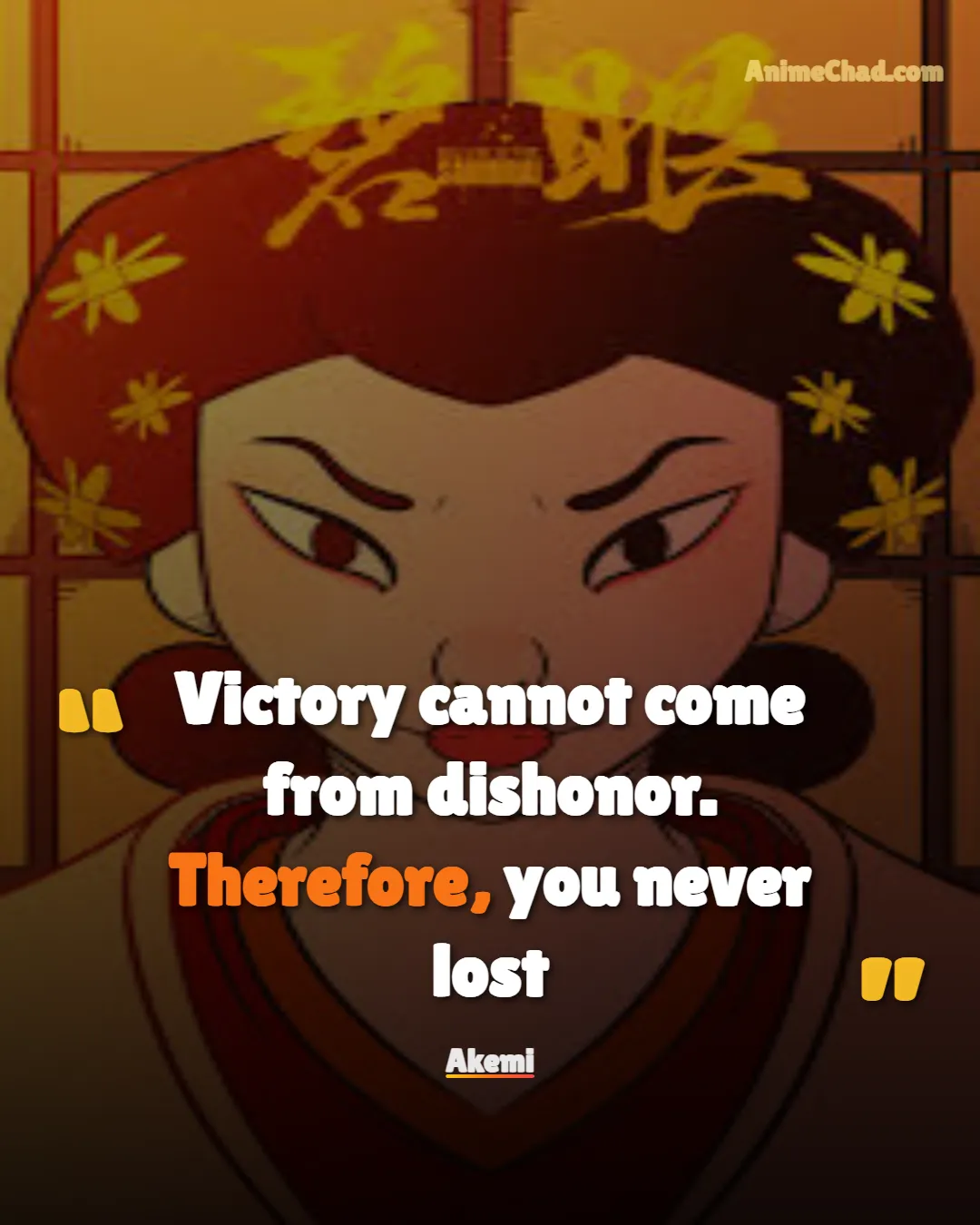
Episode 2 (An Unexpected Element)
Akemi
Manipulation of Taigen redefines defeat, exploring honor’s fragility in a dishonorable world.
A gun will never be as beautiful as a sword but…

Episode unknown
Abijah Fowler
Fowler laments weaponry’s evolution, symbolizing cultural clash and Mizu’s sword-bound vengeance.
You do not know what I’ve done to reach you. This doesn’t end until you die

Episode unknown
Mizu
Threat to foe conveys relentless sacrifice, peaking emotional intensity in climactic confrontations.
I am on the path of revenge
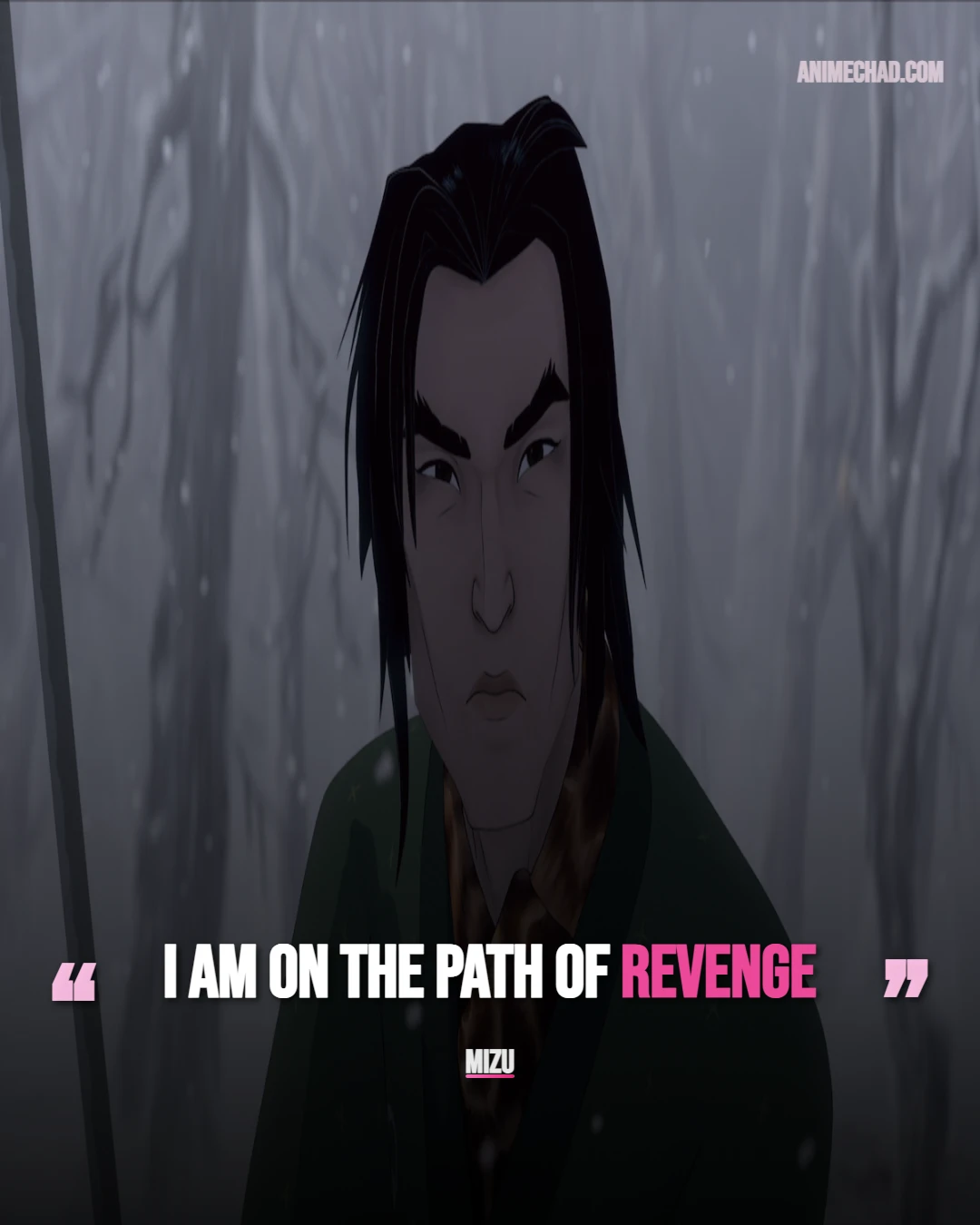
Episode 1 (Hammerscale)
Mizu
Core declaration to Ringo sets her unyielding arc, blending isolation with fierce determination.
She’s not a girl. She’s a princess… She moves, kill her
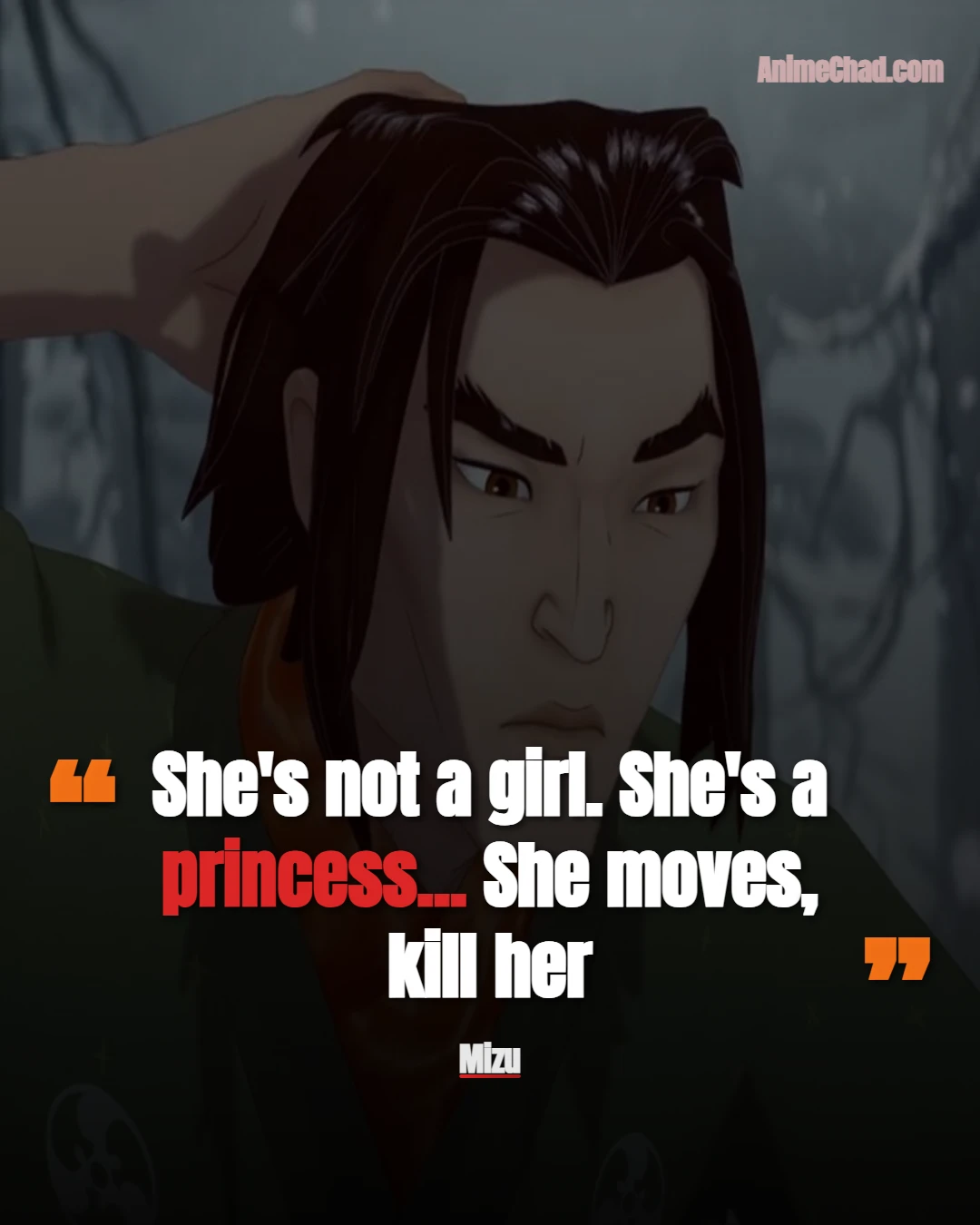
Episode 3 (A Fixed Number of Paths)
Mizu
Cold command to Ringo tests loyalty, highlighting revenge’s moral compromises in tense standoffs.
We can wait forever or we can work
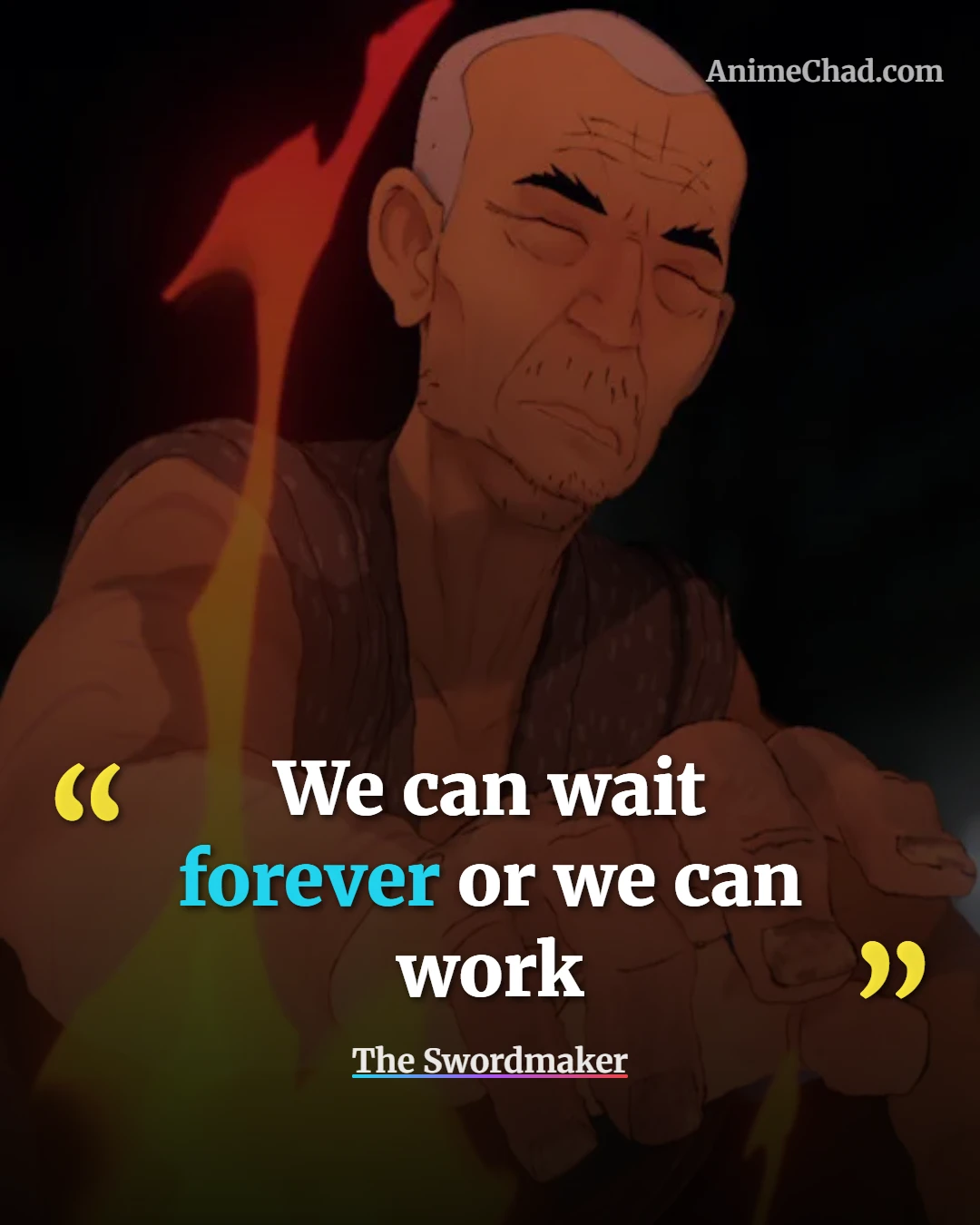
Episode 8 (The Blue Eye Samurai)
The Swordmaker
Final push to Ringo embodies perseverance, closing Mizu’s arc with hope amid unresolved pain.