
Blue Gender follows Yuji Kaido, a man awakened from cryosleep into a ruined Earth overrun by monstrous beings called the Blue. The series explores themes of survival, trauma, dehumanizing militarism, and the struggle to reconnect with empathy in a brutal world.
This collection highlights powerful lines that capture the characters’ emotional journeys and the show’s bleak yet hopeful vision of humanity.
I still don’t understand this world, but I’m ready to leave my past behind and move on
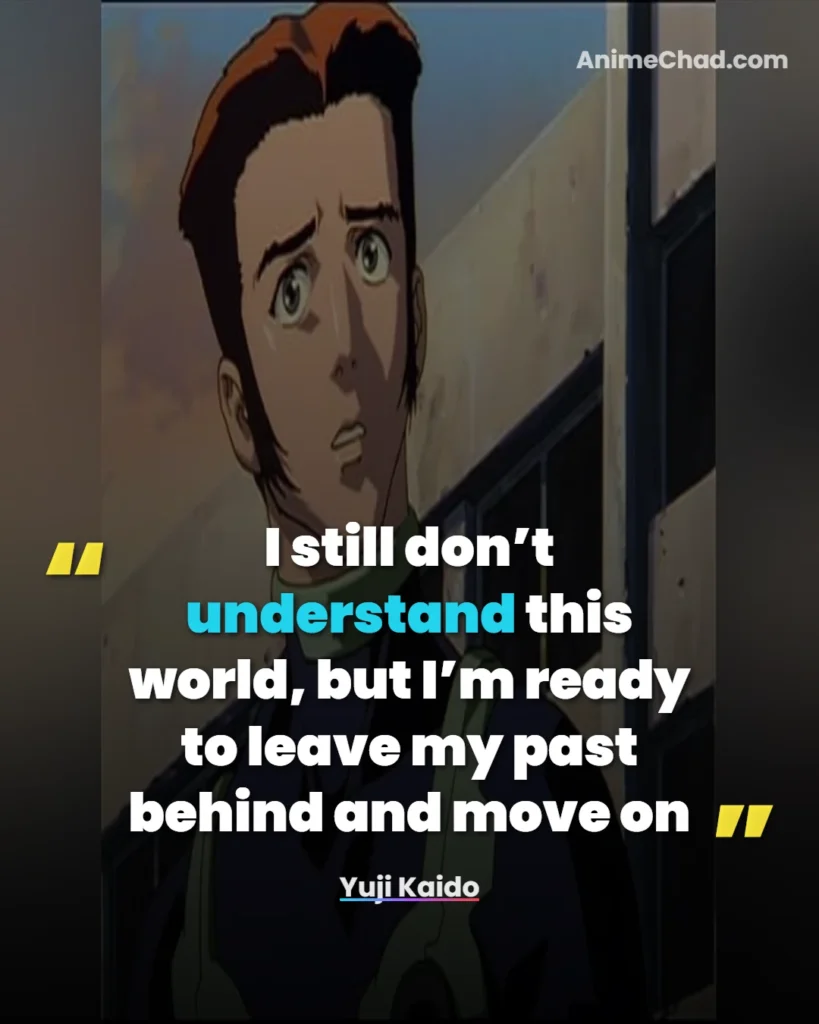
Episode 3 (Return to the Earth) [approx.]
Yuji Kaido
Yuji chooses survival over despair, marking his first real step toward maturity amid apocalyptic chaos.
As long as I’m alive, I’ll keep fighting the Blue
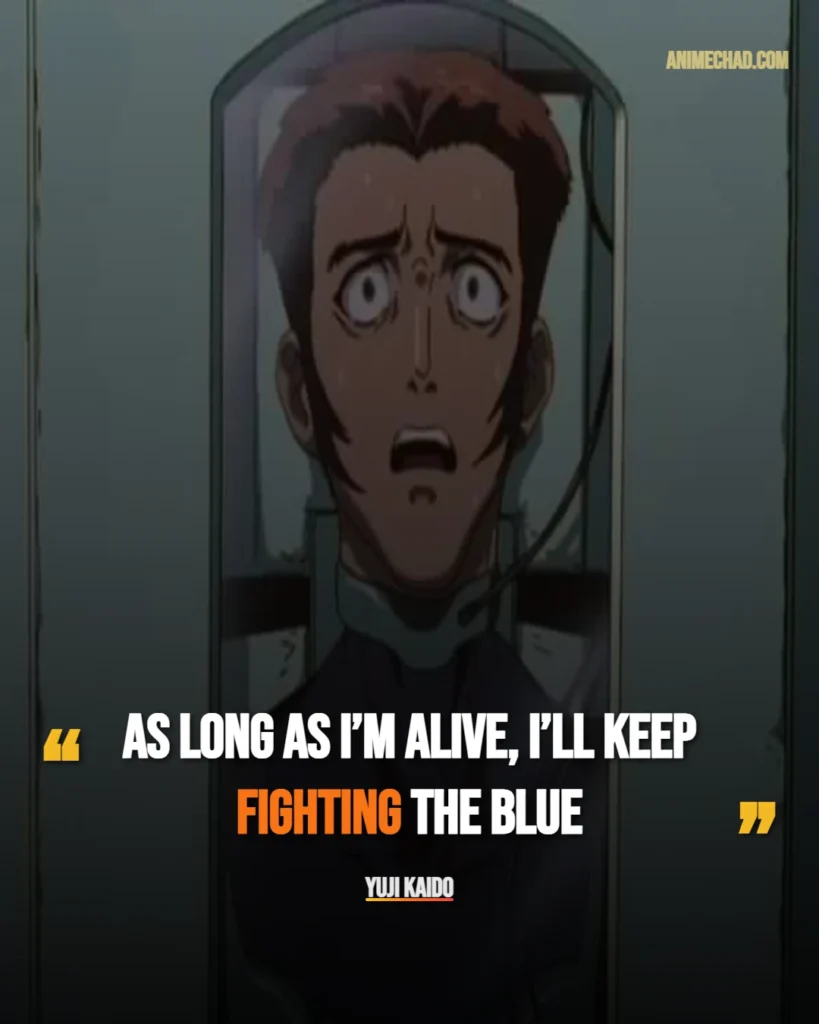
Episode 4 (Priority) [approx.]
Yuji Kaido
A desperate vow that turns Yuji’s fear into determination, embodying the series’ core survival instinct.
Orders don’t matter if everyone ends up dead
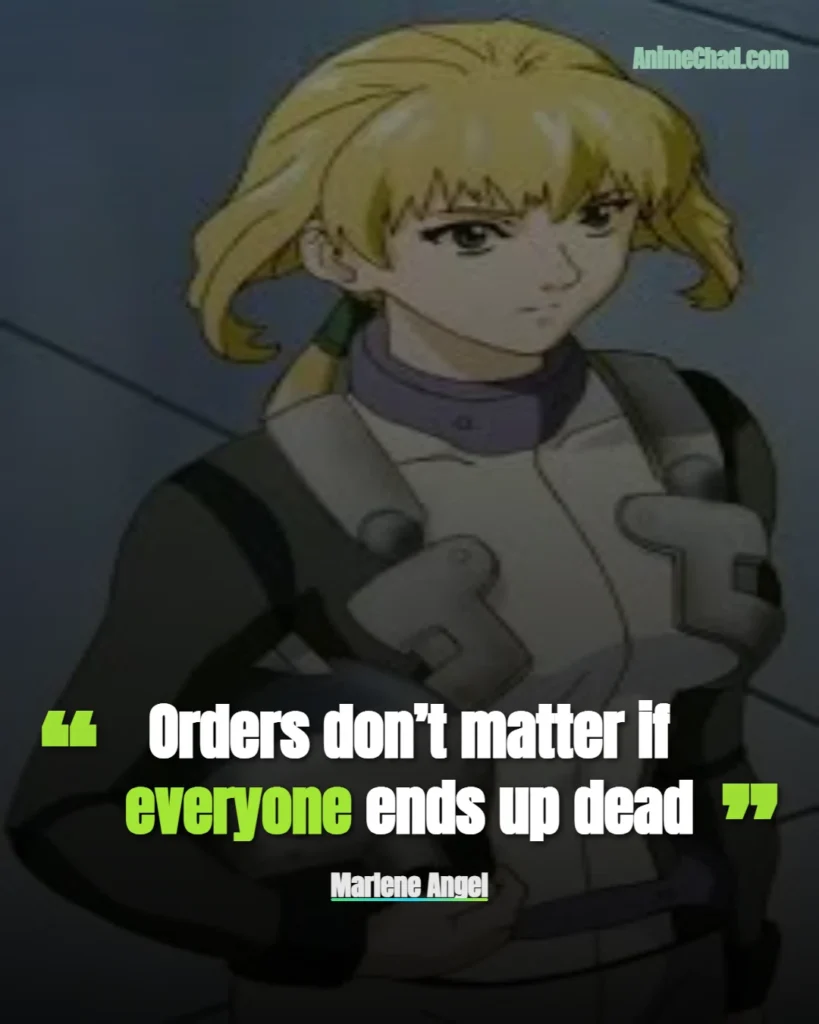
Episode 2 (Cry) [approx.]
Marlene Angel
Marlene’s rigid soldier mindset begins to crack as she confronts the cost of blind obedience.
If we don’t protect each other, there’s no point in surviving
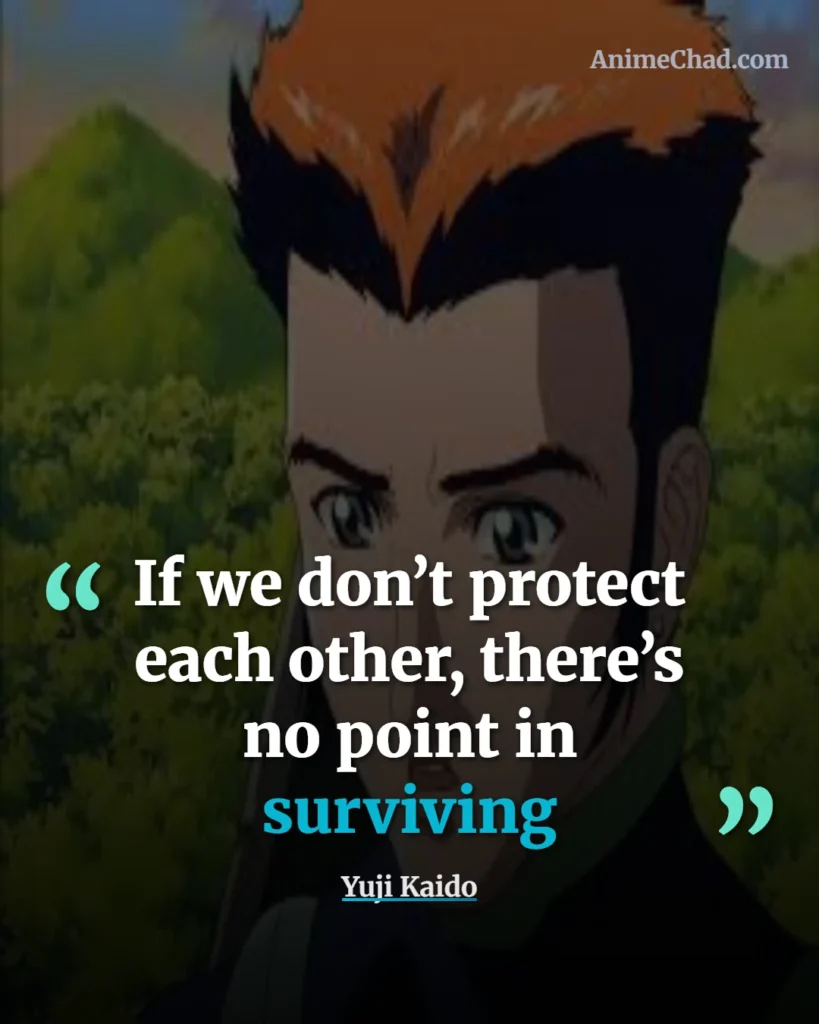
Episode 5 (Relation) [approx.]
Yuji Kaido
Yuji argues that survival without compassion is empty, challenging Second Earth’s cold utilitarianism.
Turn your hatred for the Blue into a passion for staying alive
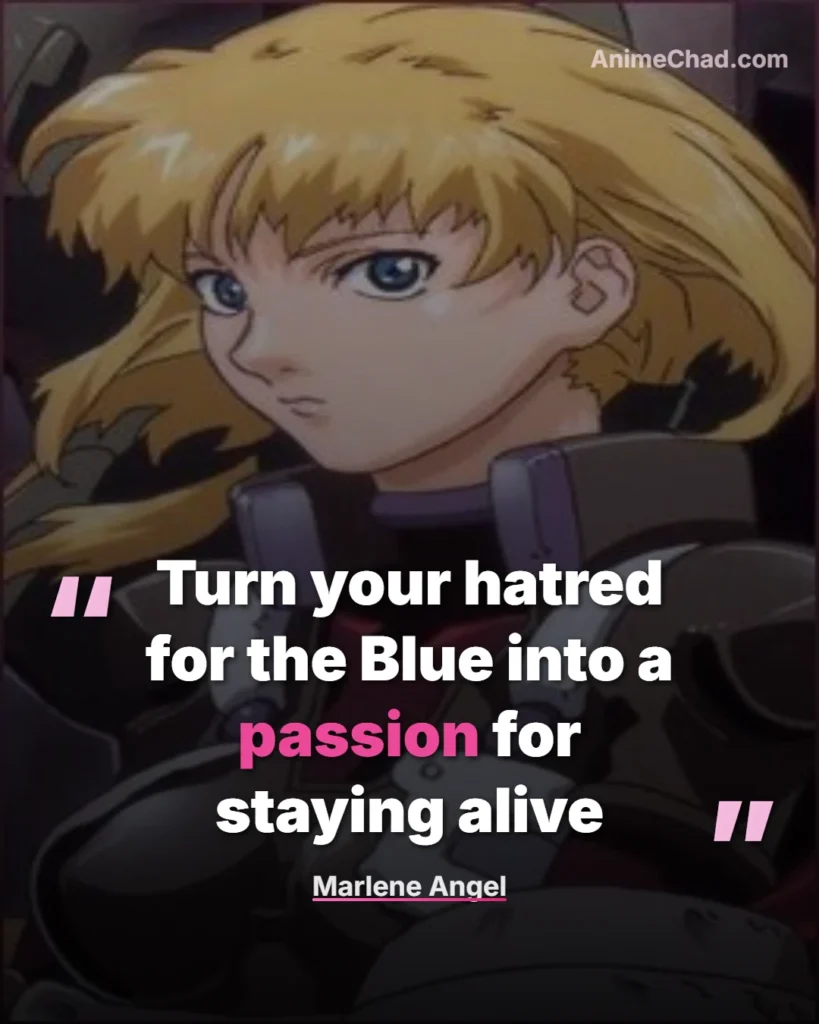
Episode 8 (Sleep) [approx.]
Marlene Angel
Marlene reframes vengeance into survival, showing her shift from pure duty toward concern for Yuji’s psyche.
I’m not a sample. I’m human
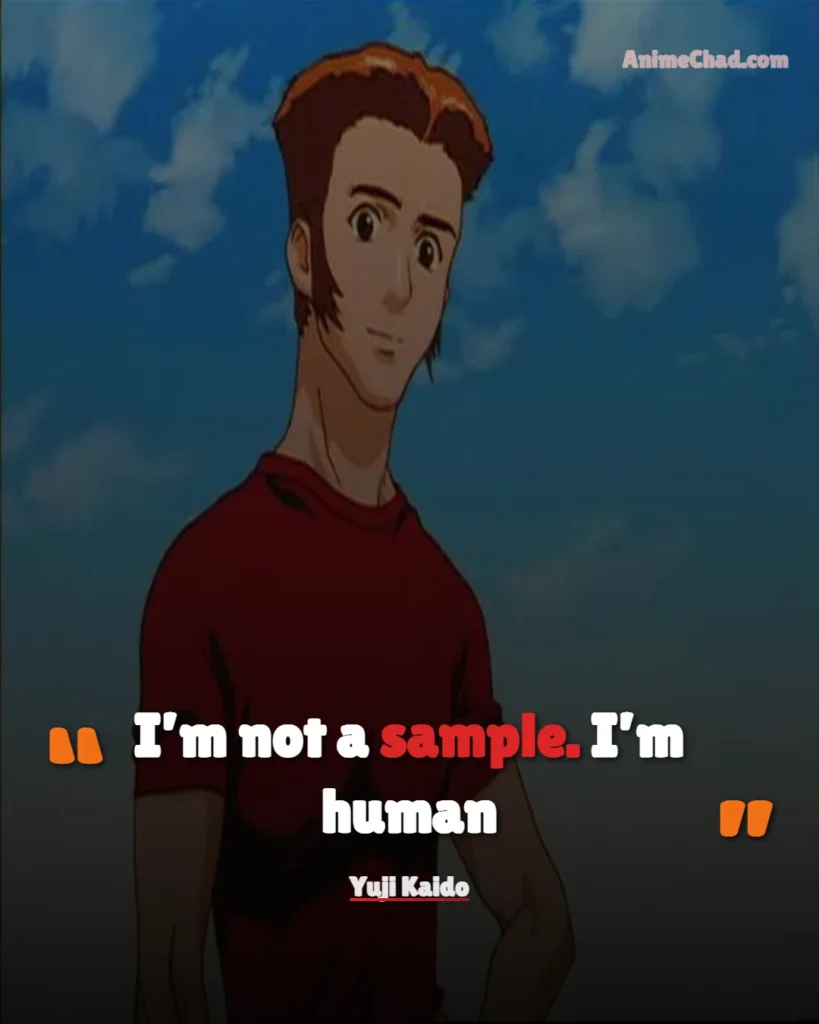
Episode 7 (Sympathizer) [approx.]
Yuji Kaido
Yuji rejects being treated as an expendable asset, condemning Second Earth’s dehumanizing science.
You can’t save everyone, but you can choose who you refuse to abandon
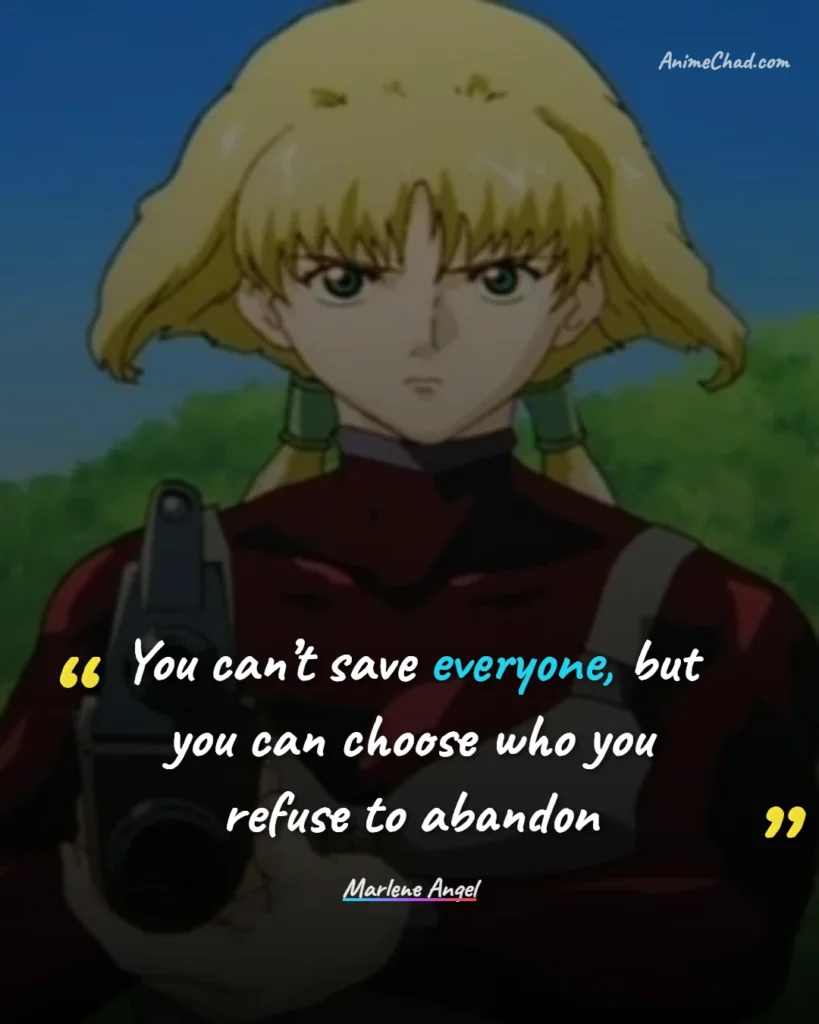
Episode 9 (Confirm) [approx.]
Marlene Angel
Marlene admits painful limits while affirming loyalty, reflecting her growth beyond emotionless soldiering.
The Blue aren’t the only monsters on this planet
Episode 10 (Vitual Death) [approx.]
Yuji Kaido
Yuji condemns human cruelty, equating ruthless leaders with the creatures destroying Earth.
Living in fear isn’t living at all
Episode 6 (Set) [approx.]
Yuji Kaido
Yuji rejects constant terror, choosing active resistance over paralyzing anxiety.
If this world is hell, then we’ll find our own reason to keep walking
Episode 11 (Drop) [approx.]
Marlene Angel
Marlene acknowledges the horror around them while embracing a personal, human reason to go on.
Up there they talk about humanity, but down here we’re treated like parts in a machine
Episode 13 (Planet Second Earth) [approx.]
Yuji Kaido
Yuji exposes the hypocrisy of Second Earth’s leadership and its cold, mechanical view of people.
If we forget how to care, we might as well let the Blue win
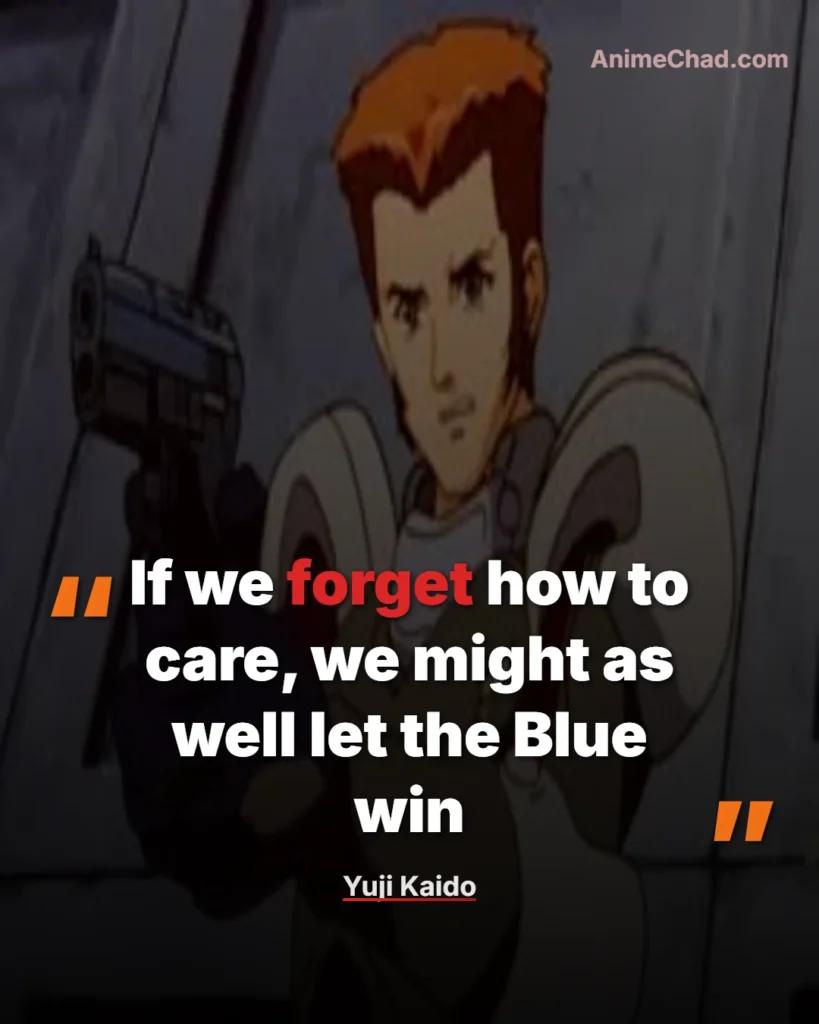
Episode 14 (Settlement) [approx.]
Yuji Kaido
Yuji links empathy to victory, insisting emotional numbness is as deadly as the enemy.
I followed orders so I wouldn’t have to feel guilty
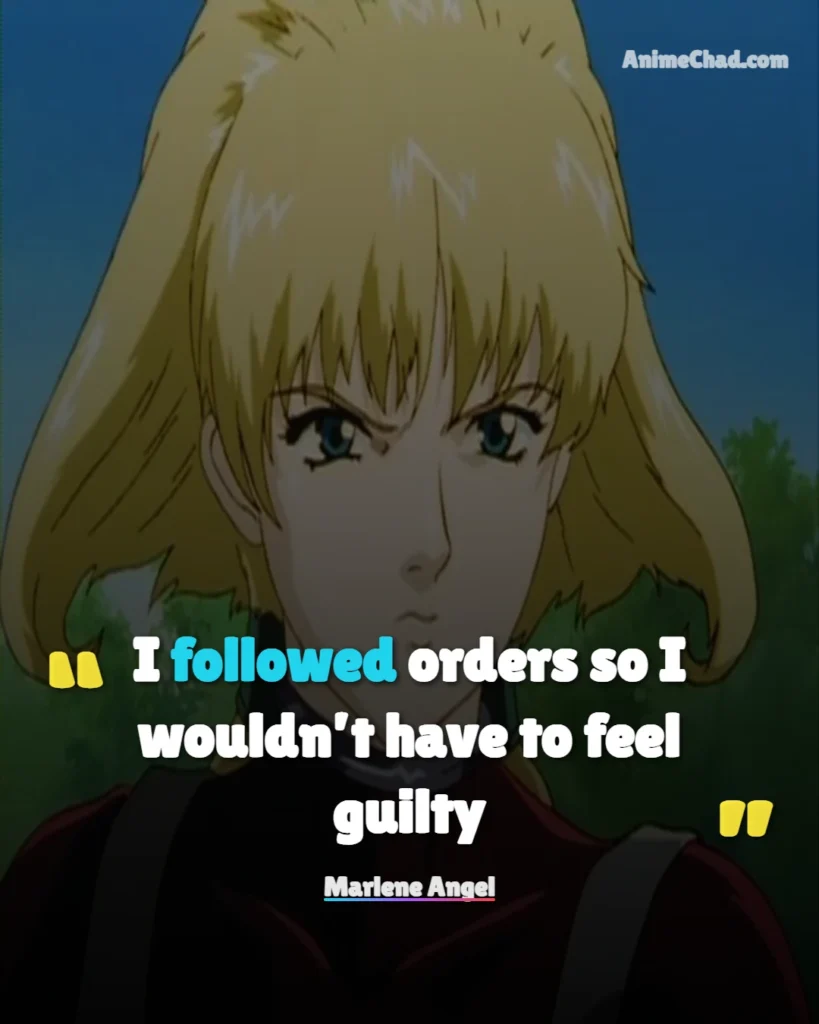
Episode 15 (Adagia) [approx.]
Marlene Angel
Marlene confesses using duty as a shield from responsibility, signaling deep moral awakening.
You taught me there’s more to living than just not dying
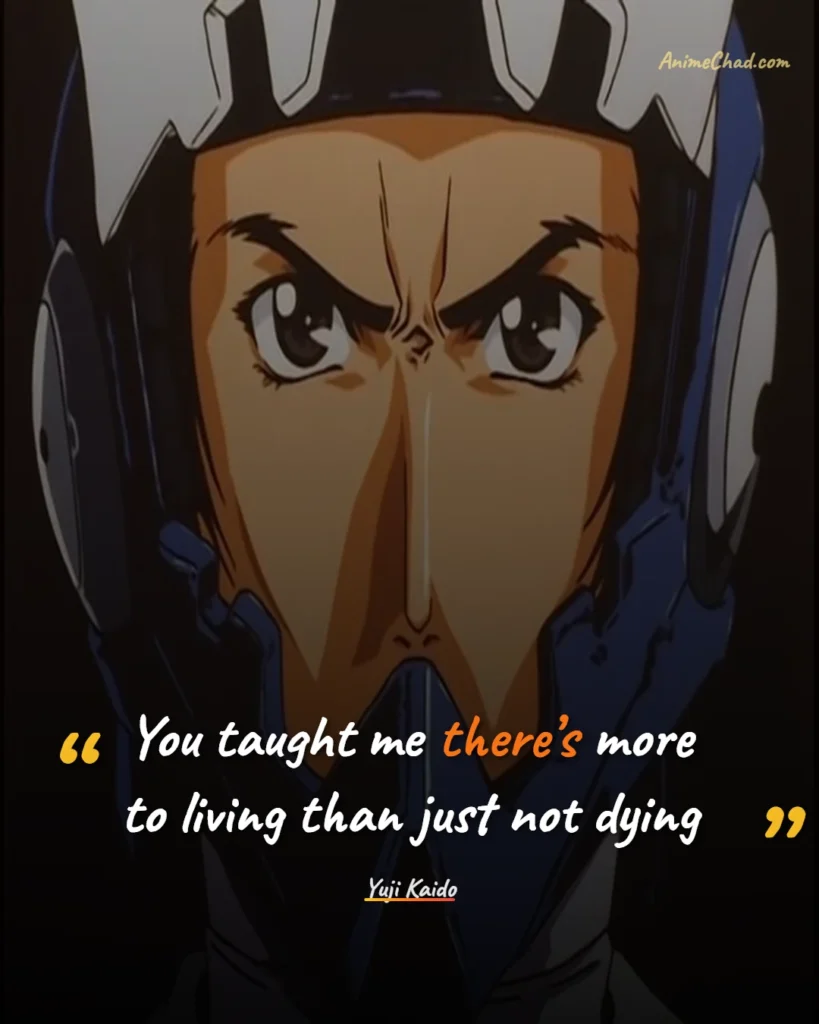
Episode 18 (Nightmare) [approx.]
Yuji Kaido
Yuji credits Marlene for showing him emotional connection, highlighting their evolving relationship.
Even in this ruined world, we can still choose kindness
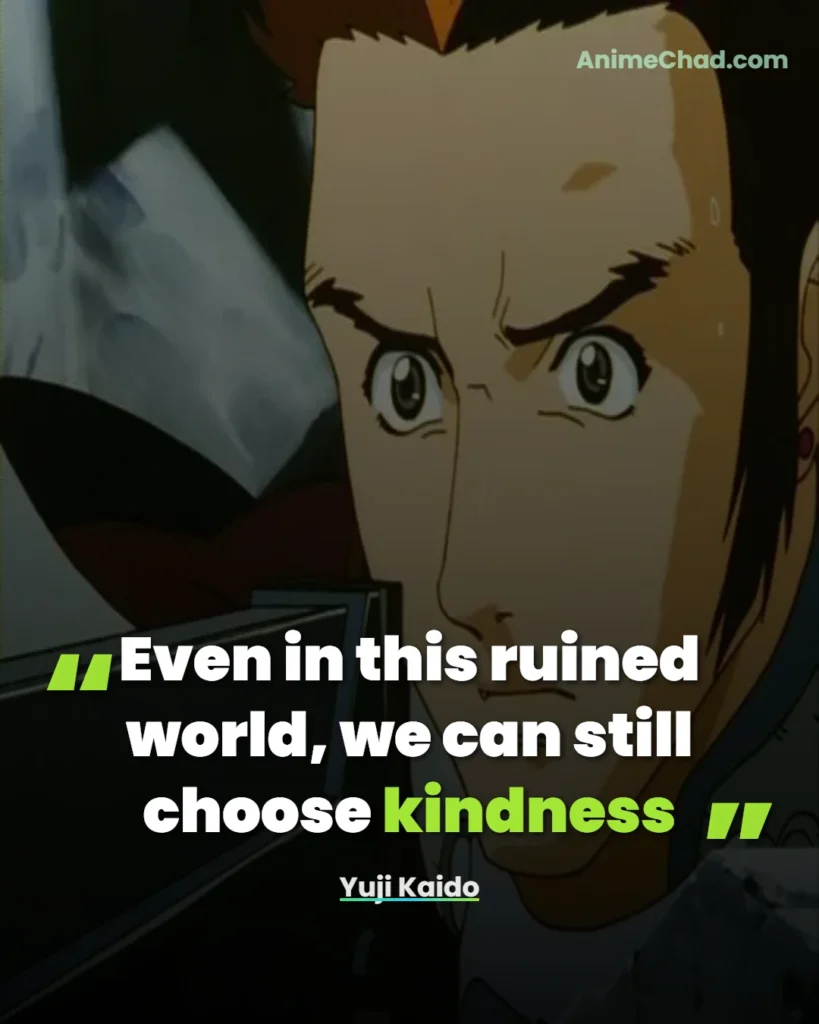
Episode 17 (Scar) [approx.]
Yuji Kaido
Yuji insists morality is a choice, not a luxury, even after civilization’s collapse.
I was trained to survive, not to love
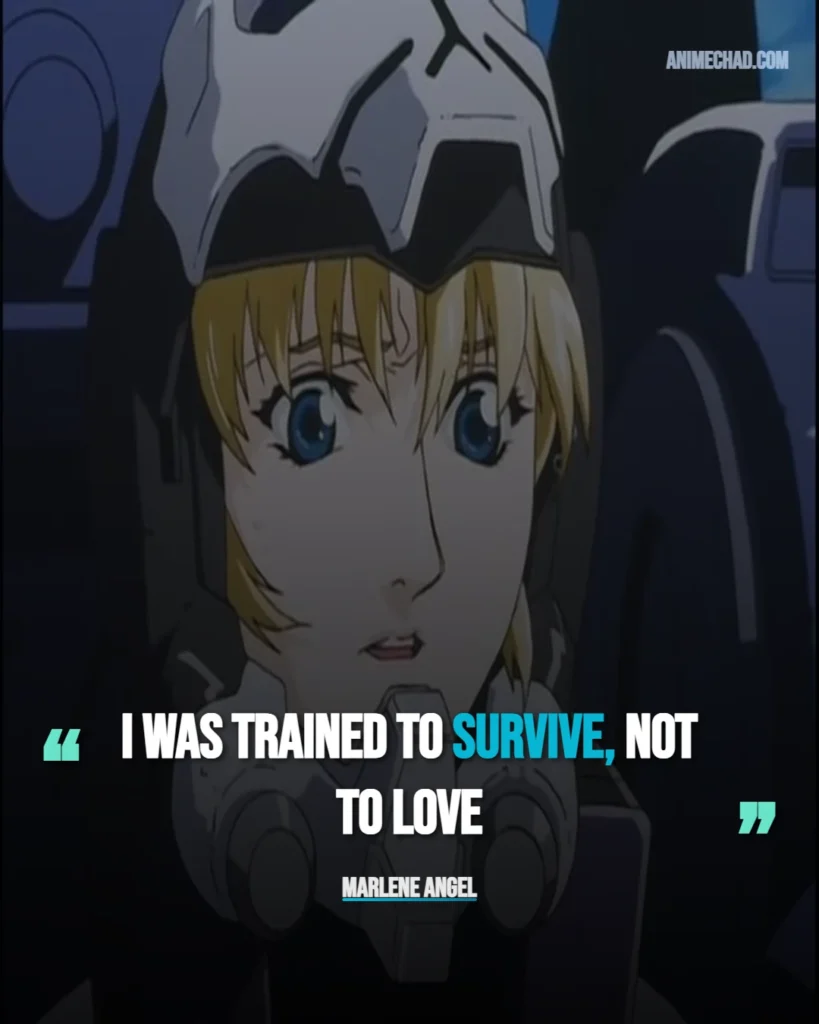
Episode 19 (Chaos) [approx.]
Marlene Angel
Marlene admits emotional emptiness, underlining how war stripped her of basic human softness.
If we run from pain, we’ll never change this world
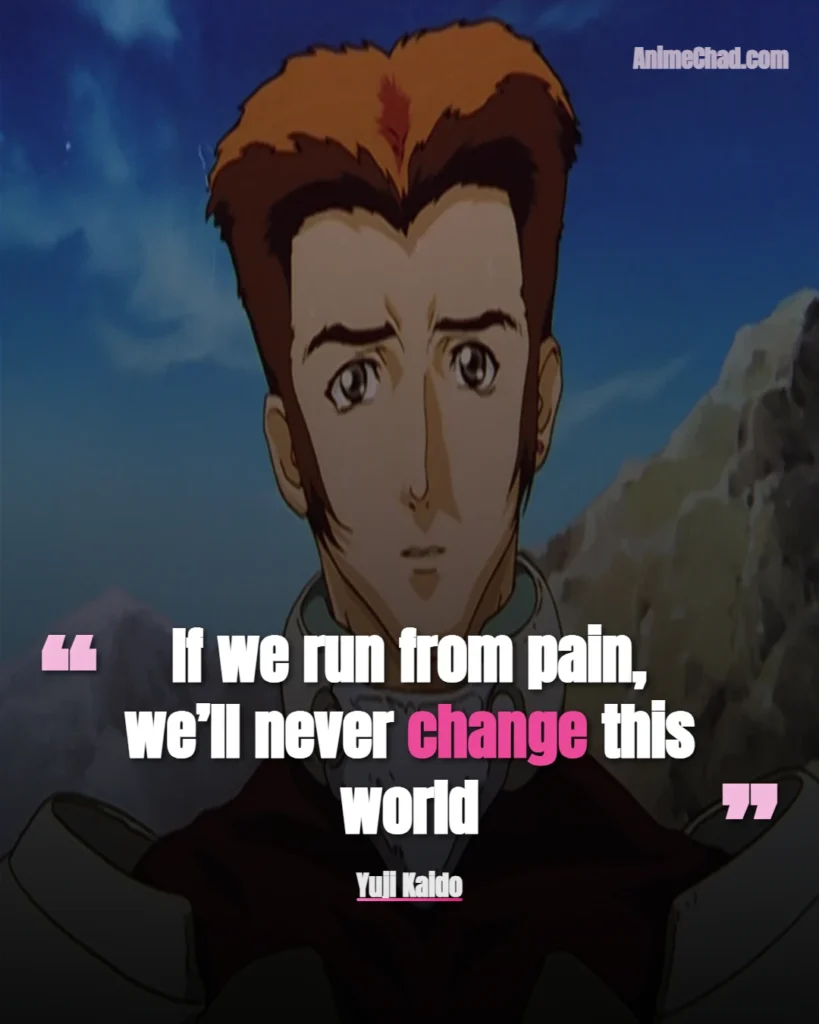
Episode 20 (Agony) [approx.]
Yuji Kaido
Yuji accepts suffering as necessary for growth and for challenging the status quo.
Humanity grew like a cancer; the Blue are the Earth’s way of cutting us out
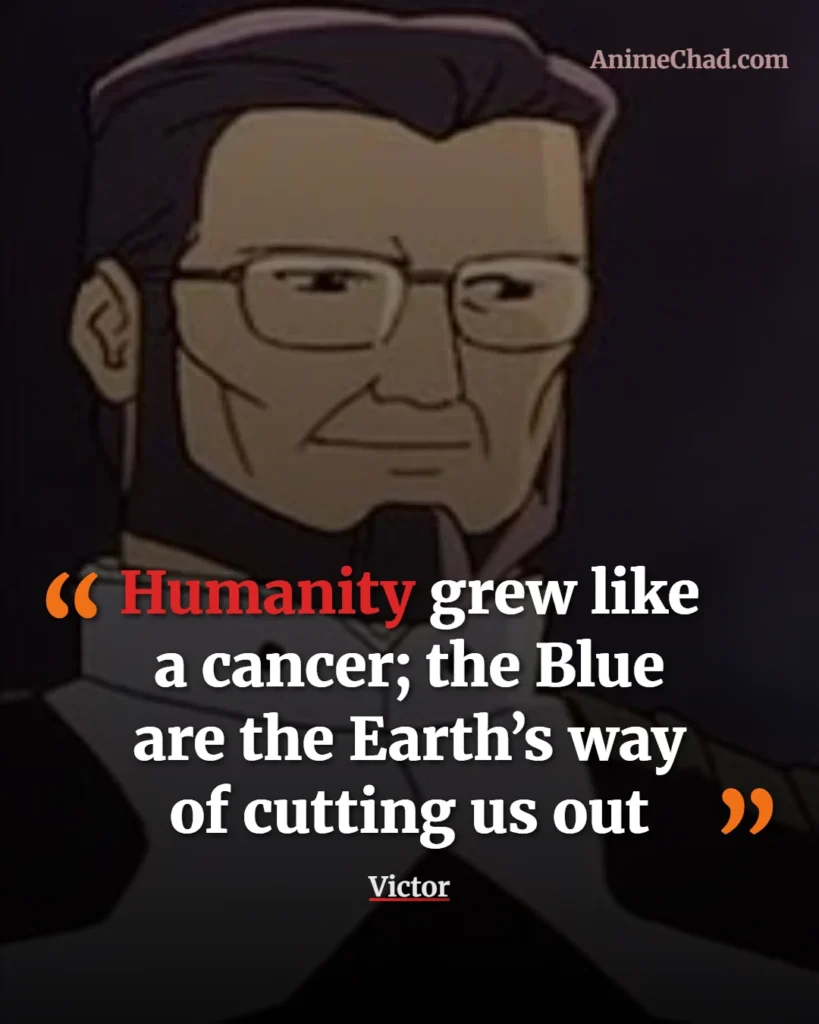
Episode 21 (Grief) [approx.]
Victor
Victor voices the harsh ecological logic behind the conflict, framing humans as the true imbalance.
I won’t sacrifice the future just to protect my pride
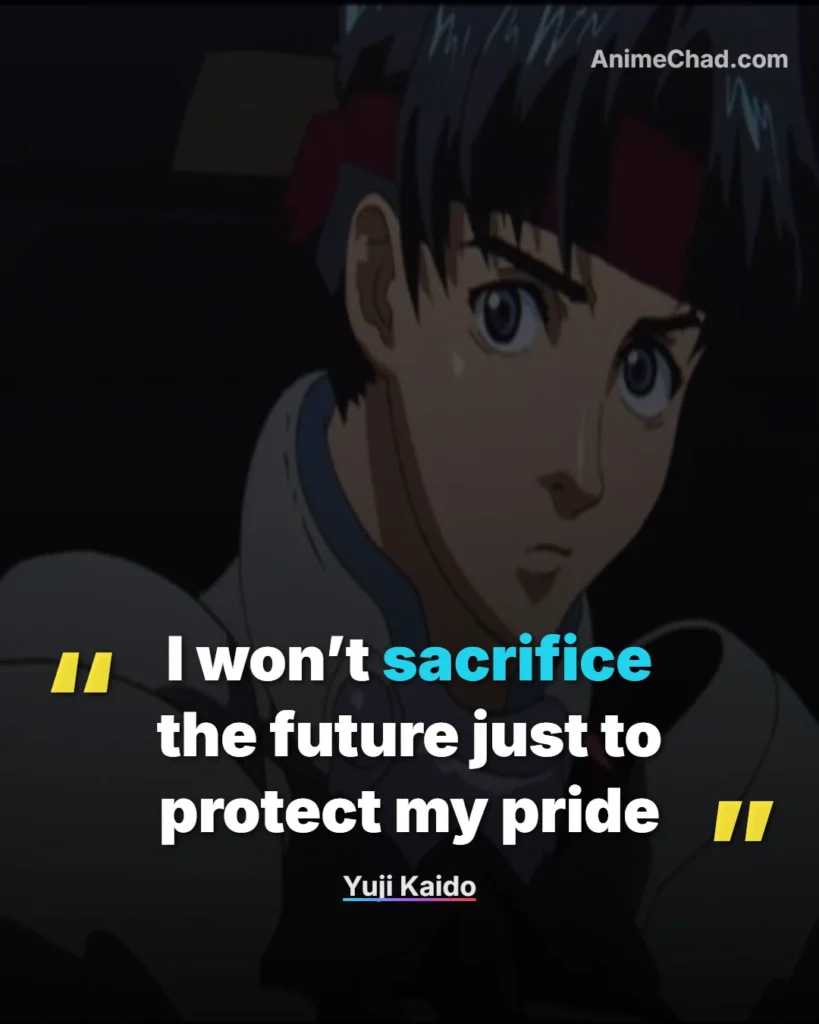
Episode 22 (Reunion) [approx.]
Yuji Kaido
Yuji rejects ego-driven decisions, choosing long-term hope over short-term dominance.
For the first time, I want to live for someone else
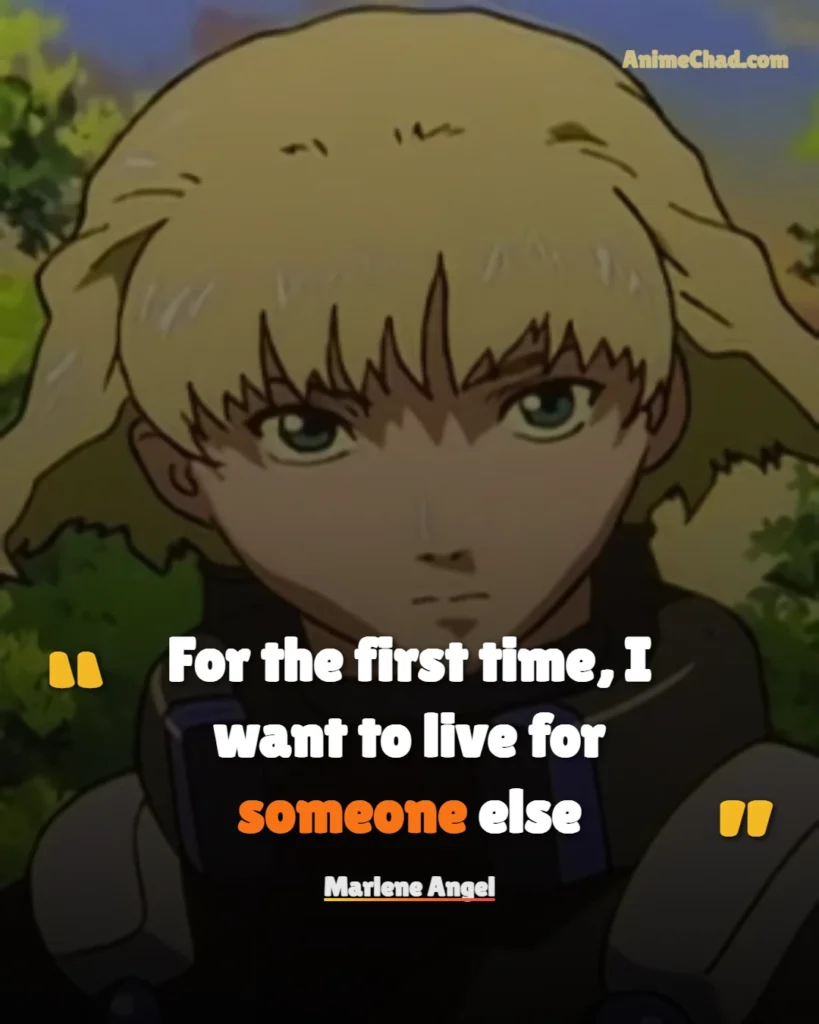
Episode 24 (Compassion) [approx.]
Marlene Angel
Marlene’s desire to live for Yuji marks her full transformation from tool to feeling human.
This child deserves a world better than the one we destroyed
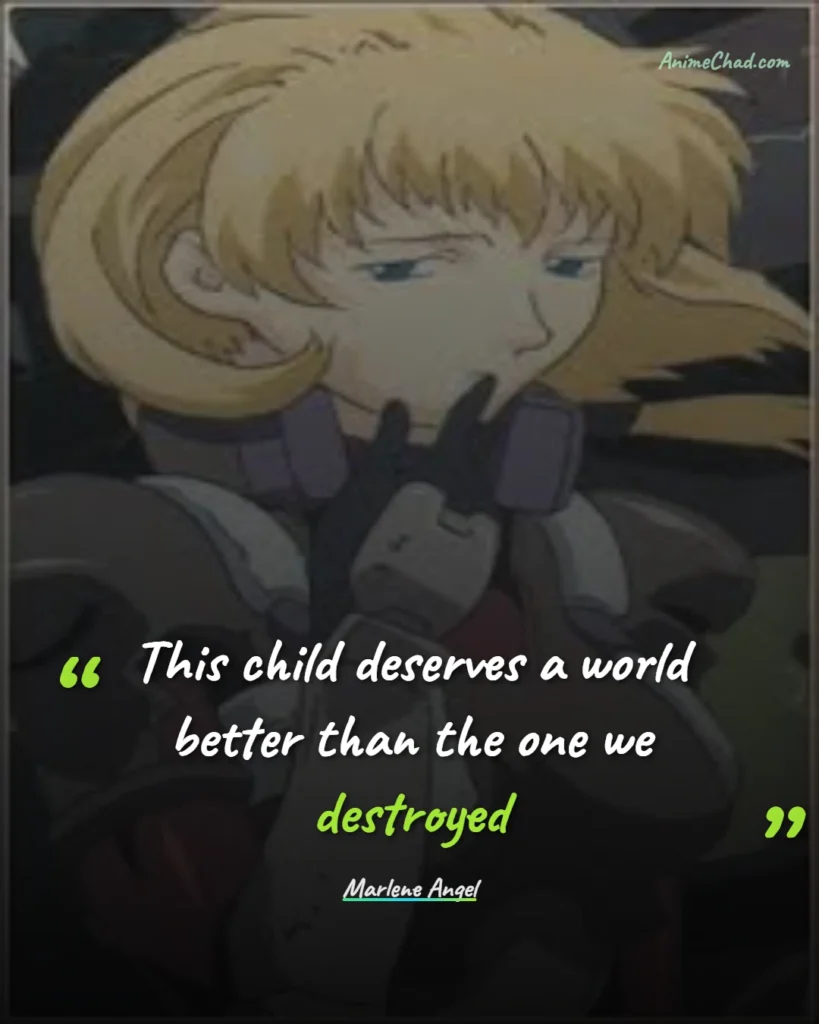
Episode 25 (Confession) [approx.]
Marlene Angel
Marlene’s pregnancy focuses the story’s hope on rebuilding rather than mere survival.
I’m done letting other people decide who lives and who dies
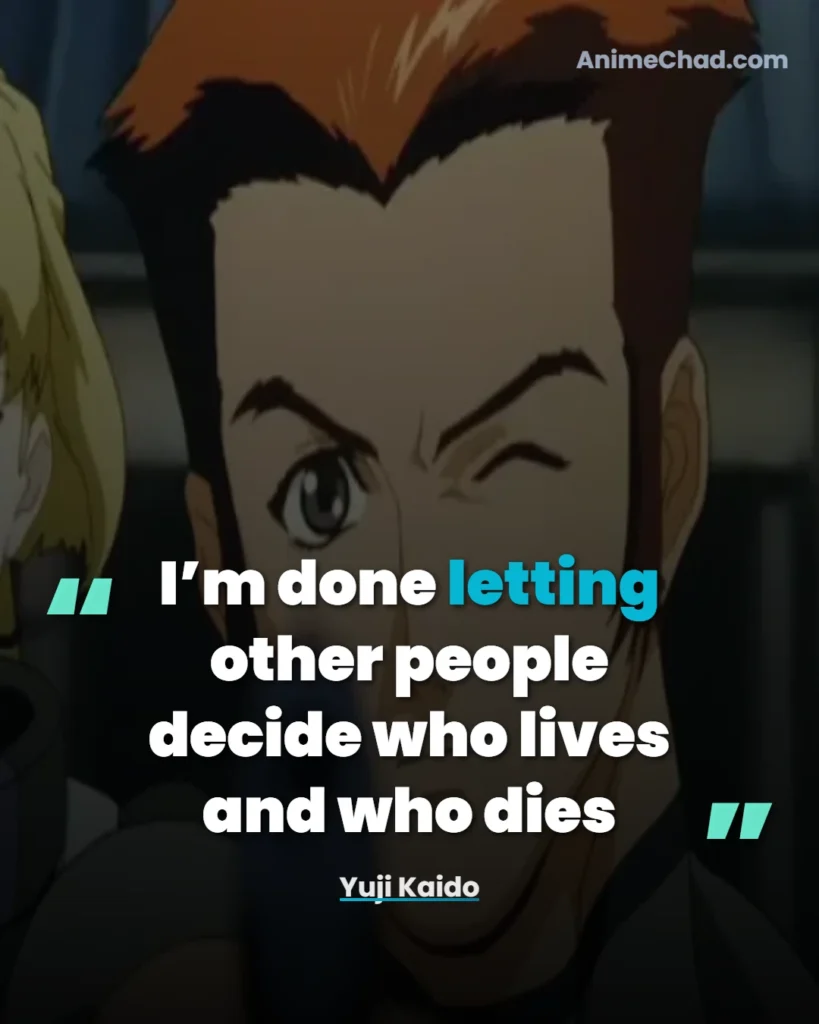
Episode 23 (Invasion) [approx.]
Yuji Kaido
Yuji rejects authoritarian control, asserting his own moral agency in war.
Even if I’m afraid, I’ll stand with you
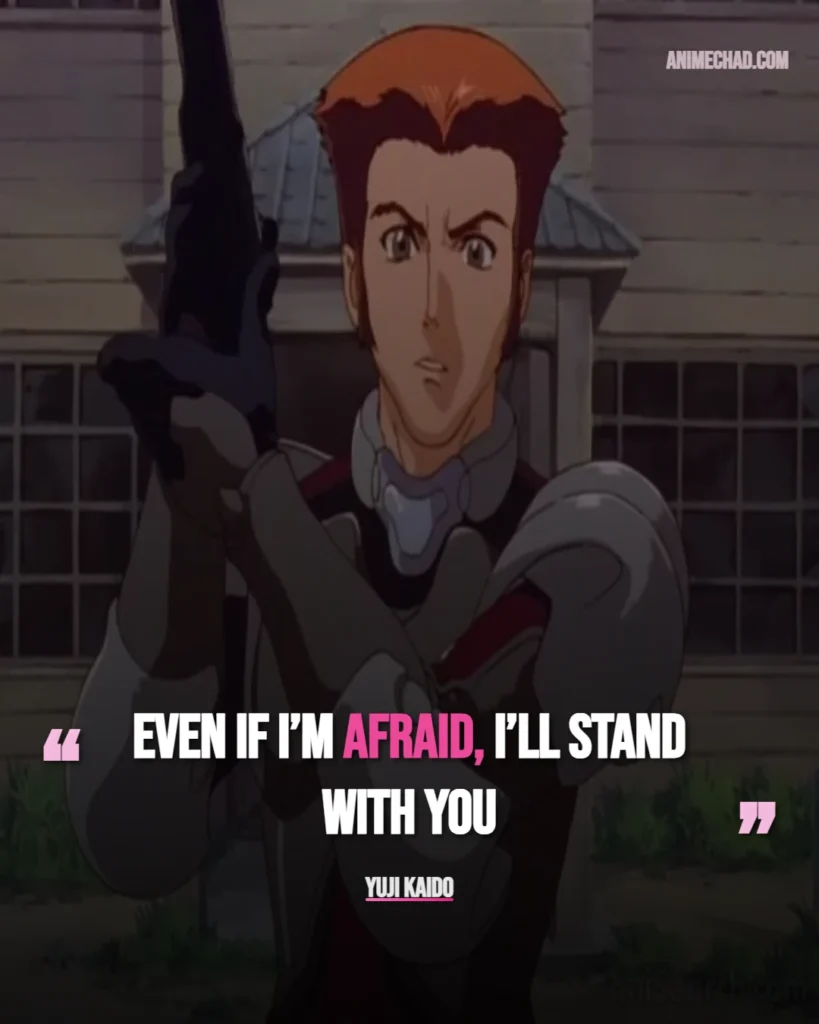
Episode 16 (Avenir) [approx.]
Yuji Kaido
Yuji embraces courage as acting despite fear, strengthening his bond with Marlene.
The moment we stop seeing each other as human, the Blue have already won
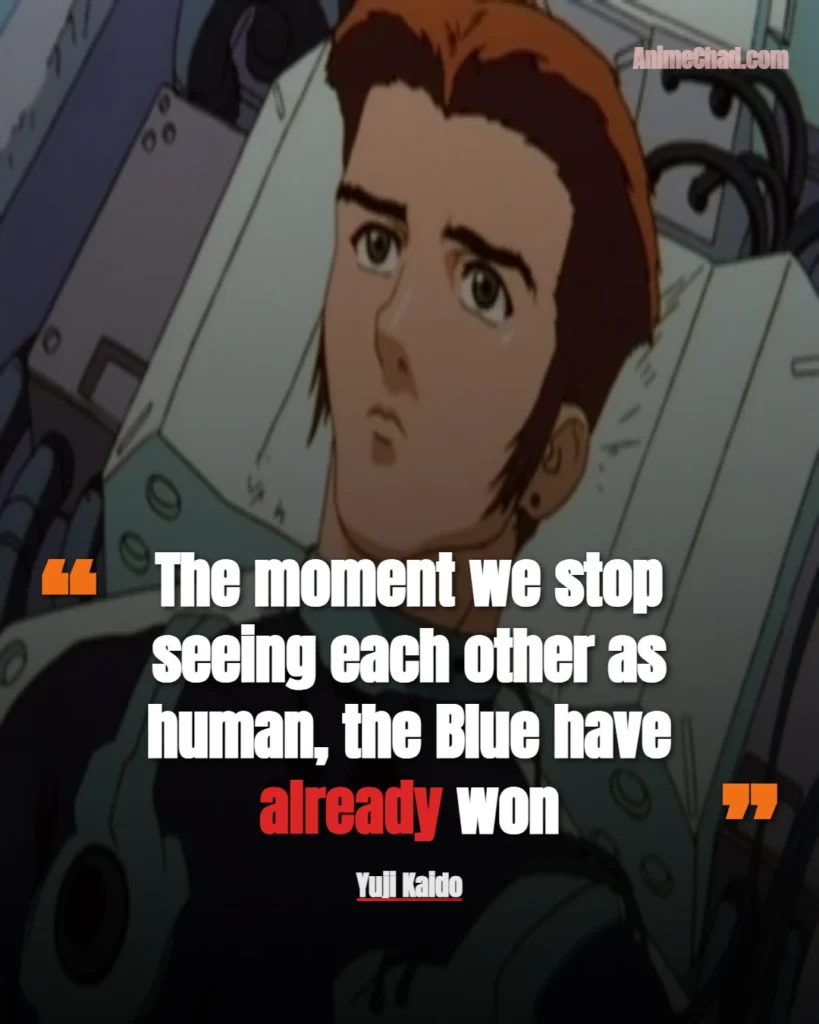
Episode 12 (Progress) [approx.]
Yuji Kaido
Yuji links dehumanization to defeat, tying interpersonal empathy to humanity’s survival.
This world is broken, but our hearts don’t have to be
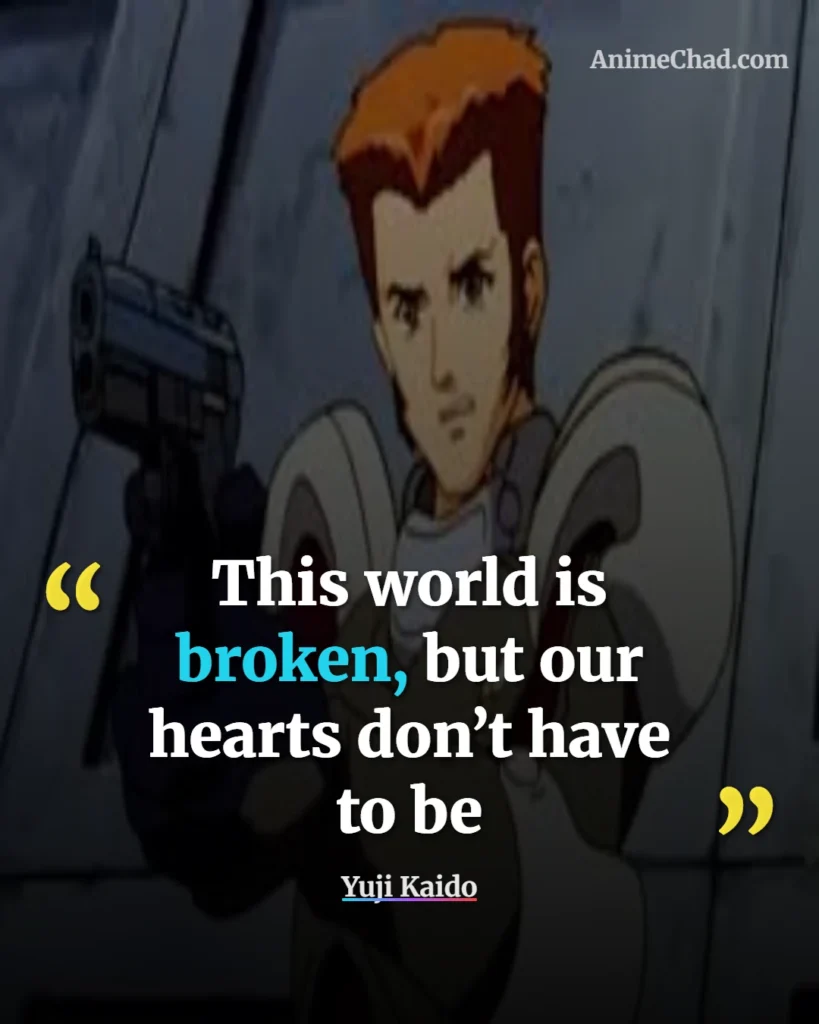
Episode 26 (Blue) [approx.]
Yuji Kaido
Yuji affirms the possibility of emotional healing even in a devastated world, closing the series on fragile hope.